
Apr . 01, 2024 17:55 Back to list
oem black wire braid hydraulic hose factories Performance Analysis

Introduction
OEM black wire braid hydraulic hoses are critical components in fluid power systems, serving a wide range of industries including construction, agriculture, manufacturing, and automotive. These hoses are engineered to convey hydraulic fluid under high pressure, transmitting power to actuators and other hydraulic devices. Positioned between the fluid reservoir and the points of application, their performance directly impacts system efficiency, reliability, and safety. The defining characteristic of this hose type is the high-strength steel wire braid reinforcement embedded within the rubber layers, providing superior pressure resistance and burst strength compared to non-reinforced alternatives. Core performance indicators include working pressure, burst pressure, temperature range, and fluid compatibility, which are meticulously controlled during manufacturing to meet stringent industry standards. The demand for custom hose assemblies – the ‘OEM’ aspect – reflects the increasing need for application-specific solutions, tailored to unique equipment designs and operational requirements. A key industry pain point revolves around consistent quality control, ensuring each hose assembly meets precise specifications and minimizing the risk of catastrophic failure.
Material Science & Manufacturing
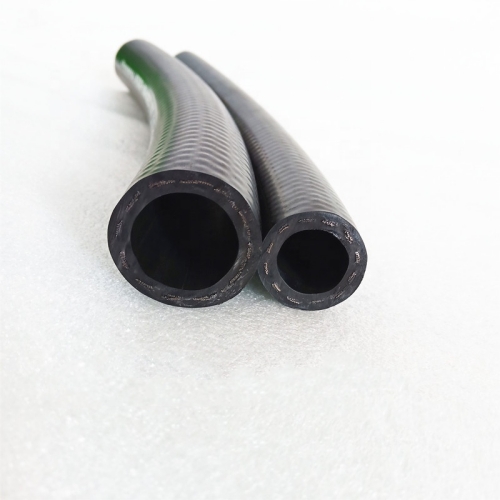
The construction of black wire braid hydraulic hoses relies on a carefully selected combination of materials and precise manufacturing processes. The inner tube is typically composed of a synthetic rubber compound, most commonly nitrile rubber (NBR) due to its excellent resistance to petroleum-based hydraulic fluids. Other rubber compounds, such as EPDM (ethylene propylene diene monomer) may be used for applications requiring compatibility with phosphate ester fluids. NBR's tensile strength typically ranges from 15-30 MPa, while its elongation at break falls between 300-500%. The reinforcement layer consists of one or more braids of high-strength steel wire. The wire gauge and braid angle directly influence the hose's pressure rating; finer wire and tighter braid angles yield higher pressure capabilities. Steel wire commonly used is typically plated with zinc or copper to prevent corrosion. The outer cover is also constructed from synthetic rubber, often a blend of nitrile and PVC for enhanced abrasion resistance and weathering protection. The manufacturing process begins with extrusion of the inner tube, followed by application of the reinforcement braid through a winding machine. The outer cover is then extruded over the braid. Key parameter control during manufacturing includes maintaining consistent rubber compound ratios, precise wire tension during braiding, and accurate vulcanization temperatures and times (typically 140-180°C for 30-60 minutes) to ensure optimal crosslinking and material properties. Proper curing is essential for achieving desired tensile strength, elongation, and resistance to fluid degradation. Post-manufacturing, each hose undergoes rigorous pressure testing to verify its integrity and compliance with safety standards.
Performance & Engineering
The performance of black wire braid hydraulic hoses is dictated by several engineering considerations, primarily focused on withstanding high pressure and maintaining operational integrity under various environmental conditions. Force analysis involves calculating hoop stress within the hose wall under internal pressure, ensuring the steel wire braid can adequately resist deformation and prevent burst failure. The burst pressure is typically four times the working pressure, providing a safety factor. Environmental resistance is crucial; hydraulic hoses are often exposed to extreme temperatures, UV radiation, ozone, and corrosive fluids. NBR’s temperature operating range is typically -40°C to 100°C, but performance can degrade with prolonged exposure to elevated temperatures. The hose must also exhibit resistance to kinking and twisting, which can restrict fluid flow and lead to premature failure. Compliance requirements are extensive, governed by standards from organizations like SAE (Society of Automotive Engineers) and EN (European Norms). These standards specify testing procedures for pressure resistance, impulse pressure, temperature cycling, and fluid compatibility. Functional implementation relies on proper hose assembly with compatible fittings. Incorrect fitting selection or improper crimping can compromise the hose's integrity and create leak paths. The correct fitting material and crimp specifications are critical for ensuring a secure and leak-proof connection, matched to the hose’s pressure rating and the fluid being conveyed.
Technical Specifications
| Parameter | Unit | Typical Value (1" ID Hose) | Testing Standard |
|---|---|---|---|
| Working Pressure | MPa | 20 | SAE J517 |
| Burst Pressure | MPa | 80 | SAE J517 |
| Inner Tube Material | - | NBR | ASTM D2000 |
| Reinforcement | - | Single Wire Braid (Steel) | SAE J517 |
| Outer Cover Material | - | Nitrile/PVC Blend | ASTM D2000 |
| Temperature Range | °C | -40 to +100 | SAE J517 |
Failure Mode & Maintenance
Black wire braid hydraulic hoses are susceptible to various failure modes in practical applications. Fatigue cracking, often initiated at the interface between the rubber and steel wire, is a common failure mechanism resulting from repeated pressure cycling and mechanical flexing. Delamination, the separation of rubber layers, can occur due to poor bonding during manufacturing or exposure to incompatible fluids. Degradation of the rubber compound, caused by prolonged exposure to heat, ozone, or UV radiation, leads to loss of elasticity and reduced pressure resistance. Oxidation of the steel wire braid, especially in the absence of protective plating, weakens the reinforcement and increases the risk of burst failure. Pinholes in the inner tube can develop due to abrasion from fluid particles or defects in the rubber compound. Maintenance strategies include regular visual inspections for signs of wear, cracking, or abrasion. Hose assemblies should be replaced at recommended intervals, typically every 3-5 years, depending on operating conditions and fluid type. Proper routing and support are essential to prevent kinking, twisting, and chafing. When replacing hoses, it’s critical to use compatible fittings and ensure proper crimping. Fluid contamination should be minimized through the use of filters and regular fluid analysis. Implementing a preventative maintenance program and documenting hose replacement history can significantly extend hose service life and prevent catastrophic failures.
Industry FAQ
Q: What is the impact of fluid compatibility on hose lifespan?
A: Fluid incompatibility can severely reduce hose lifespan. Certain fluids can cause swelling, softening, or cracking of the rubber compound, leading to premature failure. For example, using a hose rated for petroleum-based fluids with phosphate ester fluids will result in rapid degradation. Always verify fluid compatibility with the hose manufacturer's specifications.
Q: How does the braid angle affect hose pressure rating?
A: A tighter braid angle generally results in a higher pressure rating. A tighter angle distributes the load more evenly across the wire strands, providing greater resistance to hoop stress. However, tighter angles can also reduce the hose’s flexibility.
Q: What are the common causes of hose kinking, and how can it be prevented?
A: Kinking occurs when the hose is bent sharply, restricting fluid flow and potentially damaging the reinforcement. It’s often caused by improper routing, insufficient support, or tight bends. Prevention involves using larger bend radii, providing adequate support with clamps or brackets, and avoiding sharp turns.
Q: What is the significance of impulse pressure testing?
A: Impulse pressure testing simulates the pressure surges and pulsations that occur in hydraulic systems. It assesses the hose's ability to withstand repeated pressure fluctuations without failure. High impulse pressure ratings are crucial for applications with variable flow rates or reciprocating machinery.
Q: What are the potential consequences of using improperly crimped fittings?
A: Improperly crimped fittings can lead to leaks, hose blowouts, and even serious injury. Under-crimping results in a loose connection, while over-crimping can damage the hose reinforcement. Always use fittings specifically designed for the hose type and ensure the crimping process is performed by a qualified technician using calibrated equipment.
Conclusion
OEM black wire braid hydraulic hoses are essential components in modern fluid power systems, demanding rigorous material selection, precise manufacturing, and adherence to stringent industry standards. Their performance is governed by a complex interplay of material properties, engineering principles, and operational conditions. Understanding the potential failure modes and implementing proactive maintenance strategies are critical for maximizing hose lifespan and ensuring system reliability.
The increasing demand for customized hose assemblies underscores the importance of close collaboration between hose manufacturers and equipment OEMs. Future advancements in hydraulic hose technology will likely focus on developing lighter-weight materials, enhancing fluid compatibility, and improving resistance to extreme environments. Continued emphasis on quality control, testing, and compliance with evolving industry regulations will be paramount for ensuring the safe and efficient operation of hydraulic systems worldwide.