
Apr . 01, 2024 17:55 Back to list
oem best price hydraulic hose supplier Performance Analysis

Introduction
Hydraulic hoses are critical components in fluid power systems, responsible for transmitting pressurized hydraulic fluid to actuators and other components. The “oem best price hydraulic hose supplier” market caters to original equipment manufacturers (OEMs) across a diverse range of industries, including construction, agriculture, mining, and manufacturing. These hoses are not simply conduits; they are engineered systems designed to withstand high pressures, extreme temperatures, and corrosive fluids, while maintaining flexibility and durability. A primary industry pain point is balancing cost-effectiveness with stringent performance and safety requirements. OEMs require hoses that meet specific application demands, comply with relevant industry standards, and offer long-term reliability, all at a competitive price point. The increasing demand for higher operating pressures in hydraulic systems necessitates advanced hose constructions and materials. This guide provides an in-depth exploration of hydraulic hose technology, from material science and manufacturing processes to performance characteristics, failure modes, and industry best practices.
Material Science & Manufacturing
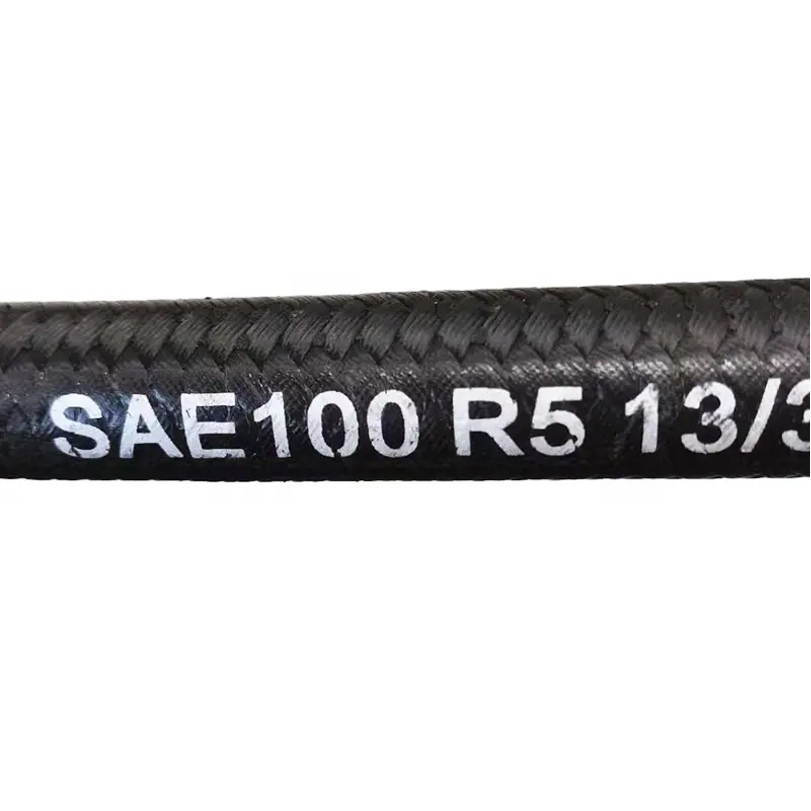
Hydraulic hoses are typically constructed from several layers, each serving a specific purpose. The innermost layer, the tube, is in direct contact with the hydraulic fluid and is commonly made from synthetic rubbers such as nitrile (NBR), ethylene propylene diene monomer (EPDM), or fluorocarbon (FKM, Viton). NBR offers good resistance to petroleum-based fluids, EPDM excels in phosphate ester fluids, and FKM provides superior resistance to high temperatures and aggressive chemicals. The reinforcement layer provides the hose’s strength and pressure resistance. Common materials include multiple layers of high-tensile steel wire (braided hose) or a spirally wound steel wire (spiral hose). Steel wire selection impacts flexibility and burst pressure. Finally, the cover layer protects the reinforcement from abrasion, weathering, and chemical attack, commonly utilizing synthetic rubbers like polyurethane or neoprene. Manufacturing processes vary depending on the hose type. Braided hoses involve extruding the inner tube and cover, followed by the braiding of steel wire using specialized braiding machines. Precise tension control during braiding is crucial to ensure uniform pressure resistance. Spiral hoses are manufactured through a continuous winding process, where steel wire is spirally wrapped around the extruded inner tube and then covered with an outer layer. Quality control parameters during manufacturing include dimensional accuracy, material hardness, tensile strength testing of the reinforcement, and pressure testing to verify burst pressure. Post-curing processes are vital for achieving optimal rubber properties and dimensional stability. Any inconsistencies in material mixing, extrusion temperature, or braiding tension can lead to premature failure.
Performance & Engineering
The performance of a hydraulic hose is defined by several key parameters. Burst pressure is the maximum pressure the hose can withstand before rupture, typically specified as a multiple of the working pressure. Working pressure is the maximum pressure the hose can safely operate at under normal conditions. Impulse pressure refers to the hose's ability to withstand pressure pulsations, common in hydraulic systems with reciprocating pumps. Hose flexibility is crucial for installation in confined spaces and minimizing stress concentrations due to bending. Temperature range dictates the hose’s operating limits, as extreme temperatures can degrade the rubber materials. Fluid compatibility ensures that the hose material does not react with or degrade in the presence of the hydraulic fluid. Engineering analysis focuses on stress-strain relationships under pressure and bending. Finite element analysis (FEA) is frequently used to model hose behavior and predict failure points. Hose assembly techniques, including the selection of appropriate fittings and crimping procedures, are critical. Incorrect crimping can lead to leakage or premature failure. Compliance requirements often include adherence to standards set by organizations such as the Society of Automotive Engineers (SAE) and the Deutsches Institut für Normung (DIN). Environmental resistance, particularly to ozone, UV radiation, and oil exposure, is also a significant consideration. Selection of appropriate hose constructions (e.g., with a weather-resistant cover) is crucial for outdoor applications.
Technical Specifications
| Parameter | Unit | Specification Range (Typical) | Test Standard |
|---|---|---|---|
| Working Pressure | PSI | 1000 - 5000 | SAE J517 |
| Burst Pressure | PSI | 3000 - 15000 | SAE J517 |
| Temperature Range | °F | -40 to +212 | SAE J517 |
| Inner Tube Material | - | NBR, EPDM, FKM | ASTM D2000 |
| Reinforcement Type | - | Braided Steel Wire, Spiral Steel Wire | SAE J517 |
| Cover Material | - | Polyurethane, Neoprene | ASTM D2000 |
Failure Mode & Maintenance
Hydraulic hose failures can stem from several sources. Fatigue cracking, caused by repeated bending and pressure cycles, is a common failure mode. This is exacerbated by improper hose routing, excessive bending radius, and exposure to vibration. Abrasion, resulting from contact with abrasive surfaces, can wear through the cover and expose the reinforcement layers. Chemical attack can degrade the rubber materials, leading to loss of flexibility and eventual failure. Corrosion of the steel wire reinforcement, particularly in environments with moisture and chlorides, can significantly reduce hose strength. Improper installation, such as over-tightening or under-tightening fittings, can cause leakage or hose distortion. Internal damage, such as tube collapse or delamination, can restrict fluid flow and lead to pressure buildup. Maintenance practices are crucial for extending hose life. Regular visual inspections should be conducted to check for abrasion, cracking, bulging, and leakage. Hose assemblies should be replaced periodically based on the application and operating conditions. Proper hose routing and support are essential to minimize stress. Hydraulic fluid should be regularly analyzed to identify contaminants that can accelerate hose degradation. When replacing hoses, it is crucial to use compatible fittings and follow the manufacturer’s recommended crimping procedures. A robust preventative maintenance program can significantly reduce the risk of unexpected failures and downtime.
Industry FAQ
Q: What is the impact of hydraulic fluid type on hose selection?
A: Hydraulic fluid compatibility is paramount. Using an incompatible fluid can cause the inner tube to swell, soften, or degrade, leading to premature failure. NBR is generally suitable for petroleum-based fluids, but not for phosphate esters. EPDM is ideal for phosphate ester fluids, while FKM offers broad compatibility and resistance to high temperatures and aggressive chemicals. Always consult the hose manufacturer’s chemical compatibility chart.
Q: How does hose reinforcement type affect performance?
A: Braided hoses offer good flexibility and are suitable for medium-pressure applications. Spiral hoses provide higher pressure ratings and are often used in demanding applications such as heavy equipment. The number of layers in either construction directly impacts the burst pressure. Spiral hoses also generally exhibit better kink resistance.
Q: What is the acceptable bend radius for a hydraulic hose?
A: Exceeding the minimum bend radius can create stress concentrations and lead to fatigue cracking. The minimum bend radius is typically specified by the hose manufacturer and varies depending on the hose size and construction. Adhering to the recommended bend radius is essential for maintaining hose integrity.
Q: How do I identify a properly crimped hose assembly?
A: A properly crimped assembly should exhibit a uniform crimp around the fitting, with no gaps or deformation of the hose shank. The fitting should be securely attached and exhibit no signs of leakage under pressure. Visual inspection and torque testing are commonly used to verify crimp quality.
Q: What are the best practices for storing hydraulic hoses?
A: Hoses should be stored in a cool, dry, and dark environment, away from direct sunlight, ozone sources, and extreme temperatures. They should be coiled loosely and supported to prevent kinking or crushing. Avoid storing hoses in contact with incompatible materials.
Conclusion
The selection and application of hydraulic hoses require a thorough understanding of material science, manufacturing processes, performance characteristics, and potential failure modes. The “oem best price hydraulic hose supplier” landscape demands a balance between cost-effectiveness and reliability. By carefully considering the operating conditions, fluid compatibility, pressure requirements, and environmental factors, OEMs can ensure the long-term performance and safety of their hydraulic systems.
Looking forward, advancements in hose technology will likely focus on developing lighter-weight, higher-strength materials, improved chemical resistance, and smart hose solutions with integrated sensors for real-time monitoring of hose condition. Implementing robust preventative maintenance programs and adhering to industry best practices will remain critical for minimizing downtime and maximizing hose life.