
Apr . 01, 2024 17:55 Back to list
oem best price hydraulic hose factories Performance Analysis
Introduction
Hydraulic hoses, critical components in fluid power systems, facilitate the transmission of pressurized fluid to actuate machinery across diverse industrial applications – from construction equipment and agricultural machinery to manufacturing processes and aerospace systems. OEM best price hydraulic hose factories cater to a significant global demand driven by factors including infrastructure development, industrial automation, and the replacement market. These hoses are engineered to withstand high pressures, varying temperatures, and exposure to aggressive fluids while maintaining flexibility and reliability. Their technical performance is defined by parameters such as burst pressure, working pressure, temperature range, fluid compatibility, and dimensional accuracy. The industry faces persistent challenges in achieving optimal hose life, minimizing fluid leakage, and complying with increasingly stringent safety and environmental regulations. This guide provides an in-depth technical overview of hydraulic hose manufacturing, performance characteristics, failure modes, and relevant industry standards, specifically targeting the needs of procurement managers and engineers within B2B industrial settings.
Material Science & Manufacturing
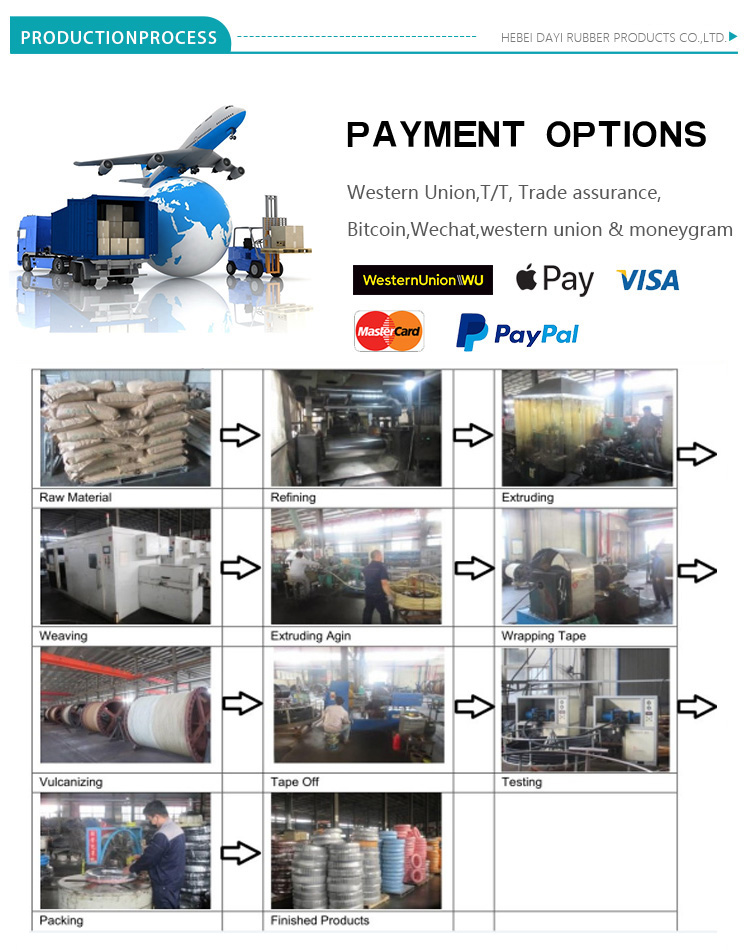
Hydraulic hoses are typically constructed from multiple layers, each contributing to specific performance characteristics. The inner tube, which directly contacts the fluid, is commonly made of synthetic rubbers such as nitrile (NBR), ethylene propylene diene monomer (EPDM), or fluorocarbon (FKM) – selected based on fluid compatibility. NBR offers excellent resistance to petroleum-based oils, while EPDM excels in phosphate ester fluids and high-temperature applications. FKM, although more expensive, provides superior resistance to aggressive chemicals and extreme temperatures. Reinforcement layers, providing tensile strength and burst resistance, are typically composed of high-strength steel wire (single or multiple braids), spiral-wound steel wire, or synthetic fiber (aramid, polyester). The outer cover, providing abrasion, weathering, and ozone protection, is usually a synthetic rubber compound like chloroprene (CR) or polyurethane (PU). Manufacturing processes vary depending on hose type. Braided hoses involve helical winding of steel wire around a mandrel, followed by rubber extrusion and vulcanization. Spiral-wound hoses utilize a continuous strand of steel wire spirally wrapped around the inner tube, providing higher pressure capacity. Critical process parameters include rubber compound mixing ratios, extrusion temperature and pressure, wire tension during braiding/winding, and vulcanization time and temperature. Precise control of these parameters is essential to achieve consistent hose dimensions, mechanical properties, and fluid resistance. Post-production testing, including hydrostatic testing and impulse testing, verifies the hose’s ability to withstand rated pressures and cyclic loading.
Performance & Engineering
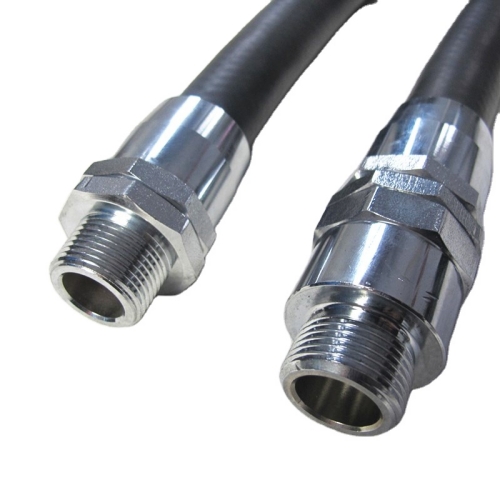
Hydraulic hose performance is governed by principles of fluid mechanics and material science. Burst pressure, the maximum pressure a hose can withstand before rupture, is a primary design consideration. Working pressure, typically 50-75% of burst pressure, represents the safe operating limit. Hose selection must account for pressure spikes and dynamic loading. Flexibility, or bend radius, is crucial to prevent kinking and fatigue failure. Tight bend radii induce stress concentrations, accelerating material degradation. Temperature extremes impact rubber elasticity and strength, reducing hose life. Exposure to ozone, UV radiation, and abrasive environments compromises the outer cover, leading to cracking and leaks. Finite Element Analysis (FEA) is employed to model stress distributions within the hose under various loading conditions, optimizing reinforcement layer configuration and material selection. Fluid compatibility is paramount. Incompatible fluids can cause swelling, softening, or degradation of the inner tube, leading to leakage and system failure. Industry standards, such as SAE J517 and EN 853, define performance requirements and testing procedures for hydraulic hoses. Hose assemblies, including fittings, must be designed to ensure a secure and leak-proof connection. Fitting materials (steel, stainless steel, brass) must be compatible with the hose and the fluid being conveyed.
Technical Specifications
| Parameter | Unit | SAE 100R1 AT | SAE 100R2 AT | DIN EN 853 1SN |
|---|---|---|---|---|
| Working Pressure | MPa | 20.7 | 34.5 | 20.6 |
| Burst Pressure | MPa | 82.7 | 138.0 | 82.0 |
| Temperature Range | °C | -40 to +100 | -40 to +121 | -40 to +100 |
| Inner Tube | Material | NBR | NBR | NBR |
| Reinforcement | Material | Single Steel Wire Braid | Two Steel Wire Braids | Single Steel Wire Spiral |
| Outer Cover | Material | CR | CR | CR |
Failure Mode & Maintenance
Hydraulic hose failures typically stem from exceeding pressure limits, fatigue cracking, abrasion damage, or fluid incompatibility. Fatigue cracking, initiated by cyclic loading and stress concentrations, is a common failure mode. Delamination, separation of reinforcement layers from the rubber matrix, reduces hose strength and can lead to catastrophic failure. Abrasion damage, caused by contact with abrasive surfaces, compromises the outer cover, exposing the reinforcement layers to corrosion. Oxidation and UV degradation can embrittle the rubber compounds, reducing their elasticity and strength. Improper installation, such as excessive bending or twisting, can induce premature failure. Regular visual inspections are critical to identify signs of wear, damage, or leakage. Hose assemblies should be replaced periodically, even if no visible defects are apparent, based on manufacturer’s recommendations and operating conditions. Proper storage, protected from sunlight, ozone, and extreme temperatures, is essential to prevent premature degradation. Flush the system periodically to remove contaminants that can accelerate wear. When replacing hoses, ensure compatibility with the fluid and operating pressure. Use properly torqued fittings to prevent leakage and ensure a secure connection. Prevent kinking during operation and storage.
Industry FAQ
Q: What are the key differences between braided and spiral-wound hydraulic hoses?
A: Braided hoses use one or more layers of helical steel wire, offering good flexibility and moderate pressure capacity. Spiral-wound hoses utilize a continuous strand of steel wire spirally wrapped around the inner tube, providing significantly higher pressure capacity and superior resistance to bursting, but typically with less flexibility. The choice depends on the application’s pressure requirements and routing constraints.
Q: How does temperature affect hydraulic hose performance?
A: Extreme temperatures impact rubber elasticity and strength. High temperatures can cause rubber to soften and swell, reducing pressure capacity and potentially leading to leaks. Low temperatures can make rubber brittle and prone to cracking. Hose selection must consider the operating temperature range of the application.
Q: What is the importance of fluid compatibility in hydraulic hose selection?
A: Fluid incompatibility can cause swelling, softening, or degradation of the inner tube material, leading to leakage and system failure. It's critical to select a hose with an inner tube material that is chemically compatible with the fluid being conveyed. Consult chemical resistance charts provided by hose manufacturers.
Q: What are the common causes of hydraulic hose failure in heavy machinery?
A: Common causes include exceeding pressure limits, fatigue cracking due to cyclic loading, abrasion damage from rubbing against other components, improper installation (excessive bending or twisting), and fluid contamination. Regular inspections and preventative maintenance are essential.
Q: What standards should I be aware of when procuring hydraulic hoses?
A: Key standards include SAE J517 (hydraulic hose specifications), SAE J1926 (hose fitting specifications), EN 853 (European hydraulic hose standard), and ISO 3862 (hose fitting dimensions). Compliance with these standards ensures interchangeability and safety.
Conclusion
The selection and maintenance of hydraulic hoses are critical for the reliable operation of fluid power systems. OEM best price hydraulic hose factories must focus on utilizing appropriate materials, implementing stringent manufacturing controls, and adhering to relevant industry standards. Understanding the interplay between material properties, manufacturing processes, and operating conditions is essential to mitigate failure risks and maximize hose lifespan.
Continuous innovation in hose materials, reinforcement techniques, and fitting designs will drive further improvements in performance and durability. Future trends include the development of self-sealing hoses, smart hoses with integrated sensors for condition monitoring, and more sustainable materials. By prioritizing quality, reliability, and safety, hydraulic hose manufacturers can contribute to the efficiency and longevity of industrial equipment worldwide.