
Apr . 01, 2024 17:55 Back to list
oem 6mm air hose manufacturers Performance Analysis

Introduction
OEM 6mm air hoses are critical components in pneumatic systems across a diverse range of industries, including automotive manufacturing, construction, woodworking, and general industrial automation. These hoses function to transmit compressed air to power tools, operate pneumatic machinery, and facilitate various processes. Their 6mm internal diameter is a common size offering a balance between airflow capacity and portability. The production of these hoses requires stringent quality control to ensure safety and reliability, addressing concerns regarding burst pressure, chemical compatibility, and operating temperature range. This guide provides a comprehensive technical overview of 6mm air hose manufacturing, material science, performance characteristics, failure modes, and relevant industry standards, specifically targeting procurement managers and engineering professionals involved in B2B industrial applications. The core performance revolves around consistently delivering the required airflow at specified pressure without leakage or material degradation, impacting overall system efficiency and operational safety.
Material Science & Manufacturing
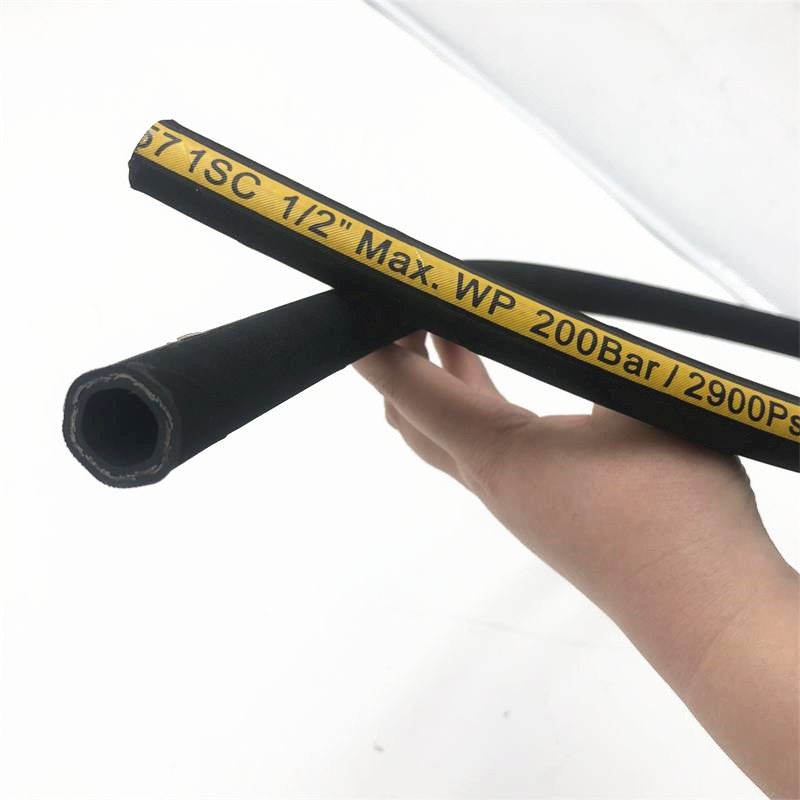
The primary material for 6mm air hoses is typically a thermoplastic elastomer (TPE) or a reinforced PVC compound. TPEs, such as thermoplastic polyurethane (TPU) and styrene-butadiene-styrene (SBS), offer excellent flexibility, abrasion resistance, and chemical compatibility. PVC compounds are cost-effective and provide good all-around performance, but generally exhibit lower flexibility than TPEs. Reinforcement is crucial for withstanding high pressures. Common reinforcement materials include polyester yarn (high tensile strength and elongation) and steel wire helix (highest pressure resistance, but less flexible). The manufacturing process generally involves extrusion. The raw material is fed into an extruder, melted, and forced through a die to create a continuous tube. For reinforced hoses, the reinforcement material is applied inline during extrusion. Post-extrusion processes include cooling, cutting to length, and fitting attachment. Critical parameters during extrusion include die temperature, screw speed, and haul-off speed, which directly impact wall thickness, dimensional accuracy, and material uniformity. Chemical compatibility of the chosen elastomer with common industrial fluids (oils, solvents) is a crucial consideration, assessed through immersion testing according to ASTM D543. The Shore hardness (durometer) of the material, measured using ASTM D2240, determines flexibility and abrasion resistance. Material selection also needs to consider operating temperature range, impacting long-term performance and preventing brittleness or softening.
Performance & Engineering
The performance of a 6mm air hose is fundamentally governed by its ability to withstand internal pressure without failure and maintain a consistent flow rate. Burst pressure, determined using ASTM D3915, is a critical specification, representing the maximum pressure the hose can withstand before rupture. Working pressure is typically a fraction of the burst pressure (e.g., 1/4 or 1/3), providing a safety factor. Tensile strength, measured per ASTM D412, indicates the hose's resistance to stretching and tearing. Environmental resistance, particularly to ozone, UV radiation, and temperature fluctuations, is vital for outdoor applications. Ozone cracking is a significant concern with some elastomers, accelerated by UV exposure. Flexibility is crucial for ease of use and maneuverability, particularly in confined spaces. Bend radius should be specified to prevent kinking and restriction of airflow. Engineering considerations also include fitting compatibility (NPT, quick-connect), ensuring a secure and leak-free connection. The hose's ability to resist permeation of air is also important, especially in applications requiring precise pressure control. Static build-up can be a hazard in flammable environments; antistatic hoses incorporating conductive materials can mitigate this risk. Compliance with relevant safety regulations (e.g., OSHA in the US) is paramount, demanding traceability and adherence to specific performance criteria.
Technical Specifications
| Parameter | Unit | Typical Value (TPE) | Typical Value (PVC) |
|---|---|---|---|
| Internal Diameter | mm | 6.0 ± 0.2 | 6.0 ± 0.3 |
| External Diameter | mm | 10.0 ± 0.3 | 11.0 ± 0.4 |
| Working Pressure | bar | 10 | 8 |
| Burst Pressure | bar | 30 | 24 |
| Tensile Strength | MPa | 15 | 12 |
| Elongation at Break | % | 400 | 300 |
| Operating Temperature Range | °C | -40 to +80 | -20 to +60 |
Failure Mode & Maintenance
Common failure modes for 6mm air hoses include burst failure due to exceeding working pressure, cracking due to fatigue or environmental degradation, leakage at fittings, and kinking restricting airflow. Burst failures typically occur due to material defects, overpressure events, or damage from abrasion. Fatigue cracking develops over time due to repeated bending and flexing, exacerbated by UV exposure and temperature cycling. Leakage at fittings can arise from improper installation, damaged fittings, or material incompatibility. Kinking occurs when the hose is bent beyond its minimum bend radius, disrupting airflow and potentially causing permanent damage. Preventative maintenance includes regular visual inspections for cracks, abrasions, and leaks. Fittings should be tightened periodically to prevent loosening. Hoses should be stored in a cool, dry place away from direct sunlight and ozone sources. Avoid exposing hoses to extreme temperatures or harsh chemicals. If damage is detected, the hose should be replaced immediately. When replacing hoses, ensure compatibility with the pneumatic system’s pressure and temperature requirements. Periodic pressure testing can verify hose integrity and identify potential leaks before they become critical. Failure analysis often involves examining the fracture surface using microscopy to determine the root cause of the failure (e.g., fatigue, overpressure, material defect).
Industry FAQ
Q: What is the impact of reinforcement material on hose lifespan?
A: The reinforcement material significantly impacts hose lifespan. Polyester yarn reinforcement provides good abrasion resistance and flexibility, extending lifespan in moderate-duty applications. Steel wire helix offers superior burst pressure resistance but can be susceptible to corrosion if not properly protected, potentially reducing lifespan in harsh environments. Choosing the appropriate reinforcement based on application demands is crucial.
Q: How does operating temperature affect the performance of a TPE hose?
A: Operating temperature has a significant impact. Exposure to temperatures above the rated maximum can cause the TPE material to soften, reducing its pressure resistance and increasing the risk of failure. Conversely, exposure to temperatures below the rated minimum can cause the material to become brittle and more prone to cracking. Maintaining operation within the specified temperature range is essential.
Q: What testing standards are used to verify chemical compatibility?
A: ASTM D543 is the primary standard used for evaluating the effect of various fluids on rubber and TPE materials. This involves immersing samples in the fluid for a specified period and then assessing changes in volume, weight, hardness, and tensile strength. Other standards, such as ISO 1817, may also be used depending on the specific application requirements.
Q: What are the key differences between a braided and a spiral-wound reinforced hose?
A: Braided reinforcement (typically polyester) provides uniform pressure resistance in all directions. Spiral-wound reinforcement (typically steel wire) offers higher burst pressure capabilities but is less flexible and may be more prone to kinking. The choice depends on the application’s pressure requirements and flexibility needs.
Q: What is the recommended safety factor for working pressure?
A: A typical safety factor for working pressure is 4:1, meaning the burst pressure should be at least four times the maximum working pressure. However, this can vary depending on the application and the criticality of the system. In safety-critical applications, a higher safety factor may be required.
Conclusion
The selection and implementation of 6mm air hoses necessitate a thorough understanding of material properties, manufacturing processes, and performance characteristics. TPE and PVC compounds, coupled with appropriate reinforcement materials, offer viable solutions for diverse pneumatic applications. Adherence to relevant industry standards, meticulous maintenance practices, and proactive failure analysis are crucial for ensuring system reliability and operational safety. Choosing the correct hose for the task requires consideration of working pressure, temperature range, chemical compatibility, and flexibility requirements.
Future developments in air hose technology are likely to focus on improving material durability, reducing weight, and enhancing environmental resistance. The integration of smart sensors for real-time pressure and temperature monitoring could further enhance system safety and predictive maintenance capabilities. Continued innovation in hose materials and manufacturing processes will be essential for meeting the evolving demands of increasingly complex industrial applications.