
Apr . 01, 2024 17:55 Back to list
oem 5/8 hydraulic hose suppliers Performance Analysis
Introduction
OEM 5/8 inch hydraulic hoses represent a critical component within fluid power systems, serving as the arterial network for transmitting hydraulic fluid to actuators and other components. These hoses are not simply conduits; they are engineered assemblies designed to withstand high pressures, fluctuating temperatures, and challenging operating environments. The designation ‘5/8 inch’ refers to the internal diameter, a key parameter influencing flow rate and pressure drop. As an OEM (Original Equipment Manufacturer) supplied item, these hoses are integrated directly into larger machines and systems – from construction equipment and agricultural machinery to industrial presses and material handling systems. Their performance directly impacts the reliability and safety of the overall system. Key performance characteristics include burst pressure, working pressure, temperature range, and fluid compatibility. Understanding these specifications, as well as the materials and manufacturing processes involved, is paramount for ensuring optimal performance and preventing catastrophic failures. The hydraulic hose market is segmented by application (mobile, industrial), pressure range, material type, and geographical region. OEM supply chains demand consistent quality, adherence to stringent specifications, and dependable delivery schedules.
Material Science & Manufacturing
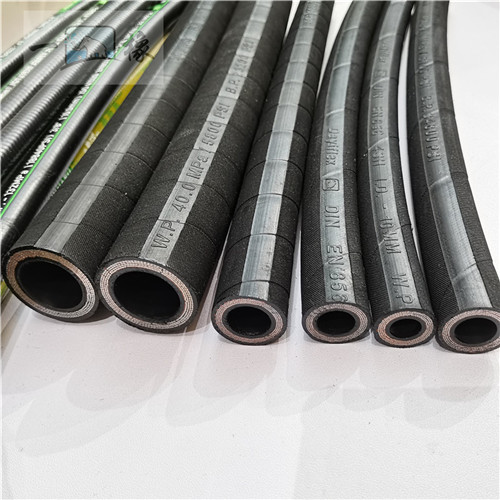
The core of a 5/8 inch hydraulic hose is typically constructed from a combination of materials designed to provide specific performance characteristics. The inner tube, in direct contact with the hydraulic fluid, is commonly composed of synthetic rubbers like nitrile (NBR), ethylene propylene diene monomer (EPDM), or fluorocarbon (FKM – Viton®). NBR provides excellent resistance to petroleum-based hydraulic fluids, while EPDM excels in phosphate ester fluid compatibility and high-temperature applications. FKM offers superior resistance to a wide range of fluids, including aggressive chemicals and high temperatures, but at a higher cost. The reinforcement layer is crucial for withstanding internal pressure. This layer usually comprises one or more braids of high-tensile steel wire. The number of braids directly correlates to the hose's working and burst pressures. Textile reinforcement, using fibers like polyester or aramid, is sometimes used in lower-pressure applications. Finally, the outer cover protects the reinforcement layer from abrasion, weathering, and chemical attack. Common cover materials include synthetic rubbers like chloroprene (CR) and polyurethane (PU). Manufacturing involves extrusion of the inner tube and cover, followed by helical winding or braiding of the reinforcement layer. Critical process parameters include extrusion temperature, cure time, braid tension, and dimensional accuracy. Post-processing typically includes quality control checks for dimensional compliance, pressure testing, and leak testing. Careful control of these parameters is essential to maintain consistent product quality and meet rigorous industry standards. The hose ends are typically crimped onto fittings using specialized machinery, ensuring a secure and leak-proof connection.
Performance & Engineering
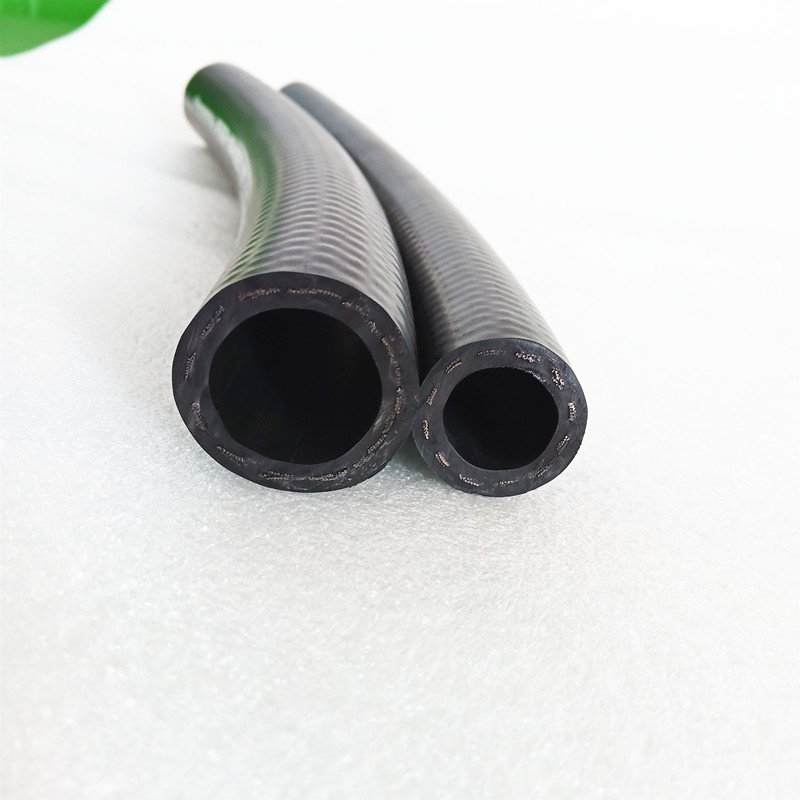
The performance of a 5/8 inch hydraulic hose is governed by several engineering principles. Hose pressure rating is determined by its burst pressure (the pressure at which the hose will rupture) divided by a safety factor (typically 4:1). Working pressure is significantly lower, representing the maximum pressure the hose should be subjected to during normal operation. Fatigue life is a critical consideration, especially in applications involving cyclic loading. Repeated flexing and pressure pulsations can lead to fatigue cracking in the reinforcement layer, eventually causing failure. Hose bend radius must be maintained within specified limits to prevent kinking and localized stress concentrations. Too tight a bend radius can damage the inner tube and reduce flow capacity. Environmental factors such as temperature, UV exposure, and chemical exposure also impact hose performance. High temperatures can degrade the rubber compounds, reducing their elasticity and strength. UV exposure can cause the outer cover to crack and become brittle. Chemical exposure can lead to swelling or degradation of the inner tube, compromising fluid compatibility. Finite Element Analysis (FEA) is often employed to optimize hose design and predict stress distributions under various loading conditions. Compliance with industry standards, such as SAE J517 and EN 853, is essential to ensure safety and reliability. Furthermore, the hose assembly’s performance must be considered holistically, including the fittings and crimping process. Poorly crimped fittings can lead to leakage or catastrophic failure.
Technical Specifications
| Parameter | Unit | Typical Value (NBR Inner Tube, 2 Wire Braid) | Typical Value (FKM Inner Tube, 4 Wire Braid) |
|---|---|---|---|
| Internal Diameter | inches | 5/8 | 5/8 |
| Working Pressure | psi | 2000 | 3000 |
| Burst Pressure | psi | 8000 | 12000 |
| Temperature Range | °F | -40 to 212 | -20 to 450 |
| Reinforcement | - | 2 Wire Braid (Steel) | 4 Wire Braid (Steel) |
| Cover Material | - | Chloroprene (CR) | Polyurethane (PU) |
| Fluid Compatibility | - | Petroleum-Based Hydraulic Fluids | Wide Range, including aggressive chemicals |
Failure Mode & Maintenance
Hydraulic hose failures can manifest in several ways. The most common failure mode is burst failure, typically resulting from exceeding the working pressure or fatigue cracking in the reinforcement layer. Other failure modes include pinhole leaks in the inner tube due to abrasion or chemical attack, and separation of the cover from the reinforcement layer due to weathering or mechanical damage. Fatigue cracking is often initiated at points of high stress concentration, such as near fittings or at sharp bends. Internal abrasion can occur if the hydraulic fluid contains particulate contamination, leading to wear and tear on the inner tube. External abrasion can damage the cover, exposing the reinforcement layer to corrosion. Oxidation of the rubber compounds can lead to hardening and cracking, reducing the hose’s flexibility and strength. Proper maintenance is crucial for extending hose life and preventing failures. This includes regular visual inspections for signs of damage, such as cracks, abrasions, and leaks. Implementing a fluid filtration system to remove particulate contamination is essential. Avoiding excessive bending and kinking is also important. When replacing hoses, it is crucial to use fittings that are compatible with the hose and the hydraulic system. Crimping should be performed using calibrated tooling and according to the fitting manufacturer’s specifications. Maintaining records of hose installations and inspections can help track hose life and identify potential problems. Regularly torque check the hose fittings after installation and periodically during operation.
Industry FAQ
Q: What is the significance of the hose’s “dash size” and how does it relate to flow rate?
A: The dash size (e.g., -8, -10) is a standardized numerical designation that corresponds to the hose’s internal diameter. A larger dash size indicates a larger internal diameter and, consequently, a higher flow rate – assuming the pressure drop remains within acceptable limits. However, flow rate is also affected by hose length and fluid viscosity. Simply increasing the dash size doesn’t guarantee improved flow if the hose is excessively long or the fluid is highly viscous.
Q: How do I select the appropriate hose cover material for my application?
A: The choice of cover material depends on the operating environment. Chloroprene (CR) provides good general-purpose resistance to abrasion and weathering. Polyurethane (PU) offers superior abrasion resistance, making it suitable for harsh environments. For applications involving exposure to ozone or ultraviolet radiation, a specialized cover material with UV inhibitors may be required.
Q: What are the implications of using an incorrect fitting with a hydraulic hose?
A: Using an incorrect fitting can lead to leakage, reduced performance, and potentially catastrophic failure. The fitting must be properly sized and compatible with the hose’s end fitting type (e.g., crimp, field attachable). An improperly crimped fitting, or a fitting made from incompatible materials, can compromise the hose’s integrity and lead to premature failure.
Q: What are the key differences between single-wire and multi-wire braid hoses?
A: Single-wire braid hoses are typically used for lower-pressure applications, generally up to 2000 psi. They offer good flexibility. Multi-wire braid hoses (e.g., two-wire, four-wire) are designed for higher-pressure applications, with increasing pressure capacity as the number of braids increases. However, they generally have reduced flexibility compared to single-wire braid hoses.
Q: What role does fluid compatibility play in hose selection?
A: Fluid compatibility is paramount. The inner tube material must be resistant to degradation from the hydraulic fluid being used. Using an incompatible fluid can cause the inner tube to swell, soften, or crack, leading to leakage or failure. Consult a fluid compatibility chart to ensure the hose material is compatible with the specific hydraulic fluid.
Conclusion
The selection and application of OEM 5/8 inch hydraulic hoses require a comprehensive understanding of material science, manufacturing processes, and engineering principles. Failure to consider these factors can lead to premature failures, costly downtime, and potential safety hazards. Proper hose selection involves evaluating the operating pressure, temperature range, fluid compatibility, and environmental conditions. Regular inspection and maintenance are critical for extending hose life and preventing catastrophic failures.
Looking forward, advancements in hose technology are focused on developing lighter-weight materials, improving abrasion resistance, and enhancing fluid compatibility. The increasing demand for more efficient and reliable hydraulic systems will drive continued innovation in hydraulic hose design and manufacturing. Adherence to international standards and rigorous quality control procedures remain essential for ensuring the safety and performance of these critical components.