
Apr . 01, 2024 17:55 Back to list
oem 5/8 hydraulic hose supplier Performance Analysis
Introduction
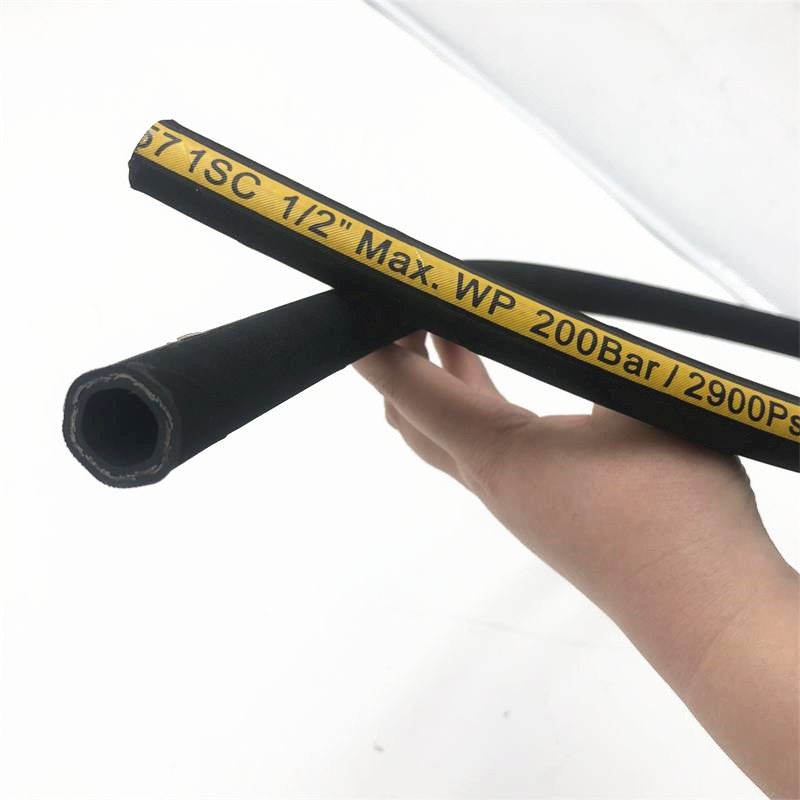
OEM 5/8 inch hydraulic hoses are critical components in fluid power systems across numerous industries, including construction, agriculture, manufacturing, and automotive. They facilitate the transmission of hydraulic fluid, enabling the operation of machinery and equipment. This guide provides a comprehensive technical overview of these hoses, covering material science, manufacturing processes, performance characteristics, failure modes, and relevant industry standards. The 5/8-inch designation refers to the inner diameter, a common size balancing flow capacity and flexibility. OEM (Original Equipment Manufacturer) designation indicates that these hoses are typically manufactured to specific customer specifications and integrated directly into larger systems rather than being sold as aftermarket replacements. Core performance characteristics include pressure rating, temperature range, fluid compatibility, and burst strength, all of which are essential considerations for system reliability and safety. A primary pain point in the industry revolves around ensuring consistent hose quality, particularly regarding dimensional accuracy and the integrity of the reinforcement layers, to prevent premature failure and costly downtime.
Material Science & Manufacturing
The construction of a 5/8 inch hydraulic hose typically involves four key layers: the inner tube, reinforcement layers, outer cover, and often, a skive angle for optimized fitting attachment. The inner tube is commonly composed of synthetic rubber compounds, such as nitrile rubber (NBR), also known as Buna-N, for oil-based hydraulic fluids, or ethylene-propylene diene monomer (EPDM) for phosphate ester fluids. NBR exhibits excellent resistance to petroleum-based oils, fuels, and water, with a typical temperature range of -40°C to +120°C. EPDM provides superior resistance to heat, ozone, and weathering, commonly employed in applications requiring exposure to harsh environments. The reinforcement layer(s) provide the hose's pressure-withstanding capability. High-tensile steel wire, spirally wound or braided, is the most common reinforcement material. The number of layers and wire diameter directly influence the hose's working pressure and burst pressure. Outer covers are usually made of chloroprene rubber (CR), offering abrasion resistance, weathering protection, and oil resistance. The manufacturing process begins with extrusion of the inner tube and outer cover. The reinforcement layers are then applied, followed by vulcanization – a chemical process using heat and pressure to cross-link the rubber compounds and bond the layers together. Precise control of temperature, pressure, and cure time is crucial to achieve optimal material properties and dimensional stability. Skiving, which involves removing a portion of the outer cover at an angle, prepares the hose end for secure fitting attachment. Quality control at each stage, including rigorous testing of raw materials and finished hoses, is paramount to ensure compliance with industry standards.
Performance & Engineering
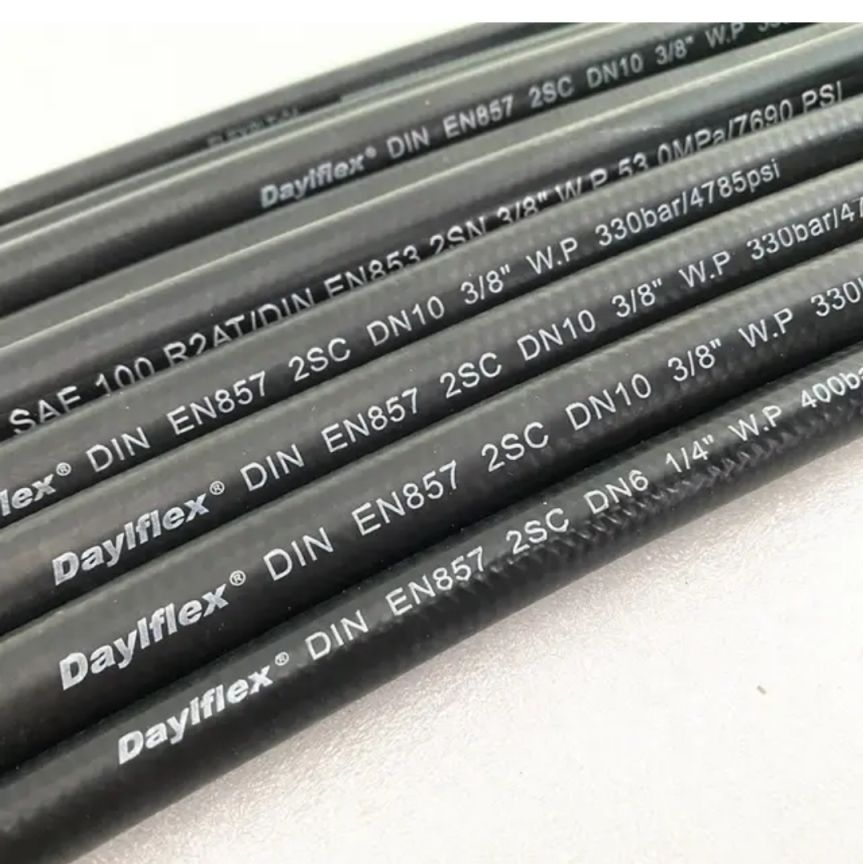
The performance of a 5/8 inch hydraulic hose is fundamentally governed by its ability to withstand internal pressure, external damage, and environmental factors. Force analysis focuses on hoop stress within the hose wall due to internal fluid pressure. The reinforcement layers are engineered to resist this stress, preventing hose expansion and rupture. Working pressure is typically defined as the maximum continuous operating pressure, while burst pressure represents the pressure at which the hose fails catastrophically. A safety factor, often 4:1, is applied to determine the working pressure from the burst pressure. Environmental resistance is critical, encompassing resistance to ozone, UV radiation, temperature extremes, and chemical exposure. The choice of rubber compounds significantly impacts these properties. Hose bend radius is also a key engineering consideration. Exceeding the minimum bend radius induces stress concentrations in the hose wall, leading to premature fatigue failure. Compliance requirements vary depending on the application and geographical region. For example, SAE J517 specifies performance requirements for hydraulic hoses in North America, while EN 856 defines standards in Europe. Fitting compatibility is paramount; incorrect fittings can lead to leaks and hose failure. Proper crimping of fittings onto the hose is essential to create a secure and leak-proof connection. Finite element analysis (FEA) is frequently employed to simulate hose behavior under various loading conditions, optimizing the design and material selection for specific applications.
Technical Specifications
| Parameter | Unit | Specification (Typical) | Test Standard |
|---|---|---|---|
| Inner Diameter | inch | 5/8 ± 0.005 | SAE J1926 |
| Working Pressure | psi | 2000 - 5000 (dependent on reinforcement) | SAE J517 |
| Burst Pressure | psi | 8000 - 20000 (dependent on reinforcement) | SAE J517 |
| Temperature Range | °F | -40 to +212 (NBR); -40 to +257 (EPDM) | SAE J517 |
| Reinforcement Type | - | Spiral Wire or Braided Wire | Manufacturer Specification |
| Cover Material | - | Chloroprene Rubber (CR) | SAE J517 |
Failure Mode & Maintenance
Hydraulic hose failure can manifest in several forms, each with distinct causes and preventative measures. Fatigue cracking, particularly near fittings, is a common failure mode resulting from repeated flexing and pressure cycles. This is exacerbated by exceeding the minimum bend radius or using improper fittings. Abrasion damage to the outer cover can expose the reinforcement layers, leading to corrosion and eventual hose rupture. Internal abrasion, caused by particulate contamination in the hydraulic fluid, can erode the inner tube, resulting in leaks. Chemical degradation occurs when the hose material is exposed to incompatible fluids, causing swelling, softening, and loss of strength. Oxidation, caused by exposure to ozone and UV radiation, can degrade the rubber compounds, leading to cracking and brittleness. Proper maintenance is crucial to prolong hose life and prevent failures. Regular visual inspections should be conducted to identify signs of abrasion, cracking, or leaks. The hydraulic fluid should be kept clean and free of contaminants through the use of filters. Hoses should be replaced at recommended intervals, even if no visible damage is apparent. Correct hose routing and support are essential to prevent excessive bending and abrasion. When replacing a hose, ensure that the new hose meets or exceeds the original specifications and that compatible fittings are used. Periodic pressure testing can identify potential weaknesses before catastrophic failure occurs.
Industry FAQ
Q: What is the significance of the hose 'skive angle' and how does it affect fitting performance?
A: The skive angle is the angle at which the outer cover is removed from the hose end to facilitate fitting attachment. A properly matched skive angle ensures optimal bonding between the fitting and the hose reinforcement layers, creating a secure and leak-proof connection. An incorrect skive angle can lead to fitting slippage, extrusion of the hose liner, and eventual failure.
Q: How do different reinforcement types (braided vs. spiral) impact hose performance and application suitability?
A: Braided reinforcement offers greater flexibility and is suitable for applications with tight bend radii. However, it typically has a lower pressure rating than spiral reinforcement. Spiral reinforcement provides higher pressure capacity and resistance to kinking, making it ideal for high-pressure systems and applications where hose movement is limited.
Q: What is the role of hydraulic fluid compatibility in hose selection?
A: Hydraulic fluid compatibility is critical. Using a hose material that is incompatible with the fluid can cause swelling, softening, or degradation of the rubber compounds, leading to leaks and failure. It's essential to consult compatibility charts and select a hose specifically designed for the intended fluid type.
Q: What are the common causes of hose 'kinking,' and how can it be prevented?
A: Kinking occurs when the hose is bent sharply, collapsing the inner tube and restricting fluid flow. This is typically caused by insufficient hose length, improper routing, or inadequate support. Prevention involves ensuring sufficient hose length, using flexible hose routing, providing adequate support to prevent sharp bends, and selecting hoses with anti-kink features (such as spiral reinforcement).
Q: What is the importance of impulse pressure rating in hydraulic hose selection?
A: Impulse pressure refers to pressure spikes or surges in the hydraulic system. A hose with a sufficient impulse pressure rating can withstand these fluctuations without premature failure. This is particularly important in applications involving frequent valve switching or rapid cylinder movement. Failing to account for impulse pressures can significantly reduce hose lifespan.
Conclusion
OEM 5/8 inch hydraulic hoses are essential components in a wide range of industrial applications, demanding meticulous attention to material selection, manufacturing processes, and performance characteristics. Understanding the interplay between pressure rating, temperature range, fluid compatibility, and reinforcement type is crucial for ensuring system reliability and preventing costly failures. The selection process requires a thorough assessment of application requirements and adherence to relevant industry standards.
Looking ahead, advancements in hose technology will likely focus on developing materials with improved chemical resistance, higher pressure capabilities, and extended service life. Predictive maintenance strategies, utilizing sensor technology to monitor hose condition and predict potential failures, will also play an increasingly important role in optimizing system performance and minimizing downtime. A continued emphasis on quality control and rigorous testing is paramount to maintain the integrity of these critical components.