
Apr . 01, 2024 17:55 Back to list
oem 5/8 hydraulic hose manufacturer Performance Analysis
Introduction
The 5/8 inch OEM hydraulic hose represents a critical component in fluid power systems across a wide spectrum of industries, including construction, agriculture, manufacturing, and automotive. These hoses are engineered to reliably transmit hydraulic fluid under high pressure, facilitating the operation of heavy machinery and critical equipment. Unlike general-purpose hoses, OEM hoses are manufactured to precise specifications dictated by the equipment manufacturer, ensuring compatibility, optimal performance, and adherence to stringent safety standards. The core performance characteristics – burst pressure, working pressure, temperature resistance, and fluid compatibility – are paramount in preventing system failure and maintaining operational efficiency. This guide provides an in-depth technical overview of 5/8 inch OEM hydraulic hoses, covering material science, manufacturing processes, performance parameters, failure modes, and relevant industry standards. The 5/8” size designation refers to the inner diameter of the hose, a critical parameter affecting flow rate and pressure drop.
Material Science & Manufacturing
The construction of a 5/8 inch OEM hydraulic hose typically involves four key layers: the inner tube, reinforcement layers, the outer cover, and the fittings. The inner tube is commonly composed of nitrile rubber (NBR) for its excellent resistance to petroleum-based hydraulic fluids, though ethylene propylene diene monomer (EPDM) is used for phosphate ester fluids. NBR exhibits a temperature range of -40°C to +120°C, while EPDM extends to -54°C to +150°C. The reinforcement layer, responsible for withstanding internal pressure, is typically constructed of multiple spiral-wound layers of high-tensile steel wire. The gauge (diameter) and tensile strength of the steel wire directly correlate with the hose’s burst pressure. Polyester or aramid fiber braiding is sometimes employed in lower-pressure applications. The outer cover, providing abrasion, ozone, and weathering protection, is usually made of synthetic rubber compounds like Chloroprene (Neoprene) or polyurethane. Polyurethane offers superior abrasion resistance. Manufacturing processes include extrusion of the inner tube and outer cover, calendaring of reinforcement layers, and spiral winding. Critical process controls include maintaining precise rubber compound formulations, ensuring consistent wire tension during winding, and achieving proper adhesion between layers through vulcanization (curing). Vulcanization parameters – temperature, pressure, and time – significantly impact the hose’s final mechanical properties. Quality control measures involve hydrostatic testing to verify burst pressure and impulse testing to assess fatigue life.

Performance & Engineering
The performance of a 5/8 inch hydraulic hose is governed by several critical engineering principles. Burst pressure, typically expressed in PSI (pounds per square inch), represents the maximum pressure the hose can withstand before rupture. Working pressure, a fraction (typically 1/4) of the burst pressure, is the recommended maximum operating pressure. Hose pressure ratings are derived from rigorous testing conducted according to SAE J517 standards. Impulse testing simulates the pressure pulsations commonly encountered in hydraulic systems, evaluating the hose’s resistance to fatigue failure. Temperature resistance dictates the hose’s operational limits, as both high and low temperatures can degrade the rubber compounds and affect pressure ratings. Fluid compatibility is crucial; incompatible fluids can cause swelling, softening, or cracking of the inner tube. The hose’s bend radius is another critical parameter, as exceeding the minimum bend radius can induce stress concentrations and lead to premature failure. Force analysis during installation and operation must account for hose length, pressure, and bend radius to minimize strain. Corrosion protection, particularly in harsh environments, is often achieved through the use of corrosion-resistant steel wire and outer cover formulations. Compliance with industry standards such as ISO 14307 ensures interchangeability and safety.
Technical Specifications
| Parameter | Specification (Typical) | Test Standard | Units |
|---|---|---|---|
| Inner Diameter | 0.625 | SAE J1926 | inches |
| Working Pressure | 2000 | SAE J517 | PSI |
| Burst Pressure | 8000 | SAE J517 | PSI |
| Temperature Range | -40 to +100 | SAE J517 | °C |
| Reinforcement | 4SP (Spiral Wound Steel) | SAE J1926 | Layers |
| Cover Material | Synthetic Rubber (Chloroprene) | SAE J517 | - |
Failure Mode & Maintenance
Several failure modes can affect 5/8 inch hydraulic hoses. Fatigue cracking, caused by repeated pressure pulsations and flexing, is a common failure mode, particularly in high-cycle applications. The crack typically initiates at the reinforcement layer and propagates through the cover. Delamination, the separation of layers, occurs when adhesion between the inner tube, reinforcement, and cover is compromised. This can be caused by improper vulcanization or exposure to incompatible fluids. Abrasion, resulting from contact with abrasive surfaces, degrades the outer cover, exposing the reinforcement layer to corrosion. Oxidation, caused by exposure to oxygen and ozone, degrades the rubber compounds, leading to cracking and loss of flexibility. Pinholes in the inner tube, often caused by fluid contamination or internal corrosion, result in fluid leakage. Proper maintenance is crucial to extending hose life. Regular visual inspections should be conducted to identify signs of wear, cracking, or abrasion. Hose should be replaced if any damage is detected. Correct installation practices, including avoiding excessive bending and twisting, are essential. Fluid cleanliness is paramount; filtration should be used to remove contaminants that can accelerate hose degradation. Hoses should be stored in a cool, dry place away from direct sunlight and ozone sources.
Industry FAQ
Q: What is the impact of hose layline marking on traceability and warranty claims?
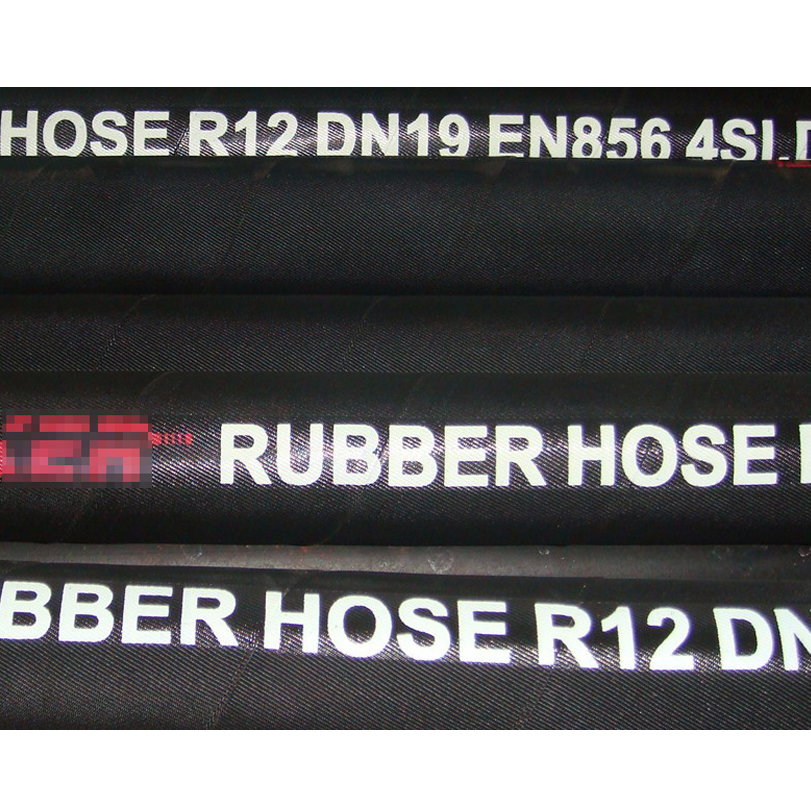
A: Hose layline markings are crucial for traceability. They typically include the manufacturer's name, hose type, manufacturing date, and working pressure. These markings facilitate identifying the hose's origin and specifications, which is essential for warranty claims and quality control investigations. Without proper layline marking, proving compliance with OEM specifications and establishing a valid warranty claim can be significantly challenging.
Q: How does the choice of fitting material affect the corrosion resistance of the hose assembly?
A: The fitting material plays a critical role in corrosion resistance. Carbon steel fittings are susceptible to corrosion, especially in harsh environments. Stainless steel (304 or 316) fittings offer superior corrosion resistance, but are more expensive. Plating (zinc, nickel) can provide temporary corrosion protection for carbon steel fittings. Galvanic corrosion can occur when dissimilar metals are used; careful selection of fitting and hose materials is essential to minimize this risk.
Q: What are the implications of exceeding the minimum bend radius for a 5/8” hydraulic hose?
A: Exceeding the minimum bend radius induces significant stress on the hose reinforcement, leading to premature fatigue failure. The tighter the bend, the greater the stress concentration. This can cause cracking in the cover and reinforcement, ultimately resulting in hose rupture. Proper hose routing and support are essential to maintain the recommended bend radius.
Q: How do different hydraulic fluid types impact the compatibility and lifespan of the inner tube material?
A: Different hydraulic fluids have varying chemical compositions and can significantly impact the inner tube material. Petroleum-based fluids are generally compatible with NBR, but phosphate ester fluids require EPDM. Incompatible fluids can cause swelling, softening, cracking, or degradation of the inner tube, leading to leakage and premature failure. Always verify fluid compatibility with the hose manufacturer’s specifications.
Q: What are the key differences between single-wire and multi-wire reinforced hydraulic hoses, and when would you choose one over the other?
A: Single-wire reinforced hoses are typically used for lower-pressure applications (up to 3000 PSI) and offer greater flexibility. Multi-wire reinforced hoses (e.g., 4SP, 6SP) are designed for higher pressures (up to 6000 PSI or higher) and provide superior strength and durability. The choice depends on the system's operating pressure and application requirements. Multi-wire hoses are preferable for demanding applications involving high pressures and frequent impulse loads.
Conclusion
The 5/8 inch OEM hydraulic hose is a highly engineered component, critical to the reliable operation of countless hydraulic systems. Its performance is dictated by a complex interplay of material science, manufacturing precision, and adherence to stringent industry standards. Understanding the nuances of material compatibility, pressure ratings, failure modes, and proper maintenance procedures is essential for maximizing hose life and preventing costly downtime. Selecting the appropriate hose type and implementing a robust maintenance program are crucial for ensuring optimal system performance and safety.
Future developments in hydraulic hose technology are focusing on lightweight materials, improved abrasion resistance, and enhanced fluid compatibility. The integration of smart sensors into hose assemblies, providing real-time pressure and temperature monitoring, is also emerging as a promising trend. These advancements will further enhance the reliability, efficiency, and safety of hydraulic systems across a wide range of industries.