
Apr . 01, 2024 17:55 Back to list
oem 5/8 hydraulic hose factories Performance Analysis
Introduction
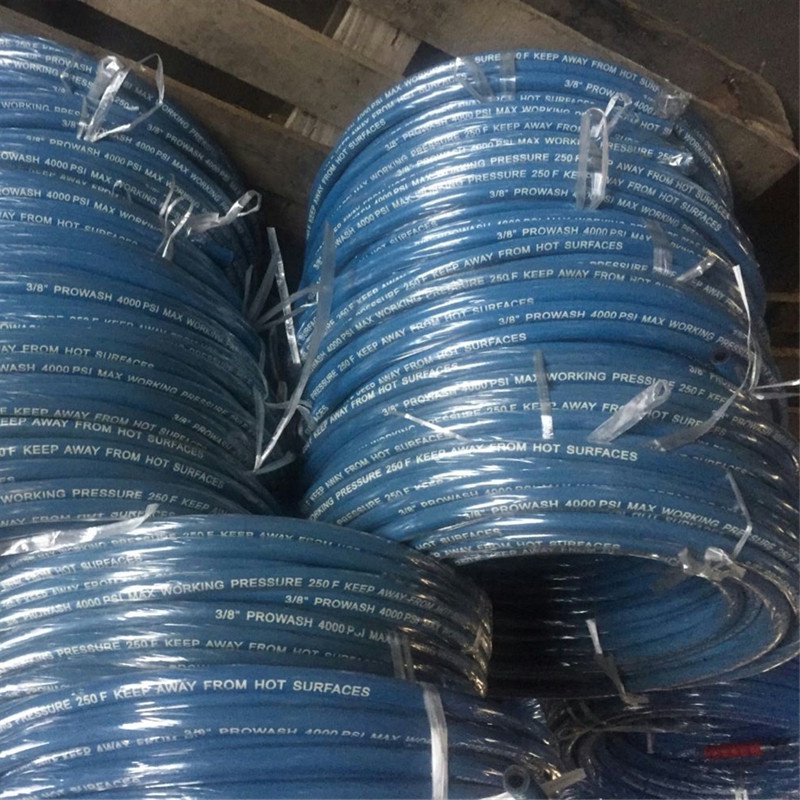
OEM 5/8 hydraulic hose factories represent a critical component within the broader fluid power industry. These facilities specialize in the manufacture of hydraulic hoses conforming to a 5/8 inch internal diameter, typically serving as Original Equipment Manufacturers (OEMs) supplying hoses for integration into larger systems – ranging from agricultural machinery and construction equipment to industrial manufacturing apparatus and automotive applications. Their position in the supply chain necessitates a high degree of precision, adherence to rigorous quality control standards, and a comprehensive understanding of materials science, hydraulic principles, and industry-specific performance requirements. Core performance characteristics center around pressure capability, burst strength, flexibility, temperature resistance, and fluid compatibility. Failure in these areas can lead to significant downtime, safety hazards, and substantial economic losses for end-users. The competitive landscape is driven by cost-effectiveness, lead times, customization capabilities, and the ability to meet evolving industry demands for more durable and specialized hose solutions.
Material Science & Manufacturing
The production of 5/8 inch hydraulic hoses involves a complex interplay of material science and precision manufacturing techniques. The core component is typically a synthetic rubber inner tube, commonly utilizing materials like Nitrile (NBR), Ethylene Propylene Diene Monomer (EPDM), or Chlorinated Polyethylene (CPM) depending on the intended fluid compatibility (oil-based hydraulics typically use NBR, while EPDM excels with water-based fluids). These elastomers are chosen for their resilience, flexibility, and resistance to degradation from hydraulic fluids. Reinforcement is crucial, consisting of multiple layers of high-tensile steel wire (braided or spiral wound) or synthetic fiber (aramid, polyester) to provide the necessary burst pressure resistance. The outer cover is generally composed of Chloroprene (CR) or Polyurethane (PU) offering abrasion resistance, weathering protection, and oil resistance. Manufacturing processes commence with extrusion of the inner tube, followed by precise winding of the reinforcement layers. This is often a helical winding process for higher pressure applications. The reinforcement is then vulcanized to the inner tube, creating a robust, unified structure. Finally, the outer cover is extruded and bonded to the reinforced inner tube. Critical parameters include precise temperature control during vulcanization (typically between 140-180°C), consistent reinforcement tension, accurate layer count, and adherence to specified dimensional tolerances. Quality control utilizes hydrostatic testing (proof and burst pressure testing) and dimensional inspection at various stages to ensure conformance to specifications. The mixing of the rubber compounds requires careful control of ingredient ratios and dispersion to achieve desired physical properties.

Performance & Engineering
The performance of a 5/8 hydraulic hose is dictated by a combination of its material properties and structural design. Force analysis is critical, focusing on hoop stress within the hose wall under internal pressure. The reinforcement layers bear the brunt of this stress, preventing expansion and rupture. Finite Element Analysis (FEA) is frequently employed during the design phase to model stress distribution and optimize reinforcement configurations for specific pressure requirements. Environmental resistance is paramount; hydraulic hoses are often subjected to extreme temperatures (ranging from -40°C to +100°C or higher, depending on application), UV exposure, and exposure to corrosive fluids and contaminants. The choice of materials must account for these factors. Compliance requirements are stringent, governed by standards such as SAE J517 (hydraulic hose performance), ISO 6898 (hydraulic systems – hose assemblies), and EN 856 (steel wire for the reinforcement of rubber hoses). These standards specify minimum burst pressures, pulse pressures, temperature ranges, and fluid compatibility criteria. Functional implementation also considers bend radius; excessive bending can induce stress concentrations and premature failure. Hose assemblies require proper fitting selection and crimping procedures to ensure secure connections and prevent leakage. The proper crimp stands and die sets are used, validated to specific hose and fitting combinations. Furthermore, consideration must be given to fluid velocity; excessive velocity can cause erosion and increased pressure drop.
Technical Specifications
| Parameter | Unit | SAE 100R2 AT | SAE 100R6 AT |
|---|---|---|---|
| Internal Diameter | inches | 0.625 | 0.625 |
| Working Pressure | psi | 1000 | 2250 |
| Burst Pressure | psi | 3000 | 6750 |
| Temperature Range | °F | -40 to +212 | -40 to +212 |
| Reinforcement | - | Single Braid (Steel Wire) | Multiple Braid (Steel Wire) |
| Cover | - | Synthetic Rubber (CRM) | Synthetic Rubber (CRM) |
Failure Mode & Maintenance
Hydraulic hose failure manifests in several common modes. Fatigue cracking, induced by repeated flexing and pressure cycling, is a prevalent issue, particularly in applications with high dynamic loads. Delamination, the separation of reinforcement layers from the inner tube or outer cover, arises from inadequate bonding during manufacturing or prolonged exposure to extreme temperatures and incompatible fluids. Degradation of the rubber compounds occurs due to oxidation, ozone cracking (particularly in EPDM), and chemical attack. Internal abrasion, caused by particulate contamination in the hydraulic fluid, erodes the inner tube, leading to reduced wall thickness and eventual rupture. External damage, such as cuts, abrasions, and impact, compromises the hose’s integrity. Maintenance strategies include regular visual inspections for cracks, abrasions, and leaks. Pressure testing should be performed periodically to verify the hose’s structural integrity. Fluid filtration is critical to remove contaminants and prevent internal abrasion. Proper hose routing and support are essential to minimize stress and prevent damage from chafing or bending. Avoid exceeding the hose’s maximum working pressure and temperature ratings. When replacing hoses, ensure compatibility with the hydraulic fluid and use appropriately sized and rated fittings. Implement a preventative maintenance schedule based on operating conditions and hose usage.
Industry FAQ
Q: What is the impact of hydraulic fluid type on hose selection?
A: Hydraulic fluid compatibility is paramount. Using an incompatible fluid can cause the inner tube to swell, degrade, or crack, leading to premature failure. NBR is generally suitable for petroleum-based fluids, while EPDM is preferable for water-based fluids and phosphate ester fluids. Always consult the hose manufacturer's compatibility chart to verify suitability.
Q: How does hose reinforcement affect pressure rating?
A: The type and number of reinforcement layers directly correlate with the hose's pressure rating. Spiral-wound reinforcement generally offers higher pressure capacity than braided reinforcement. Increasing the number of braid layers or the wire diameter increases the burst pressure. The hose construction dictates the Working Pressure and Burst Pressure.
Q: What is the significance of hose bend radius?
A: Maintaining the specified minimum bend radius is crucial to prevent kinking and stress concentrations. Excessive bending can damage the reinforcement layers and reduce the hose’s lifespan. The bend radius should always adhere to the manufacturer’s specifications.
Q: How important are proper crimping procedures for hose assemblies?
A: Proper crimping is essential for a leak-free and durable hose assembly. Incorrect crimp pressure can lead to fitting slippage, hose distortion, or even premature failure. Crimping should be performed using calibrated crimping equipment and dies specifically designed for the hose and fitting combination.
Q: What preventative measures can be taken to extend hose life?
A: Regular visual inspections, fluid filtration, proper hose routing and support, and adherence to specified pressure and temperature limits are key preventative measures. Implementing a scheduled replacement program based on operating hours or calendar time can also help minimize downtime and prevent unexpected failures.
Conclusion
The manufacturing and application of OEM 5/8 hydraulic hoses demand a thorough understanding of materials science, engineering principles, and industry standards. The selection process necessitates careful consideration of fluid compatibility, pressure requirements, temperature ranges, and environmental conditions. Failure to adequately address these factors can result in costly downtime, safety hazards, and compromised system performance.
Moving forward, advancements in hose technology will likely focus on developing more durable, lightweight, and chemically resistant materials. Smart hoses incorporating sensors for pressure monitoring and leak detection are also emerging, offering predictive maintenance capabilities and enhanced system reliability. Continued adherence to stringent quality control procedures and ongoing research into advanced manufacturing techniques will be essential for maintaining the integrity and longevity of hydraulic hose systems.