
Apr . 01, 2024 17:55 Back to list
oem 16mm hydraulic hose suppliers Performance Analysis

Introduction
OEM 16mm hydraulic hoses represent a critical component in a diverse range of fluid power systems. These hoses, typically manufactured to meet specific customer requirements and industry standards, facilitate the transmission of hydraulic fluid under significant pressure. Their technical position within the industrial chain lies between hydraulic pump/valve systems and the actuators they serve—cylinders, motors, etc.—and demands exacting control over dimensional accuracy, material integrity, and pressure resistance. Core performance characteristics center around burst pressure, working pressure, temperature range, fluid compatibility, and resistance to abrasion and kinking. The selection of appropriate hose construction and reinforcement is paramount to ensure system reliability, prevent catastrophic failure, and minimize downtime, addressing a key pain point within the manufacturing and heavy equipment industries.
Material Science & Manufacturing
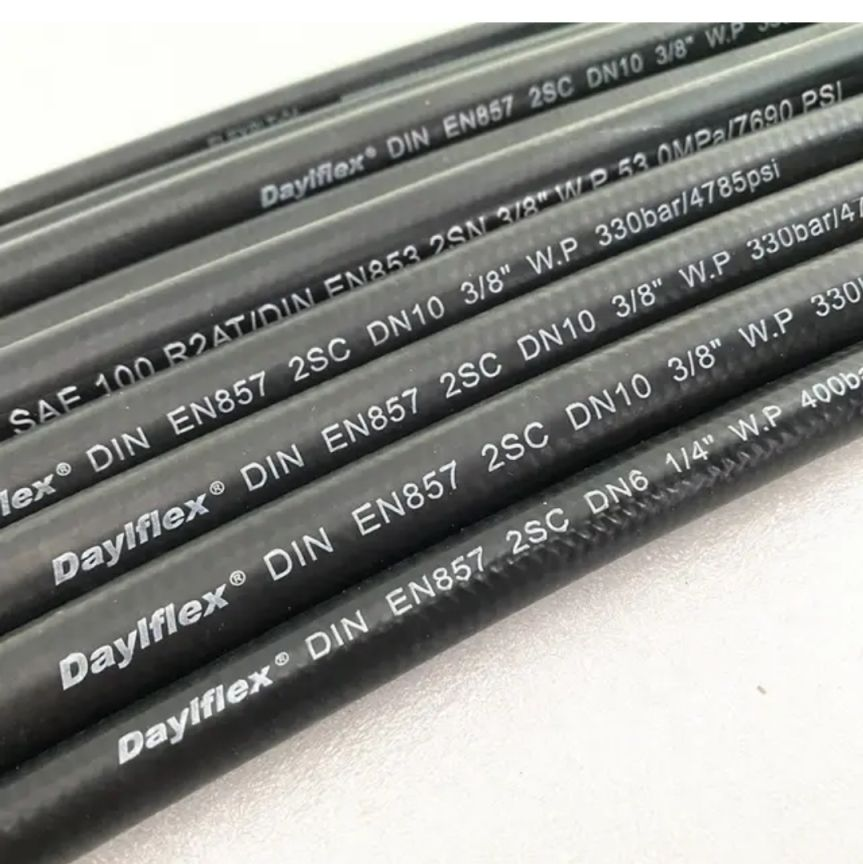
The core material for 16mm hydraulic hoses is typically a synthetic rubber compound, most commonly based on nitrile rubber (NBR) for oil-based hydraulic fluids, or ethylene propylene diene monomer (EPDM) for phosphate ester fluids. NBR offers excellent resistance to petroleum-based oils, fuels, and water, while EPDM provides superior resistance to heat, ozone, and weathering. The rubber compound is formulated with reinforcing fillers like carbon black to enhance tensile strength and abrasion resistance. Manufacturing begins with the extrusion of the inner tube, followed by the application of multiple layers of reinforcement. These reinforcement layers commonly consist of high-tensile steel wire—single wire or multi-spiral configurations—braided or spiraled around the inner tube. The number and configuration of these layers directly influence the hose's pressure rating and flexibility. A protective outer cover, often a synthetic rubber blend providing abrasion and weather resistance, is then extruded over the reinforcement. Crucial parameter control during manufacturing includes precise temperature regulation during extrusion to ensure consistent rubber curing, accurate wire tension during reinforcement winding to prevent distortion, and rigorous dimensional checks to meet specified inner diameter and outer diameter tolerances. Post-production testing involves hydrostatic pressure testing to verify burst pressure, impulse testing to assess fatigue life, and dimensional inspection to confirm conformance to specifications. Chemical compatibility testing with intended hydraulic fluids is also essential.
Performance & Engineering
Performance of a 16mm hydraulic hose is dictated by its ability to withstand internal pressure, external forces, and environmental conditions without failure. Force analysis involves consideration of hoop stress within the hose wall, generated by internal fluid pressure, and axial stress induced by bending and flexing. The reinforcement layers are engineered to counteract these stresses, preventing expansion and potential rupture. Environmental resistance is critical; hoses are exposed to temperature extremes, UV radiation, and potentially corrosive substances. Material selection plays a crucial role here, with appropriate rubber compounds and protective covers mitigating degradation. Compliance requirements are stringent and vary by region, often adhering to standards like SAE J517 (for pressure rating), SAE J518 (for reinforcement types), and ISO 14307 (for constant-pressure testing). Functional implementation considerations include bend radius (critical to avoid kinking and stress concentration), hose length (minimizing pressure loss due to friction), and fitting compatibility (ensuring leak-free connections). Fatigue life is a major engineering concern, particularly in applications with cyclical loading. Impulse testing simulates these conditions, evaluating the hose’s resistance to repeated pressure surges.
Technical Specifications
| Parameter | Unit | Typical Value (NBR Inner Tube, Steel Wire Reinforcement) | Testing Standard |
|---|---|---|---|
| Inner Diameter | mm | 16 ± 0.2 | ISO 1307 |
| Outer Diameter | mm | 26 ± 0.3 | ISO 1307 |
| Working Pressure | MPa | 20 | SAE J517 |
| Burst Pressure | MPa | 80 | SAE J517 |
| Temperature Range | °C | -40 to +100 | SAE J517 |
| Reinforcement Type | - | 2:1 Safety Factor Steel Wire Braid | SAE J518 |
| Fluid Compatibility | - | Petroleum-based Hydraulic Fluids (ISO 32-100) | DIN 51524 |
Failure Mode & Maintenance
Common failure modes for 16mm hydraulic hoses include burst failure due to exceeding pressure limits, fatigue cracking from cyclical bending and pressure surges, abrasion from external contact, and degradation of the rubber compound due to heat, ozone, or chemical exposure. Internal corrosion, though less common, can occur if incompatible fluids are used. Failure analysis typically involves visual inspection for cracks and bulges, microscopic examination of the fractured surface to determine the root cause, and chemical analysis of the rubber compound to assess degradation levels. Preventive maintenance is crucial. This includes regular visual inspections for signs of damage, checking hose connections for leaks, ensuring proper support to prevent excessive bending and abrasion, and maintaining clean hydraulic fluid. Hose replacement should be scheduled based on service life guidelines provided by the manufacturer, or more frequently in harsh operating environments. Proper hose handling during installation – avoiding sharp bends and twists – is also critical. A key failure mode specific to steel-wire reinforced hoses is wire fatigue, manifested as inter-wire cracking, often initiated by corrosion or bending stress. Addressing fluid contamination through filtration is paramount to mitigate internal abrasive wear and prolong hose life.
Industry FAQ
Q: What is the impact of impulse pressure on hydraulic hose life?
A: Impulse pressure, or pressure spikes, introduces significant fatigue stress into the hose construction. Repeated impulse pressures drastically reduce the hose’s operational lifespan, even if the working pressure is within specifications. Selecting a hose specifically rated for high impulse applications, and implementing pulsation dampeners in the hydraulic system, are crucial mitigation strategies. The frequency and amplitude of the impulse pressure are key factors in determining the severity of the impact.
Q: How does the selection of fitting material affect hose performance and longevity?
A: Incompatible fitting materials can lead to galvanic corrosion, particularly in systems utilizing dissimilar metals. Selecting fittings made from materials compatible with both the hose and the hydraulic fluid is essential. Proper crimping of the fitting onto the hose is also critical; inadequate crimping can cause leakage or premature failure. Stainless steel fittings are often preferred for their corrosion resistance.
Q: What are the primary considerations when selecting a hose cover material?
A: The hose cover material must provide adequate protection against abrasion, weathering (UV radiation, ozone), and chemical exposure. Synthetic rubber blends are commonly used, with specific formulations tailored to the anticipated operating environment. For example, a hose exposed to oil spills will require a cover with excellent oil resistance.
Q: What is the role of the safety factor in hydraulic hose selection?
A: The safety factor is a multiplier applied to the working pressure to determine the hose's burst pressure. A higher safety factor provides a greater margin of safety, reducing the risk of catastrophic failure. Industry standards, such as SAE J517, specify minimum safety factors for different hose types and applications. A typical safety factor is 4:1.
Q: How does temperature affect the performance of a hydraulic hose?
A: Extreme temperatures can significantly degrade the rubber compound, reducing its flexibility and increasing the risk of cracking. High temperatures accelerate chemical degradation, while low temperatures can cause the rubber to become brittle. Selecting a hose with a temperature rating appropriate for the operating environment is essential. Fluid viscosity also changes with temperature, potentially impacting system performance.
Conclusion
The selection and implementation of OEM 16mm hydraulic hoses demands a comprehensive understanding of material science, manufacturing processes, and engineering principles. Optimizing hose performance requires careful consideration of pressure ratings, temperature ranges, fluid compatibility, and environmental factors. Failure to address these aspects can lead to premature failure, system downtime, and potential safety hazards. Maintaining a robust preventative maintenance program, including regular inspections and timely replacement of hoses, is paramount to ensuring long-term reliability and operational efficiency.
Future advancements in hydraulic hose technology are focusing on the development of more durable and chemically resistant rubber compounds, as well as the integration of smart sensors to monitor hose condition and predict potential failures. Furthermore, ongoing research is aimed at reducing hose weight and improving flexibility without compromising performance. Adherence to relevant industry standards and best practices remains essential for ensuring the safe and reliable operation of hydraulic systems.