
Apr . 01, 2024 17:55 Back to list
oem 16mm hydraulic hose manufacturers Performance Analysis

Introduction
OEM 16mm hydraulic hoses represent a critical component in fluid power systems across a wide range of industrial applications. Positioned within the hydraulic system as the conduit for transferring pressurized fluid, these hoses facilitate the operation of heavy machinery, power tools, and automated processes. Their 16mm internal diameter categorizes them as a medium-pressure, medium-flow capacity option, commonly employed in applications where larger hose sizes are impractical or unnecessary. Core performance characteristics include pressure rating, burst pressure, temperature resistance, and fluid compatibility. A significant pain point in the industry stems from inconsistencies in hose quality leading to premature failure, unscheduled downtime, and potential safety hazards. This guide provides an in-depth examination of 16mm hydraulic hoses, covering material science, manufacturing processes, performance criteria, failure modes, and relevant industry standards, specifically tailored for procurement managers and engineers involved in B2B industrial technology.
Material Science & Manufacturing
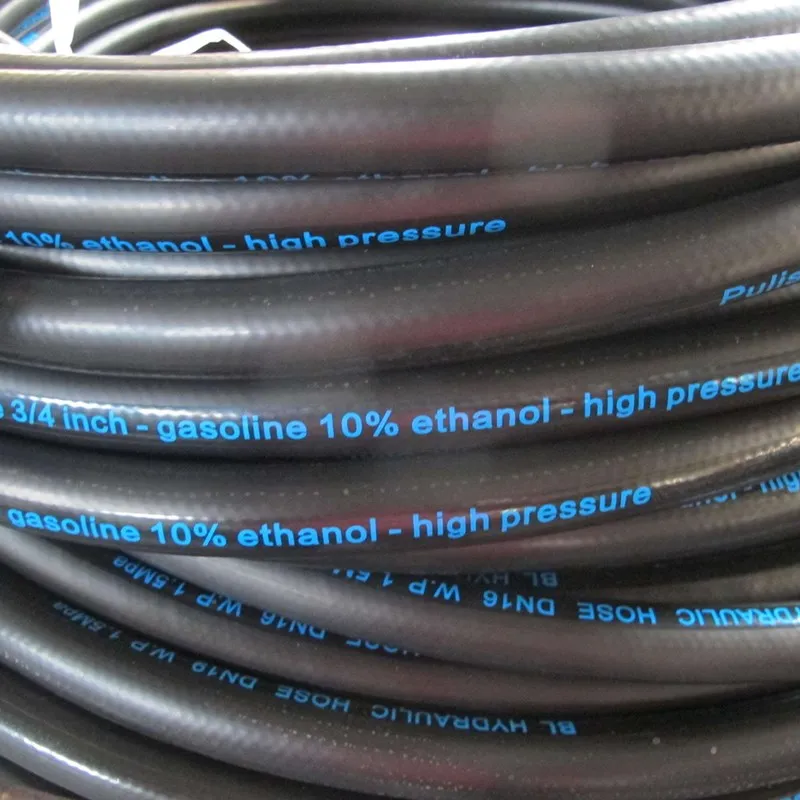
The construction of a 16mm hydraulic hose typically involves four key layers: the inner tube, reinforcement layers, outer cover, and sometimes an intermediate layer. The inner tube is commonly composed of synthetic rubbers such as nitrile rubber (NBR), chloroprene rubber (CR - Neoprene), or ethylene propylene diene monomer (EPDM), selected based on fluid compatibility. NBR offers excellent resistance to petroleum-based oils, while CR provides good resistance to heat and weathering, and EPDM excels in phosphate ester fluid compatibility. Reinforcement layers typically utilize high-tensile steel wire, spirally wound or braided, to provide the necessary pressure resistance. The number of reinforcement layers directly impacts the hose’s working pressure and burst pressure. The outer cover is usually made of synthetic rubber such as CR or a thermoplastic polyurethane (TPU) to provide abrasion resistance, weather protection, and resistance to ozone degradation. Manufacturing processes include extrusion for the inner tube and outer cover, wire winding/braiding for reinforcement, and subsequent vulcanization to bond the layers together. Critical parameters during extrusion include maintaining precise dimensional tolerances and consistent rubber compound mixing. During braiding, wire tension and pitch are crucial for ensuring uniform reinforcement. Vulcanization parameters – temperature, pressure, and time – directly affect the crosslinking density of the rubber, impacting the hose's mechanical properties and resistance to degradation. Controlling these parameters is essential for preventing issues like porosity in the rubber or insufficient adhesion between layers.
Performance & Engineering
The performance of a 16mm hydraulic hose is governed by several key engineering principles. Burst pressure is determined by the tensile strength of the reinforcement layers and the adhesion between layers. Working pressure is a fraction of the burst pressure, typically specified with a safety factor (e.g., 4:1). Hose expansion under pressure, known as volumetric expansion, must be minimized to maintain system responsiveness and prevent cavitation. This is achieved through appropriate reinforcement design. Fatigue life, the number of pressure cycles the hose can withstand before failure, is critical in dynamic applications. This is affected by the hose’s construction, the amplitude of pressure fluctuations, and the operating temperature. Environmental resistance is paramount, requiring the hose to withstand exposure to oils, chemicals, UV radiation, and temperature extremes. Compliance requirements, such as those outlined by SAE J517 and EN 853, dictate minimum performance standards for hydraulic hoses, including pressure rating, impulse testing, and temperature range. Furthermore, consideration must be given to bend radius – exceeding the minimum bend radius can induce stress concentrations and lead to premature failure. Force analysis must consider both static and dynamic loads, accounting for pressure thrust and external bending moments.
Technical Specifications
| Parameter | Unit | Typical Value (NBR/Steel Wire) | Typical Value (EPDM/Steel Wire) |
|---|---|---|---|
| Inner Diameter | mm | 16 | 16 |
| Working Pressure | MPa | 20 | 16 |
| Burst Pressure | MPa | 80 | 64 |
| Temperature Range | °C | -40 to +100 | -40 to +120 |
| Reinforcement Type | - | Spiral Steel Wire | Spiral Steel Wire |
| Cover Material | - | CR (Neoprene) | EPDM |
| Fluid Compatibility | - | Petroleum-Based Oils | Phosphate Ester Fluids |
Failure Mode & Maintenance
Common failure modes for 16mm hydraulic hoses include fatigue cracking due to repeated pressure cycling, particularly near the fittings. Bursting occurs when the working pressure exceeds the hose's rated capacity or due to damage to the reinforcement layers. Extrusion, the outward movement of the inner tube through the reinforcement, can occur under high pressure and temperature. Abrasion of the outer cover can expose the reinforcement to corrosion and weaken the hose. Pinholes and leaks can develop due to chemical attack or degradation of the rubber compounds. Degradation of the rubber material from UV exposure, ozone cracking, or fluid incompatibility is another significant cause of failure. Maintenance protocols should include regular visual inspections for signs of abrasion, cracking, bulging, or leaks. Hose fittings should be checked for tightness and corrosion. Hoses should be replaced based on a pre-determined service life or after exposure to extreme conditions. Proper storage in a cool, dry, and dark environment is crucial for preventing premature degradation. Furthermore, implementing a hose management program that tracks hose usage, age, and maintenance history can significantly reduce the risk of unexpected failures. Correct routing and support to prevent excessive bending and abrasion are essential preventative measures.
Industry FAQ
Q: What is the impact of impulse pressure on hydraulic hose life?
A: Impulse pressure, or pressure spikes, significantly reduces hydraulic hose life. These spikes create cyclical stress on the hose reinforcement, leading to fatigue failure. Hoses specifically rated for impulse applications incorporate specialized reinforcement designs to mitigate this effect. Choosing a hose with an adequate impulse rating for the system’s operating conditions is critical.
Q: How does fluid temperature affect hose performance?
A: Elevated fluid temperatures accelerate the degradation of rubber compounds, reducing the hose’s flexibility and increasing the risk of leaks. High temperatures can also decrease the hose’s pressure rating. Conversely, extremely low temperatures can cause the hose to become brittle and more susceptible to cracking. Selecting a hose with a temperature rating that matches the operating temperature range is vital.
Q: What is the difference between spiral and braided hose reinforcement?
A: Spiral reinforcement offers higher flexibility and is better suited for applications requiring tight bend radii. Braided reinforcement provides higher pressure ratings and is more resistant to kinking. The choice between spiral and braided reinforcement depends on the specific application requirements.
Q: How important is proper hose fitting selection and installation?
A: Proper fitting selection and installation are paramount for hose longevity. Incorrectly sized or installed fittings can create stress concentrations, leading to leaks or premature failure. Fittings must be compatible with the hose material and the fluid being conveyed. Crimping procedures must follow the manufacturer’s specifications to ensure a secure and leak-proof connection.
Q: What are the considerations when selecting a hose for exposure to corrosive fluids?
A: When dealing with corrosive fluids, the inner tube material must be chemically compatible to prevent degradation and swelling. EPDM is often chosen for phosphate ester fluids, while fluoropolymers like PTFE are used for highly aggressive chemicals. The outer cover should also be resistant to the fluid to prevent external corrosion and damage.
Conclusion
The selection and implementation of 16mm hydraulic hoses require a comprehensive understanding of material science, manufacturing processes, performance characteristics, and potential failure modes. Ignoring these critical elements can lead to costly downtime, safety hazards, and reduced system efficiency. Careful consideration of fluid compatibility, temperature range, pressure requirements, and environmental conditions is essential for ensuring long-term reliability and optimal performance.
Moving forward, advancements in hose technology are focusing on developing more durable and lightweight materials, improving burst strength, and enhancing resistance to harsh environments. Implementing robust hose management programs and adhering to relevant industry standards will remain crucial for mitigating risks and maximizing the lifespan of these critical components within complex hydraulic systems.