
Apr . 01, 2024 17:55 Back to list
oem 16mm hydraulic hose manufacturer Performance Analysis
Introduction
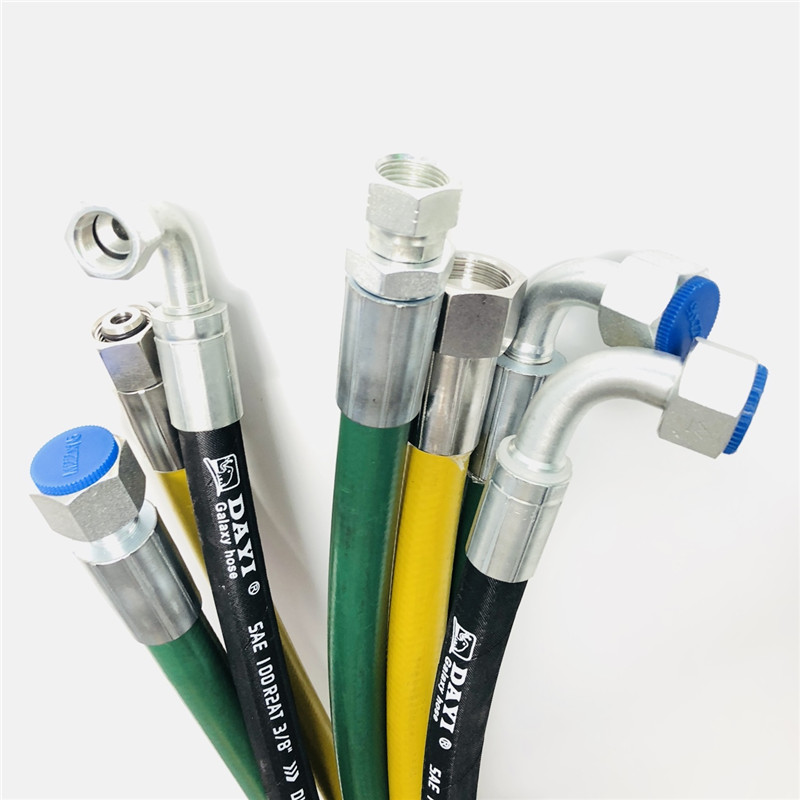
OEM 16mm hydraulic hose represents a critical component in fluid power systems across diverse industries, including construction machinery, agricultural equipment, material handling, and manufacturing. Positioned within the hydraulic system as the conduit for pressurized fluid, its performance directly influences system efficiency, reliability, and safety. This guide provides a comprehensive technical overview, detailing material science, manufacturing processes, performance characteristics, failure modes, and relevant industry standards. The 16mm designation refers to the internal diameter, a key parameter affecting flow rate and pressure capacity. The primary function of this hose is to transmit hydraulic fluid (typically mineral oil, synthetic fluids, or water-glycol mixtures) from the pump to actuators, enabling the operation of hydraulic cylinders, motors, and other hydraulic devices. Ensuring compatibility with the specific fluid is paramount. A key industry pain point revolves around hose degradation due to incompatibility, leading to costly downtime and potential safety hazards. Achieving consistent quality in OEM production, maintaining dimensional accuracy, and guaranteeing burst pressure specifications are critical success factors.
Material Science & Manufacturing
The construction of a 16mm hydraulic hose typically involves four primary layers: the inner tube, reinforcement layers, and the outer cover. The inner tube is commonly composed of synthetic rubber compounds, specifically nitrile rubber (NBR) due to its excellent resistance to petroleum-based hydraulic fluids. NBR’s chemical composition, a copolymer of acrylonitrile and butadiene, imparts necessary flexibility and fluid resistance. However, specialized applications may necessitate alternative materials such as ethylene propylene diene monomer (EPDM) for phosphate ester fluids or fluoropolymers (e.g., PTFE) for highly aggressive chemicals. The reinforcement layer(s) provide strength and pressure resistance. These layers are typically constructed of multiple plies of high-tensile steel wire, often spirally wound or braided. Wire gauge and ply count directly correlate to the hose’s working pressure and burst pressure. Textile reinforcement, using fibers like polyester or aramid, can be incorporated for increased flexibility and reduced weight, particularly in lower-pressure applications. The outer cover, commonly made of chloroprene rubber (CR) or polyurethane (PU), provides protection against abrasion, weathering, ozone, and oil. Manufacturing involves several key processes. Tube extrusion forms the inner liner. Reinforcement layers are applied via winding or braiding machines, precisely controlling tension and angle. Finally, the outer cover is extruded over the reinforcement. Critical parameter control during extrusion includes temperature, pressure, and screw speed to ensure consistent wall thickness and material properties. Post-processing includes curing (vulcanization) to enhance rubber elasticity and crosslinking, improving fluid resistance and durability.

Performance & Engineering
Hydraulic hose performance is dictated by several key engineering considerations. Burst pressure, working pressure, and flow rate are paramount. Burst pressure is the maximum pressure the hose can withstand before failure, typically four times the working pressure. Working pressure is the maximum continuous operating pressure specified by the manufacturer. Flow rate is influenced by the hose’s internal diameter and smoothness. A larger diameter and smoother inner surface minimize flow restriction and pressure drop. Force analysis considers hoop stress (pressure acting radially on the hose wall) and longitudinal stress (tension resulting from pressure). Reinforcement layers are engineered to withstand these stresses, preventing expansion and rupture. Environmental resistance is critical; exposure to extreme temperatures, UV radiation, and corrosive fluids can degrade the hose material. Material selection and the addition of UV stabilizers or antioxidants mitigate these effects. Compliance requirements vary by region and application. SAE J517 and EN 853 are common standards specifying performance characteristics and testing procedures. Hose assemblies (hose + fittings) require careful engineering to ensure proper crimp strength and prevent leakage or failure at the connection points. Finite Element Analysis (FEA) is often employed to optimize hose design and validate performance under various loading conditions. Another key concern is electroconductivity; in some applications, static electricity build-up can be hazardous, necessitating the use of conductive reinforcement materials.
Technical Specifications
| Parameter | Unit | Typical Value (NBR Inner Tube, Steel Wire Reinforcement, CR Cover) | Test Standard |
|---|---|---|---|
| Internal Diameter | mm | 16 | ISO 1307 |
| Working Pressure | MPa | 20 | SAE J517 |
| Burst Pressure | MPa | 80 | SAE J517 |
| Temperature Range | °C | -40 to +100 | DIN EN 853 |
| Minimum Bend Radius | mm | 48 | ISO 1307 |
| Fluid Compatibility | - | Mineral Oil, Petroleum-based Hydraulic Fluids | ASTM D2000 |
Failure Mode & Maintenance
Hydraulic hose failures can stem from various mechanisms. Fatigue cracking, induced by repeated flexing and pressure cycling, is a common failure mode, particularly near fittings. Delamination occurs when the reinforcement layers separate from the inner tube or outer cover, reducing pressure resistance. Hydrolytic degradation, caused by the absorption of water into the rubber matrix, weakens the material and leads to cracking. Oxidation, driven by exposure to oxygen and high temperatures, causes hardening and embrittlement. Abrasion, resulting from contact with abrasive surfaces, erodes the outer cover, exposing the reinforcement layers. Chemical attack from incompatible fluids can swell or dissolve the rubber compounds. To mitigate these failures, regular inspections are crucial. Look for signs of cracking, swelling, abrasion, or leakage. Avoid sharp bends and kinks. Ensure proper hose routing to prevent rubbing against other components. Maintain correct fluid levels and filter cleanliness to prevent contamination. Implement a preventative maintenance schedule for hose replacement based on operating hours or calendar time. When replacing hoses, always use fittings compatible with the hose material and pressure rating. Proper crimping technique is essential for ensuring a secure connection. A detailed failure analysis should be conducted for any unexpected hose failures to identify the root cause and prevent recurrence.
Industry FAQ
Q: What is the impact of exceeding the minimum bend radius on hose life?
A: Exceeding the minimum bend radius induces excessive stress on the reinforcement layers, accelerating fatigue cracking and potentially leading to premature failure. Repeated bending beyond the specified radius permanently deforms the hose, reducing its pressure capacity and increasing the risk of rupture.
Q: How does fluid temperature affect hydraulic hose performance?
A: Elevated temperatures can accelerate rubber degradation, reducing elasticity and fluid resistance. Low temperatures can cause the rubber to harden and become brittle, increasing susceptibility to cracking. Maintaining fluid temperature within the specified range is critical for optimal hose life and performance.
Q: What are the key considerations when selecting a hose for phosphate ester fluids?
A: Phosphate ester fluids are incompatible with standard nitrile rubber (NBR). EPDM inner tubes are required to provide adequate resistance and prevent swelling or degradation. Compatibility of the outer cover and reinforcement layers with phosphate ester fluids should also be verified.
Q: How do I determine the correct crimp size for a hose and fitting assembly?
A: Crimp size is dictated by the hose material, fitting type, and operating pressure. The fitting manufacturer provides crimp specifications. Using an incorrect crimp size can lead to leakage, blow-off, or premature failure. Proper crimping equipment and trained personnel are essential.
Q: What is the significance of hose traceability?
A: Hose traceability, achieved through markings or tags, provides a record of the hose’s manufacturing date, batch number, and material specifications. This information is valuable for failure analysis, warranty claims, and ensuring consistent quality.
Conclusion
The 16mm hydraulic hose, while seemingly a simple component, embodies significant engineering complexity and material science considerations. Achieving reliable performance requires meticulous attention to material selection, manufacturing processes, and adherence to industry standards. Understanding the potential failure modes and implementing preventative maintenance strategies are crucial for maximizing service life and ensuring system safety.
Continued advancements in hydraulic hose technology focus on developing materials with enhanced temperature resistance, improved chemical compatibility, and increased durability. The integration of smart sensors for real-time pressure monitoring and leak detection represents a promising avenue for predictive maintenance and improved system reliability. OEMs and end-users must prioritize quality control and adopt best practices to mitigate risks and optimize the performance of hydraulic systems.