
Apr . 01, 2024 17:55 Back to list
oem 16mm hydraulic hose factory Performance Analysis

Introduction
OEM 16mm hydraulic hose represents a critical component in fluid power systems across a diverse range of industrial applications, including construction equipment, agricultural machinery, material handling, and manufacturing. These hoses are designed to transmit hydraulic fluid under substantial pressure, facilitating the operation of actuators, motors, and other hydraulic components. The core function of a 16mm hydraulic hose lies in its ability to reliably convey pressurized fluid while maintaining structural integrity and resisting degradation from environmental factors. Within the industrial supply chain, OEM hose manufacturers act as a tier-one supplier to equipment manufacturers, requiring stringent quality control and adherence to precise dimensional and performance specifications. Key performance characteristics include burst pressure, working pressure, temperature range, fluid compatibility, and bend radius. The selection of appropriate hose construction materials – rubber compounds, reinforcement layers, and outer coverings – is paramount to ensure longevity and operational safety. This guide provides an in-depth technical overview of 16mm hydraulic hose manufacturing, material science, performance criteria, failure modes, and relevant industry standards.
Material Science & Manufacturing
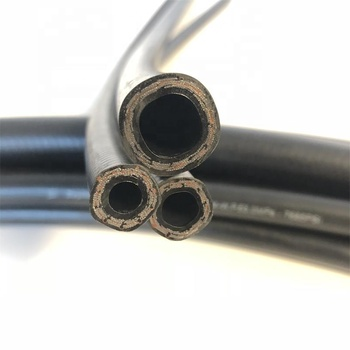
The construction of a 16mm hydraulic hose typically involves four key layers: the inner tube, reinforcement layer(s), outer cover, and fittings. The inner tube, which comes into direct contact with the hydraulic fluid, is commonly composed of synthetic rubber compounds such as nitrile (NBR), ethylene propylene diene monomer (EPDM), or fluorocarbon (FKM/Viton), chosen for their fluid resistance, flexibility, and temperature stability. NBR is generally used for petroleum-based fluids, EPDM for phosphate ester fluids, and FKM for aggressive chemicals and high temperatures. The reinforcement layer(s) provide the hose’s pressure resistance. These are typically braided or spiraled high-strength steel wire, or synthetic fiber such as aramid. Braided hoses offer excellent flexibility, while spiral-wound hoses provide higher pressure ratings. The outer cover, typically made of synthetic rubber such as chloroprene (CR) or polyurethane (PU), provides abrasion resistance, weather protection, and resistance to oil and chemicals. Manufacturing processes begin with extrusion of the inner tube, followed by the application of the reinforcement layer through braiding or winding machines. Precise tension control during reinforcement application is crucial to achieve consistent pressure ratings. The outer cover is then extruded over the reinforcement, and the hose is vulcanized – a process of cross-linking the rubber molecules using heat and pressure – to enhance its strength, elasticity, and chemical resistance. Fittings are crimped onto the hose ends using specialized machinery, creating a secure and leak-proof connection. Parameter control during vulcanization (temperature, pressure, time) is critical; under-vulcanization leads to poor mechanical properties, while over-vulcanization can cause brittleness. Post-production testing includes burst pressure testing, impulse testing, and leak testing.
Performance & Engineering
The performance of a 16mm hydraulic hose is dictated by its ability to withstand internal pressure, external forces, and environmental conditions. Force analysis considers hoop stress (circumferential stress due to internal pressure) and longitudinal stress (stress along the hose axis). Reinforcement layer design directly impacts the hose’s ability to resist burst pressure. Working pressure is typically specified as a percentage (e.g., 50%) of the burst pressure, providing a safety factor. Environmental resistance encompasses temperature fluctuations, exposure to UV radiation, ozone, and corrosive chemicals. Rubber compounds degrade over time due to oxidation, hydrolysis, and chemical attack. Engineering considerations also include bend radius; exceeding the minimum bend radius can cause kinking and hose failure. Impulse testing simulates pressure pulsations common in hydraulic systems, evaluating the hose’s ability to withstand cyclic loading. Compliance requirements, such as those specified by SAE (Society of Automotive Engineers) standards, dictate minimum performance criteria for burst pressure, working pressure, temperature range, and fluid compatibility. Fitting design and crimp quality are also critical; a poorly crimped fitting can lead to leakage or hose separation. Finite Element Analysis (FEA) is frequently employed in the design phase to optimize hose geometry and reinforcement configuration for specific application requirements. Proper hose routing and support are vital to prevent chafing and abrasion, which can compromise the hose's integrity.
Technical Specifications
| Parameter | Unit | Typical Value (NBR Inner Tube, Steel Wire Braided) | Typical Value (FKM Inner Tube, Spiral Steel Wire Reinforced) |
|---|---|---|---|
| Inner Diameter | mm | 16 | 16 |
| Outer Diameter | mm | 27 | 29 |
| Working Pressure | MPa | 20 | 35 |
| Burst Pressure | MPa | 80 | 140 |
| Temperature Range | °C | -40 to +100 | -20 to +200 |
| Reinforcement Type | - | 2-wire braid | 4-spiral |
| Fluid Compatibility | - | Petroleum-based fluids | Aggressive chemicals, fuels |
Failure Mode & Maintenance
Common failure modes in 16mm hydraulic hoses include burst failure due to exceeding the working pressure, fatigue cracking due to cyclic loading, abrasion damage from external contact, and degradation of the rubber compounds due to exposure to heat, chemicals, and UV radiation. Burst failure typically occurs at the weakest point in the hose, often near fittings or areas with reinforcement defects. Fatigue cracking initiates from internal defects or stress concentrations and propagates over time, leading to eventual hose rupture. Abrasion can compromise the outer cover, exposing the reinforcement layer to corrosion. Rubber degradation manifests as hardening, cracking, and loss of elasticity, reducing the hose’s ability to withstand pressure. Failure analysis often involves examining the fracture surface to identify the root cause of the failure. Maintenance practices include regular visual inspections for signs of damage, proper hose routing to avoid abrasion and kinking, and periodic fluid analysis to detect contamination or chemical degradation. Hose assemblies should be replaced if they exhibit any signs of damage, such as cracks, blisters, or abrasion. Proper storage of hoses is also important; they should be stored in a cool, dry place away from direct sunlight and ozone sources. Regularly check crimp connections for signs of loosening or corrosion. Consider implementing a preventative maintenance schedule based on operating hours and environmental conditions.
Industry FAQ
Q: What is the impact of fluid velocity on hose life?
A: Higher fluid velocity increases the risk of erosion and cavitation, accelerating hose degradation. Excessive velocity can also generate heat, further contributing to rubber compound breakdown. Selecting a hose with an appropriate inner diameter to maintain optimal fluid velocity is crucial.
Q: How do different reinforcement materials affect hose performance?
A: Steel wire reinforcement provides high pressure resistance and durability, but offers limited flexibility. Synthetic fiber reinforcement, such as aramid, offers greater flexibility but lower pressure ratings. Spiral-wound steel reinforcement provides the highest pressure capability but can be less flexible than braided constructions.
Q: What is the role of fitting selection in preventing hose failure?
A: Fittings must be compatible with the hose material and rated for the same working pressure. Improperly sized or crimped fittings are a common cause of hose failure. Using high-quality fittings and ensuring proper installation are essential.
Q: How does temperature affect the performance of a hydraulic hose?
A: Extreme temperatures can significantly impact hose performance. High temperatures accelerate rubber degradation, while low temperatures can reduce flexibility and increase the risk of cracking. Selecting a hose with a temperature rating appropriate for the application is critical.
Q: What are the considerations when selecting a hose for use with biodegradable hydraulic fluid?
A: Biodegradable hydraulic fluids can be more aggressive towards certain rubber compounds. It’s essential to select a hose with an inner tube material specifically rated for compatibility with the specific biodegradable fluid being used. Consult the fluid manufacturer's compatibility chart.
Conclusion
OEM 16mm hydraulic hoses are integral components in numerous industrial systems, demanding meticulous attention to material selection, manufacturing processes, and performance parameters. Understanding the interplay between fluid compatibility, pressure ratings, temperature limits, and reinforcement construction is fundamental to ensuring reliable and safe operation. Careful consideration of potential failure modes and implementation of proactive maintenance strategies are essential to maximizing hose service life and minimizing downtime.
Future developments in hydraulic hose technology are focused on enhancing durability, reducing weight, and improving environmental sustainability. Research into advanced rubber compounds, innovative reinforcement materials (such as carbon nanotubes), and smart hose monitoring systems will continue to drive advancements in this critical industrial sector. The trend towards more demanding operating conditions and stricter environmental regulations necessitates a continuous commitment to innovation and quality control in the design and manufacture of hydraulic hose assemblies.