
Apr . 01, 2024 17:55 Back to list
oem 10mm hydraulic hose manufacturer Performance Analysis
Introduction
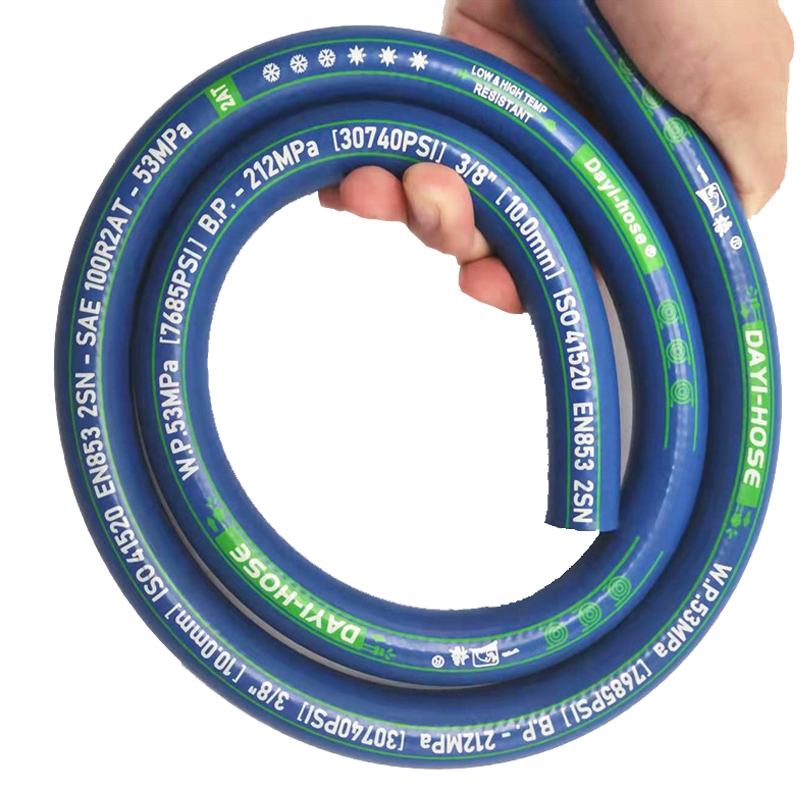
The 10mm hydraulic hose, manufactured by OEMs, represents a critical component in fluid power systems across diverse industries, including construction equipment, agricultural machinery, industrial manufacturing, and automotive applications. Its function is to reliably transmit hydraulic fluid under pressure, enabling the operation of actuators and other hydraulic devices. This guide provides an in-depth technical overview, covering material science, manufacturing processes, performance characteristics, potential failure modes, and relevant industry standards. A key industry pain point revolves around ensuring consistent hose performance and longevity, particularly regarding burst pressure, impulse resistance, and resistance to fluid degradation. OEMs specializing in these hoses must address these concerns through rigorous quality control and material selection, complying with stringent international regulations.
Material Science & Manufacturing
The core construction of a 10mm hydraulic hose typically involves several layers. The innermost layer, the tube, is commonly composed of synthetic rubber compounds such as nitrile rubber (NBR) for petroleum-based hydraulic fluids, or fluoroelastomers (FKM, like Viton) for compatibility with more aggressive fluids like phosphate esters. NBR offers good abrasion resistance and cost-effectiveness, while FKM provides superior chemical resistance and high-temperature performance. The reinforcement layer is crucial for withstanding internal pressure. This typically comprises multiple braids of high-strength steel wire – the number and construction (e.g., 1SP, 2SP, 4SP, 6SP indicating one to six spiral plies) directly impact the hose’s pressure rating. A synthetic rubber cover, often utilizing a blend of SBR (styrene-butadiene rubber) and EPDM (ethylene propylene diene monomer) provides abrasion, weather, and ozone resistance. Manufacturing processes involve extrusion of the inner tube, spiraling or braiding of the reinforcement layers, and subsequent extrusion of the cover. Precise control of extrusion temperatures, curing times, and braid tension are paramount. Improper curing can lead to reduced rubber elasticity and premature failure. The steel wire used in reinforcement is typically high-carbon steel, requiring careful surface treatment (e.g., galvanization) to prevent corrosion. Bonding between layers is achieved through adhesion promoters and vulcanization, demanding optimized formulations and process parameters.
Performance & Engineering
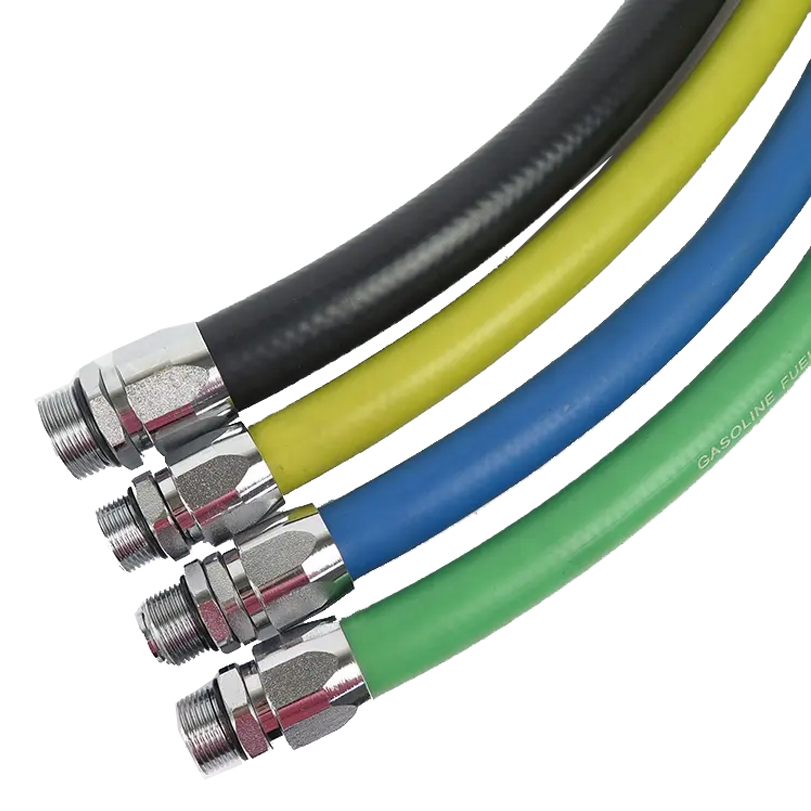
The performance of a 10mm hydraulic hose is primarily dictated by its ability to withstand internal pressure, external damage, and fluid compatibility. Force analysis centers around hoop stress within the tube, determined by the formula σ = (P r) / t, where σ is hoop stress, P is internal pressure, r is the inner radius, and t is the tube thickness. Higher pressures demand thicker walls or stronger reinforcement. Impulse resistance – the hose’s ability to withstand pressure surges – is crucial, particularly in applications like hydraulic hammers. This is directly related to the reinforcement structure and the elasticity of the rubber components. Environmental resistance is a significant concern; exposure to UV radiation, ozone, extreme temperatures, and corrosive substances can degrade the rubber compounds, leading to cracking and leakage. Compliance requirements vary by region and application. For example, SAE J517 specifies performance requirements for hydraulic hoses, while EN 856 covers similar standards in Europe. Functional implementation necessitates careful consideration of hose bend radius; exceeding the minimum bend radius can induce stress concentrations and premature failure. Furthermore, correct fitting selection and installation are critical to prevent leakage and ensure optimal performance. Hose assemblies must be tested to their working pressure and burst pressure to validate their integrity before service.
Technical Specifications
| Parameter | Unit | Typical Value (NBR Tube, 2SP Reinforcement) | Typical Value (FKM Tube, 4SP Reinforcement) |
|---|---|---|---|
| Inner Diameter | mm | 10.0 ± 0.2 | 10.0 ± 0.2 |
| Outer Diameter | mm | 17.5 ± 0.3 | 19.0 ± 0.3 |
| Working Pressure | MPa | 20.7 | 34.5 |
| Burst Pressure | MPa | 82.7 | 138.0 |
| Temperature Range | °C | -40 to +100 | -30 to +150 |
| Impulse Cycles (at 1.5x WP) | Cycles | 200,000 | 500,000 |
Failure Mode & Maintenance
Failure modes in 10mm hydraulic hoses are varied. Fatigue cracking, particularly in the reinforcement layer, is a common issue arising from repeated pressure cycling and flexing. This often initiates at points of high stress concentration, such as near fittings. Delamination, the separation of layers, can occur due to inadequate bonding during manufacturing or prolonged exposure to harsh fluids. Degradation of the rubber compounds, manifested as hardening, cracking, and loss of elasticity, is caused by UV exposure, ozone, and high temperatures. Oxidation can also contribute to rubber degradation, especially with certain fluids. Fitting corrosion can lead to leakage and hose failure. Internal abrasion from fluid contamination (e.g., metal particles) can erode the inner tube. Maintenance involves regular visual inspections for cracks, abrasions, and leaks. Hose assemblies should be replaced if any damage is detected. The hydraulic fluid should be regularly filtered to remove contaminants. Proper hose routing and support are essential to prevent excessive bending and abrasion. Periodic pressure testing can help identify potential weaknesses before catastrophic failure. Replacement should always adhere to OEM specifications to ensure compatibility and performance.
Industry FAQ
Q: What is the impact of fluid type on hose selection?
A: The fluid type dictates the compatibility requirements of the inner tube. Petroleum-based fluids typically utilize NBR, offering good cost-effectiveness. However, for phosphate ester fluids, FKM is essential due to its superior chemical resistance. Ignoring fluid compatibility can lead to swelling, hardening, or degradation of the inner tube, causing leaks and premature failure.
Q: How does the spiral reinforcement count (e.g., 2SP, 4SP) affect hose performance?
A: The spiral reinforcement count directly impacts the hose's pressure rating and impulse resistance. A higher spiral count (e.g., 4SP vs. 2SP) provides greater strength and resistance to both internal pressure and pressure fluctuations. However, increased reinforcement also reduces flexibility.
Q: What are the key considerations for hose bend radius?
A: Exceeding the minimum bend radius induces stress concentrations in the hose wall, leading to fatigue cracking. The minimum bend radius is typically specified by the hose manufacturer and should be strictly adhered to during installation. Insufficient bend radius will reduce the operational life of the hose.
Q: How important is fitting selection for hydraulic hose assemblies?
A: Fitting selection is critical. Incorrect fittings can cause leakage, damage the hose, or reduce its pressure rating. Fittings must be properly sized, crimped, and compatible with the hose and fluid being used. Using substandard fittings negates the performance benefits of a high-quality hose.
Q: What preventative maintenance practices should be implemented for hydraulic hoses?
A: Regular visual inspections are essential, looking for cracks, abrasions, leaks, and damaged fittings. Maintain a clean hydraulic system with proper filtration. Route hoses properly to avoid excessive bending and abrasion. Periodic pressure testing can identify potential weaknesses. Keep a record of hose replacement dates.
Conclusion
The 10mm hydraulic hose, as a critical component in fluid power systems, demands careful consideration of material science, manufacturing precision, and operational parameters. Selecting the appropriate hose based on fluid compatibility, pressure requirements, and environmental conditions is paramount to ensuring reliable and safe operation. Failure to address these factors can lead to premature failure, costly downtime, and potential safety hazards.
Furthermore, implementing a robust preventative maintenance program, including regular inspections, fluid filtration, and proper hose routing, significantly extends hose lifespan and minimizes the risk of catastrophic failure. Adherence to relevant international standards such as SAE J517 and EN 856 is crucial for ensuring product quality and compliance.