
Apr . 01, 2024 17:55 Back to list
oem 10mm hydraulic hose factory Performance Analysis
Introduction
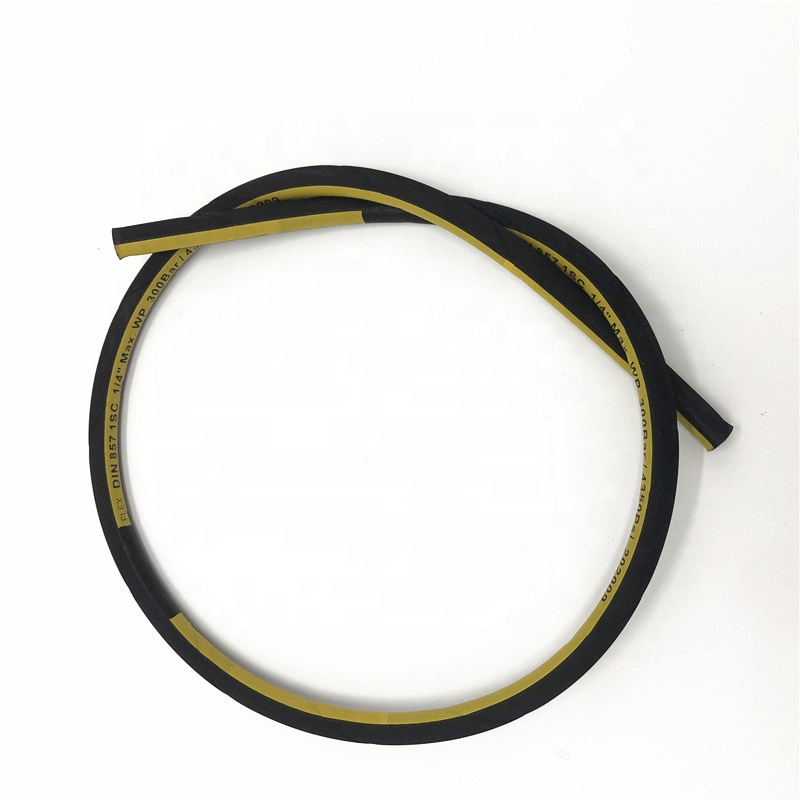
OEM 10mm hydraulic hose represents a critical component within fluid power systems, serving as the conduit for transferring pressurized hydraulic fluid to actuate machinery. Positioned within the broader industrial supply chain, these hoses fall between raw material suppliers (rubber compounds, steel wire) and the manufacturers of hydraulic equipment (construction, agricultural, and industrial machinery). Core performance characteristics center around burst pressure, working pressure, temperature resistance, and fluid compatibility. Unlike general-purpose rubber tubing, hydraulic hose is engineered to withstand significant stresses and operate reliably in demanding environments. The specific requirements for a 10mm hose – inner diameter – are dictated by flow rate demands and system pressure ratings. This guide details the material science, manufacturing processes, performance parameters, potential failure modes, and applicable industry standards for OEM 10mm hydraulic hose.
Material Science & Manufacturing
The construction of a 10mm hydraulic hose typically involves multiple layers, each contributing to its overall performance. The inner tube is usually composed of a synthetic rubber compound, commonly nitrile (NBR) due to its excellent resistance to petroleum-based hydraulic fluids. Other compounds, like chloroprene (CR) or ethylene propylene diene monomer (EPDM), are used for specialized applications requiring resistance to specific fluids or extreme temperatures. The reinforcement layer is critical for pressure containment and is typically a high-tensile steel wire braid (single, double, or spiral wound). The number of braids directly influences the hose’s burst pressure rating. An outer cover, often made of a synthetic rubber like chlorinated polyethylene (CPE) or polyurethane, provides abrasion, ozone, and weathering resistance.
Manufacturing begins with the extrusion of the inner tube using a continuous extrusion process. Precise temperature control and screw speed are crucial for achieving consistent wall thickness and uniform rubber properties. The reinforcement braid is then applied using a winding machine, ensuring complete and even coverage. The outer cover is extruded over the braid, followed by vulcanization – a curing process using heat and pressure to crosslink the rubber polymers, enhancing their strength and elasticity. Key parameters during vulcanization include temperature, pressure, and time; deviations can lead to under-cured (low tensile strength) or over-cured (brittle) hoses. Post-vulcanization, hoses undergo rigorous testing, including burst pressure testing, impulse testing, and leak testing. Quality control focuses on dimensional accuracy, material consistency, and the integrity of the reinforcement layer.
Performance & Engineering
The primary engineering consideration for 10mm hydraulic hose is the ability to withstand internal pressure without failure. This is determined by the hose's burst pressure, which is significantly higher than the working pressure. Burst pressure is calculated based on the tensile strength of the reinforcement braid and the thickness of the rubber layers, employing the Barlow formula (P = 2St/D, where P is pressure, S is tensile strength, t is wall thickness, and D is diameter). Impulse testing simulates pressure fluctuations common in hydraulic systems, evaluating the hose's resistance to fatigue cracking. Environmental resistance is also crucial. Exposure to ultraviolet (UV) radiation, ozone, and extreme temperatures can degrade the rubber compounds, reducing their flexibility and strength. Fluid compatibility must be carefully considered, as certain fluids can cause swelling or softening of the rubber, leading to leaks or failure. The hose's bend radius is another key parameter; exceeding the minimum bend radius can create stress concentrations and reduce the hose's lifespan. Proper fitting selection is paramount to prevent blowouts or leaks at the connection points.
Technical Specifications
| Parameter | Unit | Typical Value (NBR Inner, Steel Wire Braid, CPE Cover) | Test Standard |
|---|---|---|---|
| Inner Diameter | mm | 10.0 ± 0.3 | ISO 1307 |
| Working Pressure | MPa | 20 | SAE J517 |
| Burst Pressure | MPa | 80 | SAE J517 |
| Temperature Range | °C | -40 to +100 | ISO 1817 |
| Reinforcement | - | Single Steel Wire Braid | SAE J517 |
| Outer Diameter | mm | 16.5 ± 0.5 | ISO 1307 |
Failure Mode & Maintenance
Common failure modes in 10mm hydraulic hose include burst failure due to exceeding the working pressure, fatigue cracking from repeated pressure pulses, abrasion damage from external contact, and degradation of the rubber compounds due to environmental exposure. Pinholes can develop in the inner tube due to corrosion or internal abrasion by contaminated fluid. Fitting-related failures often stem from improper installation, corrosion of the fitting material, or incompatibility between the hose and fitting materials. Failure analysis typically involves visual inspection for cracks, bulges, or abrasion, followed by microscopic examination of the fractured surface to determine the root cause.
Preventive maintenance is crucial for extending hose life. Regular visual inspections should be performed to identify signs of wear or damage. Hoses should be replaced if they exhibit cracks, bulges, abrasion, or leaks. Hydraulic fluid should be maintained clean and free of contaminants, as particulate matter can accelerate wear. Proper routing and support of the hose are essential to prevent abrasion and kinking. The use of hose guards can protect against external damage. Periodically checking fitting tightness is also recommended. A documented hose replacement schedule, based on operating conditions and service life, can help prevent unexpected failures.
Industry FAQ
Q: What is the impact of fluid velocity on the lifespan of a 10mm hydraulic hose?
A: Higher fluid velocity increases the risk of internal abrasion, especially if the fluid contains particulate matter. This abrasion progressively wears away the inner tube, eventually leading to leaks or failure. Proper fluid filtration and maintaining velocity within recommended limits are crucial for maximizing hose life.
Q: How does the type of hydraulic fluid affect hose compatibility?
A: Different hydraulic fluids have varying chemical compositions. Some fluids can cause swelling or softening of certain rubber compounds, leading to leaks or failure. Nitrile (NBR) is generally compatible with petroleum-based fluids, while EPDM is better suited for phosphate ester fluids. Always verify fluid compatibility before using a hose.
Q: What is the significance of impulse testing and how is it performed?
A: Impulse testing simulates the pressure pulsations common in hydraulic systems. It assesses the hose's resistance to fatigue cracking caused by these repeated pressure cycles. Testing involves subjecting the hose to cyclic pressure loading at a specified frequency and amplitude, for a defined number of cycles. Failure is indicated by cracking or rupture of the hose.
Q: What are the key differences between single-wire and two-wire braided hydraulic hoses?
A: Two-wire braided hoses offer significantly higher burst pressure and impulse pressure ratings compared to single-wire hoses. The additional layer of reinforcement provides increased strength and resistance to flexing. However, they are generally more expensive and less flexible than single-wire hoses.
Q: What are the best practices for storing hydraulic hoses to prevent degradation?
A: Hydraulic hoses should be stored in a cool, dry, and dark environment, away from direct sunlight, ozone sources (like electric motors), and extreme temperatures. Hoses should be coiled loosely to avoid kinking and stored off the ground to prevent moisture absorption. Avoid storing hoses near chemicals or solvents that could cause degradation.
Conclusion
The OEM 10mm hydraulic hose, while seemingly a simple component, embodies complex material science and engineering principles. Proper selection, installation, and maintenance are paramount to ensuring reliable performance and preventing costly failures in hydraulic systems. The choice of materials – from the inner tube compound to the outer cover – must be carefully considered based on fluid compatibility, temperature range, and environmental conditions. Adhering to relevant industry standards and conducting regular inspections are crucial for maximizing hose lifespan and minimizing downtime.
Future trends in hydraulic hose technology include the development of more durable and lightweight materials, the integration of sensor technology for real-time monitoring of hose condition, and the adoption of advanced manufacturing processes to improve quality control and reduce production costs. Furthermore, the move towards more sustainable materials and environmentally friendly manufacturing practices is gaining momentum within the industry.