
Apr . 01, 2024 17:55 Back to list
oem 1/4 hydraulic hose manufacturer Performance Analysis
Introduction
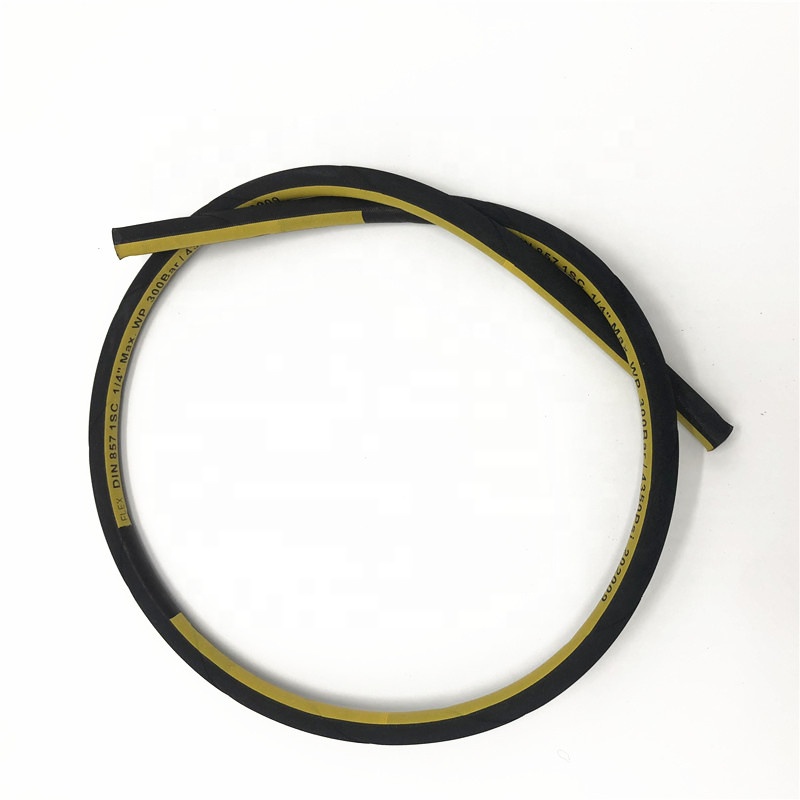
OEM 1/4 hydraulic hose represents a critical component within fluid power systems, facilitating the transmission of hydraulic fluid to actuators and other components. Positioned within the broader industrial supply chain, its performance directly impacts the efficiency, reliability, and safety of heavy machinery across diverse sectors including construction, agriculture, manufacturing, and automotive. This guide provides an in-depth technical overview of these hoses, encompassing material science, manufacturing processes, performance characteristics, potential failure modes, and relevant industry standards. Core performance metrics center around burst pressure, working pressure, temperature range, fluid compatibility, and abrasion resistance. The increasing demand for higher operating pressures and specialized fluid compatibility drives continuous innovation in hose construction and material selection. A primary industry pain point revolves around ensuring consistent dimensional accuracy and reliable performance under extreme conditions to prevent costly downtime and potential safety hazards. Further exacerbating this is the need for hoses to adhere to increasingly stringent environmental regulations regarding fluid containment and material composition.
Material Science & Manufacturing
The construction of a 1/4" hydraulic hose typically involves several layers, each contributing to its overall performance. The inner tube, crucial for fluid compatibility, is commonly composed of nitrile rubber (NBR), polyethylene (PE), or fluoropolymers (PTFE, FKM) depending on the conveyed fluid. NBR offers good resistance to petroleum-based fluids, while PTFE and FKM excel in harsh chemical environments. The reinforcement layer provides the hose’s strength and pressure resistance. Braiding, typically using high-tensile steel wire, is the most common reinforcement method. Spiral-wound reinforcement, utilizing multiple layers of spirally wrapped steel wire, is employed for higher pressure applications. Between the inner tube and reinforcement layer, a bonding layer ensures adhesion and prevents separation. Finally, the outer cover provides abrasion, weather, and oil resistance, commonly utilizing synthetic rubbers like chloroprene (CR) or ethylene propylene diene monomer (EPDM). Manufacturing begins with extrusion of the inner tube and outer cover. The reinforcement layer is then applied through braiding or winding machines. Precise tension control during braiding is critical for consistent pressure ratings. Following reinforcement, the layers are vulcanized – a process involving heat and pressure – to create a permanent bond. Post-vulcanization, hoses undergo rigorous quality control checks including burst pressure testing, impulse testing, and dimensional inspection. Key parameters monitored during manufacturing include rubber compound viscosity, braiding density, vulcanization temperature and time, and dimensional tolerances.
Performance & Engineering
The performance of a 1/4" hydraulic hose is dictated by several engineering principles. Burst pressure, the maximum pressure the hose can withstand before rupture, is a critical safety parameter. Working pressure, typically 50-75% of burst pressure, defines the safe operating limit. Hose flexibility is governed by the reinforcement structure and the elasticity of the rubber compounds. A tighter braid or spiral provides higher pressure capacity but reduces flexibility. Environmental resistance is paramount; hoses must withstand temperature fluctuations, UV exposure, ozone degradation, and exposure to oils, fuels, and chemicals. Force analysis involves calculating the hoop stress within the hose wall under pressure. Hoop stress is directly proportional to pressure and radius and inversely proportional to wall thickness. Finite Element Analysis (FEA) is often utilized to optimize hose design for specific applications, predicting stress distribution and identifying potential weak points. Compliance requirements, notably SAE J517 and EN 853, dictate minimum performance standards for burst pressure, temperature range, and fluid compatibility. Furthermore, impulse testing simulates cyclical pressure fluctuations, assessing the hose’s resistance to fatigue failure. Proper hose routing is essential; sharp bends and excessive twisting can significantly reduce hose lifespan.
Technical Specifications
| Parameter | Unit | Typical Value (NBR/Steel Wire Braid) | Typical Value (PTFE/Stainless Steel Spiral) |
|---|---|---|---|
| Inner Diameter | inch | 0.25 | 0.25 |
| Working Pressure | psi | 2000 | 4500 |
| Burst Pressure | psi | 8000 | 18000 |
| Temperature Range | °F | -40 to +212 | -65 to +500 |
| Reinforcement Type | - | Single Steel Wire Braid | Spiral Wound Stainless Steel |
| Outer Cover Material | - | Chloroprene (CR) | Fluoropolymer (FKM) |
Failure Mode & Maintenance
Hydraulic hose failures commonly stem from several factors. Fatigue cracking, induced by repeated pressure cycles and flexing, is a prevalent issue, particularly near fittings. Abrasion damage, caused by contact with abrasive surfaces, can compromise the outer cover and eventually lead to reinforcement exposure. Pinholing, small leaks in the inner tube, can result from corrosion or degradation of the rubber compound. Kinking, caused by excessive bending, restricts fluid flow and stresses the hose wall. Fitting failures, often due to improper installation or corrosion, can lead to catastrophic hose rupture. Oxidation of the rubber compounds, accelerated by high temperatures and exposure to oxygen, reduces flexibility and increases the risk of cracking. Maintenance involves regular visual inspections for abrasion, cracking, blistering, and leaks. Hose routing should be checked to ensure proper support and avoid sharp bends. Fittings should be inspected for corrosion and proper torque. Fluid compatibility should be verified to prevent chemical degradation of the inner tube. Scheduled replacement based on operating conditions and manufacturer recommendations is crucial. If any signs of damage are detected, the hose should be immediately replaced. Avoid using damaged hoses, even for temporary repairs, as this poses a significant safety risk.
Industry FAQ
Q: What is the impact of fluid velocity on hose lifespan?
A: Higher fluid velocity increases internal friction and pressure drop, generating heat and accelerating hose degradation. Excessive velocity can also induce vibration, contributing to fatigue failure. Proper hose sizing is essential to maintain optimal fluid velocity within the recommended range.
Q: How does temperature affect the performance of a hydraulic hose?
A: Temperature extremes can significantly impact hose performance. High temperatures accelerate rubber degradation, reducing flexibility and increasing the risk of cracking. Low temperatures can cause the rubber to become brittle, increasing susceptibility to damage. Operating outside the specified temperature range can compromise hose integrity.
Q: What are the key considerations for selecting a hose fitting?
A: Fittings must be compatible with the hose type and fluid being conveyed. Material compatibility is crucial to prevent corrosion. Fitting pressure ratings must exceed the hose’s working pressure. Proper installation, including correct torque and thread sealant, is essential to ensure a leak-free connection.
Q: What is the difference between braided and spiral wound reinforcement?
A: Braided reinforcement offers good flexibility and moderate pressure capacity. Spiral wound reinforcement provides significantly higher pressure capacity but reduced flexibility. The choice depends on the application's pressure requirements and routing constraints.
Q: How can I prevent hose twisting during installation?
A: Hose twisting creates stress concentrations and reduces hose lifespan. Using swivel fittings allows the hose to rotate freely, preventing twisting. Proper hose routing and support minimize bending and twisting forces. Avoid over-tightening fittings, which can induce twisting.
Conclusion
The selection and maintenance of OEM 1/4" hydraulic hoses are crucial for the reliable and safe operation of hydraulic systems. Understanding the interplay between material science, manufacturing processes, and performance characteristics allows for informed decision-making, maximizing hose lifespan and minimizing downtime. Proper consideration of fluid compatibility, operating temperature, and pressure requirements is paramount.
Continuous monitoring and adherence to industry best practices, including regular inspections and scheduled replacements, are essential for preventing catastrophic failures. Advancements in hose technology, such as the development of new rubber compounds and reinforcement materials, continue to enhance hose performance and durability, addressing the evolving needs of demanding industrial applications.