
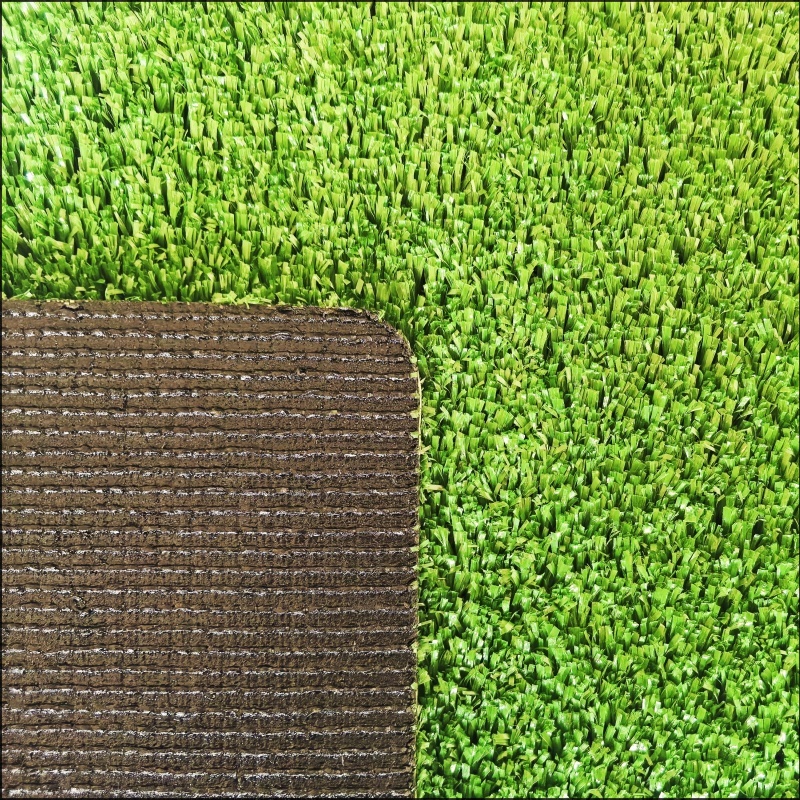
Modern sports grass artificial systems have evolved profoundly from their initial, rubber-dependent iterations. For decades, the industrial rubber sector played an indispensable role in developing robust outdoor infrastructure, manufacturing everything from high-pressure fluid transfer hoses to the shock-absorbing Styrene-Butadiene Rubber (SBR) crumb utilized extensively in recreational surfacing. Rubber’s inherent elasticity, kinetic absorption, and initial weather resistance made it a staple in high-impact environments. However, as environmental regulations tighten and the limits of material science expand, engineers are rigorously re-evaluating the long-term viability of traditional vulcanized rubber products in open-air applications. This critical analysis has paved the way for advanced, self-supporting thermoplastic elastomers that offer superior longevity and safety.
Assessing the Limits of Traditional Rubber in Open Environments
While industrial rubber hoses and heavy-duty EPDM components perform flawlessly in controlled industrial fluid dynamics or subterranean installations, deploying fragmented rubber in open environmental applications introduces complex challenges. In legacy synthetic surface installations, rubber granules were heavily utilized as a mandatory infill material to provide structural support to synthetic fibers and offer impact attenuation for athletes.
The primary vulnerability of traditional rubber in these applications is thermal-oxidative aging. Prolonged exposure to intense ultraviolet (UV) radiation and severe thermal cycling causes the chemical cross-links within the vulcanized rubber to break down. This results in the hardening, embrittlement, and eventual pulverization of the rubber particles. Furthermore, black rubber infills act as highly efficient thermal masses, absorbing solar radiation and drastically increasing surface temperatures—often exceeding ambient air temperatures by hazardous margins. Coupled with the environmental concerns of micro-rubber particles leaching into local soil and aquatic ecosystems, the industry recognized an urgent need for material substitution.
The Mechanics of Fluid Dynamics and Surface Drainage
An often-overlooked intersection between industrial rubber hose manufacturing and modern surface engineering is the critical management of fluid dynamics. Just as a premium reinforced hose must facilitate high-volume liquid transfer without structural failure or bottlenecking, outdoor surfacing materials must manage torrential rainfall and fluid dispersion seamlessly. Legacy rubber-filled systems notoriously suffer from compaction over time; the rubber granules compress into a dense, impermeable layer that severely restricts water permeability, leading to stagnant surface pooling and sub-base degradation.
In stark contrast, modern engineered surfacing systems utilize a highly permeable geotextile backing integrated with a stabilized polyurethane matrix. This advanced substrate configuration offers extraordinary fluid routing capabilities. By mirroring the efficiency of high-grade industrial fluid management, these advanced surfaces achieve water flow rates of up to 60L/min/m². This guarantees instant drainage, maintaining operational safety and preventing hydrostatic pressure from undermining the installation's foundation.
Thermoplastic Extrusion: The Infill-Free Engineering Revolution
The engineering response to rubber’s outdoor limitations has been a profound shift toward highly engineered polymer extrusion technologies. Instead of relying on a disparate, unstable layer of rubber granules for physical support, advanced manufacturers are utilizing high-density Polyethylene (PE) and Polypropylene (PP) formulations. These thermoplastics are extruded under precise thermal and pressure conditions to create complex monofilament structures with exceptional structural memory and kinetic resilience.
By engineering the molecular architecture of the yarn itself—creating micro-ribbed or diamond-shaped cross-sections—these advanced fibers can withstand heavy compressive loads and remain upright without requiring any granular rubber infill. This "infill-free" technology represents a massive leap in surface engineering. It completely eliminates the risk of airborne rubber dust, halts microplastic migration through water runoff, and significantly reduces the thermal retention of the surface, thereby creating a safer, cooler, and more stable environment for high-intensity physical applications.
Lifecycle Economics and Sourcing Premium Materials
As the global transition away from traditional SBR rubber infills accelerates, the procurement strategies for large-scale athletic and landscaping projects are adapting accordingly. Facility managers and urban planners are now prioritizing integrated manufacturing processes where polymer extrusion, high-density tufting, and backing application are rigorously controlled under strict, unified quality parameters.
Whether a contractor is sourcing heavy-duty industrial components or seeking premium Carpet Grass china for sale, focusing on long-term lifecycle costs rather than initial material acquisition is crucial. High-quality providers and advanced material suppliers offer products that eliminate the heavy ongoing maintenance associated with rubber top-ups and compaction mitigation. Ultimately, the evolution from rubber-heavy dependencies to advanced, self-supporting thermoplastic composites highlights a broader industrial mandate: the relentless pursuit of materials that are ecologically safer, structurally superior, and economically sustainable over the long term.