
Apr . 01, 2024 17:55 Back to list
china wrapped surface hydraulic hose suppliers Performance Analysis
Introduction
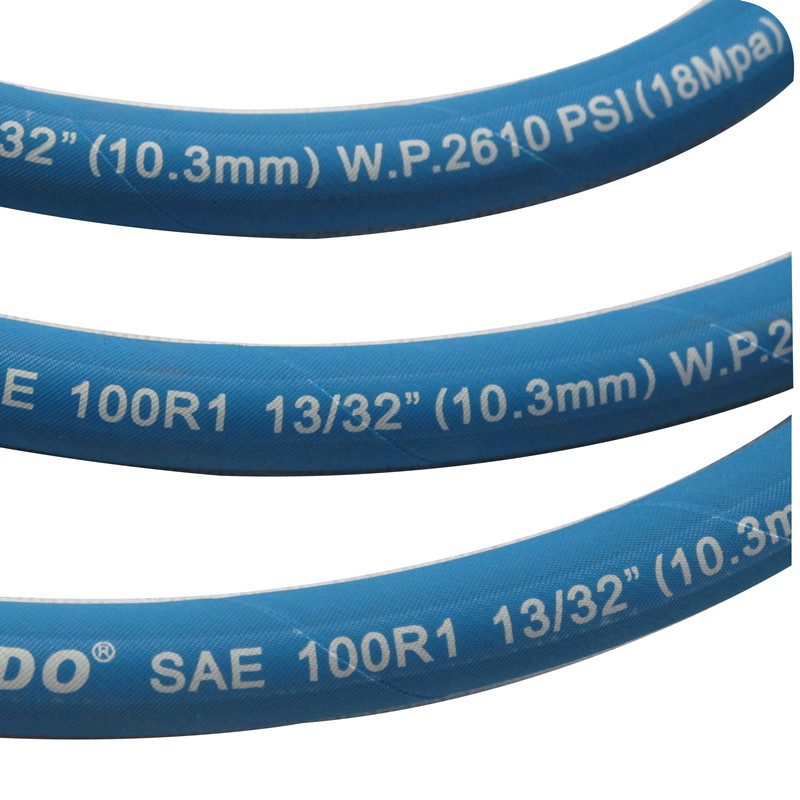
Wrapped surface hydraulic hoses, manufactured extensively by suppliers in China, are critical components in hydraulic systems across a broad spectrum of industries, including construction, agriculture, mining, and manufacturing. These hoses are designed to transmit hydraulic fluid under significant pressure, facilitating the operation of hydraulic machinery. The ‘wrapped surface’ designation refers to the reinforcement layer construction, typically employing multiple high-tensile strength textile or steel wire braids or spirals, encased within an outer protective cover. Their technical position in the supply chain lies between raw material producers (rubber, steel, textiles) and the OEM manufacturers of hydraulic equipment, as well as the aftermarket replacement parts sector. Core performance characteristics include pressure rating, burst pressure, temperature resistance, fluid compatibility, and flexibility. A key pain point in the industry is consistently achieving high quality and dimensional accuracy in the reinforcement layer, directly impacting hose lifespan and safety. Another significant challenge lies in ensuring consistent chemical compatibility with diverse hydraulic fluids, particularly in evolving formulations aiming for environmental sustainability.
Material Science & Manufacturing
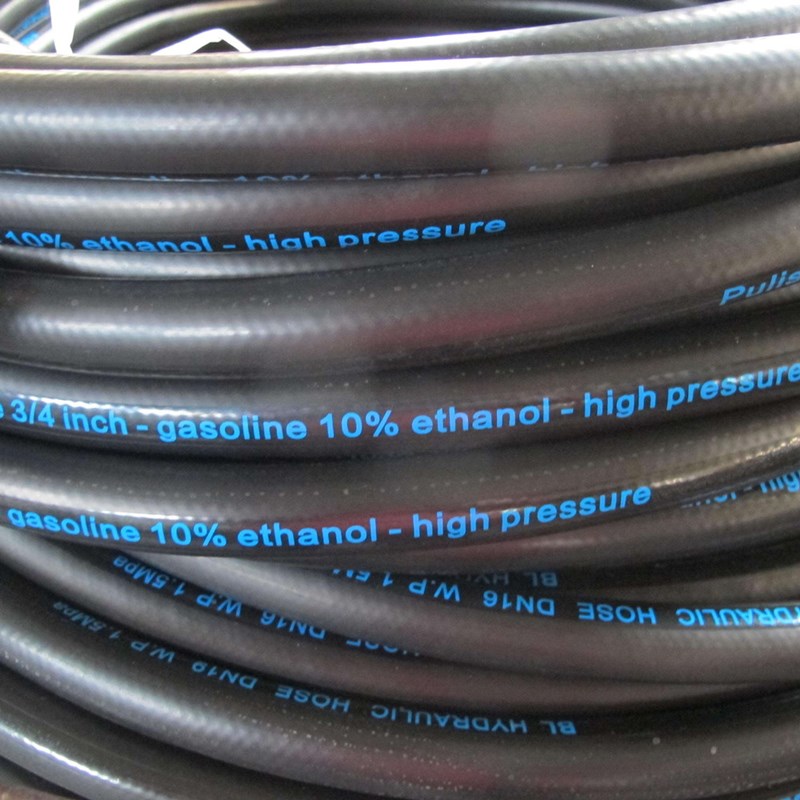
The core material for hydraulic hose construction is typically a synthetic rubber compound, most commonly based on nitrile rubber (NBR) for its excellent oil resistance. Other materials like chloroprene rubber (CR) are used for increased heat and weathering resistance, while fluoroelastomers (FKM/Viton) are employed for specialized applications requiring compatibility with aggressive fluids at elevated temperatures. The reinforcement layer, defining the pressure-bearing capacity, is crucial. Textiles (polyester, nylon) are used for lower pressure applications, offering flexibility and cost-effectiveness. High-pressure hoses utilize steel wire, either braided or spiraled. Braided hoses provide flexibility in multiple planes, while spiraled hoses offer higher strength-to-weight ratios. The outer cover, protecting against abrasion, weathering, and oil attack, commonly utilizes a polyurethane (PU) or rubber compound. Manufacturing involves several stages: inner tube extrusion, reinforcement layer winding/braiding, intermediate layer application (for adhesion), outer cover extrusion, and final curing. Key parameter control points include rubber compound formulation (polymer content, filler loading, plasticizer type), reinforcement layer tension and coverage, and curing time/temperature. Precise control of these parameters is essential to achieve consistent mechanical properties and prevent defects like voids or delamination. The mixing of rubber compounds requires precise control of shear rates and temperature to ensure homogenous dispersion of additives. The braiding process necessitates accurate fiber tension and winding angles to maximize burst strength.
Performance & Engineering
Hydraulic hose performance is fundamentally governed by its ability to withstand internal pressure without failure. Force analysis involves calculating hoop stress within the inner tube and the tensile stress within the reinforcement layer. Burst pressure is typically four times the working pressure, providing a safety factor. Fatigue life, critical for dynamic applications, is determined by repeated pressure cycling, inducing stress concentration at fitting interfaces and within the reinforcement. Environmental resistance is paramount. Exposure to ozone, UV radiation, and extreme temperatures can degrade the rubber compounds, reducing flexibility and causing cracking. Hydraulic fluids themselves can cause swelling or softening of the rubber, compromising its integrity. Compliance requirements vary by region and application. SAE J517 (USA), EN 853 & EN 857 (Europe), and GB/T 3686 (China) specify performance criteria for hydraulic hoses, including pressure rating, temperature range, and fluid compatibility. Furthermore, the hose must meet dimensional tolerances to ensure proper fitting sealing. Functional implementation requires careful consideration of hose bend radius to avoid kinking and damage to the reinforcement layer. Hose assembly quality, including proper fitting crimping, is critical for preventing leakage and failure. Finite element analysis (FEA) is increasingly used to optimize hose designs and predict performance under various loading conditions.
Technical Specifications
| Parameter | Unit | SAE J517 R1AT | EN 853 1SN |
|---|---|---|---|
| Working Pressure | MPa | 20.7 | 16 |
| Burst Pressure | MPa | 82.7 | 64 |
| Temperature Range | °C | -40 to +100 | -40 to +100 |
| Reinforcement Type | - | 1 AT (Single Textile Braid) | 1 SN (Single Steel Wire Braid) |
| Inner Tube Material | - | NBR | NBR |
| Outer Cover Material | - | Polyurethane | Polyurethane |
Failure Mode & Maintenance
Common failure modes for wrapped surface hydraulic hoses include burst failure due to exceeding pressure limits, fatigue cracking resulting from repeated pressure cycles and vibration, abrasion damage to the outer cover, and chemical degradation of the rubber compounds. Burst failures typically originate at weak points in the reinforcement layer or at fitting interfaces. Fatigue cracking often initiates at stress concentrators, such as kinks or abrasions. Chemical degradation manifests as swelling, softening, or cracking of the rubber, leading to loss of flexibility and sealing capability. Oxidation can also cause rubber to become brittle and crack over time. Failure analysis often involves microscopic examination of the fractured surfaces to determine the root cause. Maintenance best practices include regular visual inspections for abrasion, cracking, and leaks. Hose assemblies should be replaced if any damage is detected. Proper hose routing, avoiding sharp bends and contact with hot surfaces, is essential. Regularly checking fitting tightness is also crucial. Fluid contamination can accelerate hose degradation; therefore, maintaining clean hydraulic fluid is vital. Storage conditions should be cool, dry, and away from direct sunlight and ozone sources. Hoses should be periodically pressure tested to verify their integrity, particularly in critical applications. Avoid twisting the hose during installation and operation.
Industry FAQ
Q: What is the significance of the ‘dash size’ in hydraulic hose nomenclature?
A: The ‘dash size’ (e.g., -6, -8, -10) refers to the inner diameter of the hose in sixteenths of an inch. So, a -8 hose has an inner diameter of 8/16 or 0.5 inches. This is a standardized system for specifying hose size and ensuring compatibility with fittings.
Q: How do I determine the correct working pressure for my application?
A: The working pressure should be determined by the maximum system pressure, including any pressure spikes or surges. It is always best to select a hose with a working pressure significantly higher than the maximum system pressure, providing a safety margin. Consider the temperature as well, as working pressure typically decreases with increasing temperature.
Q: What are the advantages and disadvantages of steel wire braided hoses versus textile reinforced hoses?
A: Steel wire braided hoses offer higher pressure ratings and superior burst strength compared to textile reinforced hoses. However, they are less flexible and more expensive. Textile reinforced hoses are more flexible and cost-effective but are limited to lower pressure applications.
Q: What is the role of the intermediate layer in hydraulic hose construction?
A: The intermediate layer, often a rubber compound, acts as a bonding layer between the reinforcement layer and the inner tube, ensuring adhesion and preventing separation. This is critical for maintaining hose integrity under pressure.
Q: How does fluid compatibility affect hose selection?
A: Incompatible fluids can cause the rubber compounds to swell, soften, or degrade, leading to leaks and failure. Always verify that the hose material is compatible with the specific hydraulic fluid being used. Refer to chemical compatibility charts provided by hose manufacturers.
Conclusion
China wrapped surface hydraulic hoses represent a vital component in numerous industrial applications, demanding a robust understanding of material science, manufacturing processes, and performance characteristics. Selecting the appropriate hose requires careful consideration of working pressure, temperature range, fluid compatibility, and environmental conditions. Adherence to international standards like SAE J517 and EN 853 is crucial for ensuring safety and reliability. The continuous development of new rubber compounds and reinforcement technologies aims to enhance hose performance and longevity, while addressing emerging challenges related to sustainability and fluid compatibility.
Maintaining a proactive approach to hose inspection and maintenance, alongside the implementation of best practices for fluid cleanliness and system operation, is paramount for preventing premature failures and maximizing operational efficiency. The future of hydraulic hose technology is likely to focus on developing lighter-weight, higher-strength materials, incorporating smart sensing capabilities for real-time performance monitoring, and further optimizing hose designs through advanced simulation and analysis techniques. Effective collaboration between hose manufacturers, equipment OEMs, and end-users is essential for driving innovation and ensuring the continued reliability of hydraulic systems.