
Apr . 01, 2024 17:55 Back to list
china wrapped surface hydraulic hose supplier Performance Analysis
Introduction
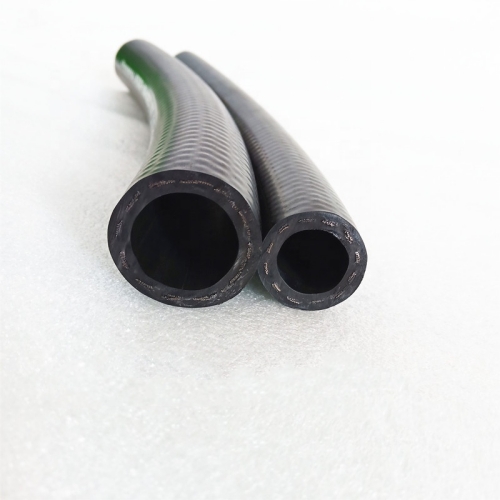
Wrapped surface hydraulic hoses are critical components in fluid power systems, transmitting hydraulic fluid to actuate machinery across diverse industrial applications. Manufactured extensively in China, these hoses represent a significant portion of the global supply chain, offering cost-effective solutions without compromising performance. This technical guide focuses on the engineering, material science, performance characteristics, and maintenance requirements of china wrapped surface hydraulic hoses. These hoses are distinct due to their construction, employing multiple layers of high-tensile braided reinforcement, covered by a robust, abrasion-resistant outer wrap. The core functionality relies on the ability to withstand high pressures, resist fluid contamination, and maintain flexibility under varying operational conditions. A key industry pain point is ensuring consistent quality and adherence to international safety standards, particularly regarding burst pressure and fatigue life. Understanding the nuances of material selection, manufacturing processes, and potential failure modes is paramount for procurement managers and engineers alike.
Material Science & Manufacturing
The core construction of a wrapped surface hydraulic hose begins with an inner tube, typically composed of nitrile rubber (NBR), ethylene propylene diene monomer (EPDM), or fluorocarbon rubber (FKM/Viton), chosen based on fluid compatibility and temperature requirements. NBR provides excellent resistance to petroleum-based fluids, EPDM excels in phosphate ester hydraulic fluids and weathering resistance, and FKM offers superior resistance to high temperatures and aggressive chemicals. Reinforcement layers generally consist of high-tensile steel wire, spirally wrapped to impart pressure resistance. The number of layers and wire diameter dictate the hose's working and burst pressures. Between the reinforcement and the outer cover lies a bias-cut fabric layer, providing dimensional stability and preventing wire protrusion. The outer cover is commonly constructed from synthetic rubbers like polyurethane or a blend of PVC and nitrile, engineered for abrasion resistance, ozone resistance, and UV protection.
Manufacturing processes include extrusion of the inner tube, spiral winding of the reinforcement wires, application of the bias-cut fabric, and finally, extrusion of the outer cover. Critical parameters during manufacturing include precise control of rubber compound mixing ratios, consistent wire tension during winding, and uniform extrusion temperatures and pressures. Post-production testing includes hydrostatic pressure testing to verify burst pressure, impulse testing to assess fatigue life, and dimensional checks to ensure compliance with specifications. Quality control is also focused on the adhesion between layers – delamination is a major failure mode. Proper curing of the rubber compounds is essential for achieving optimal physical properties such as tensile strength, elongation at break, and hardness. Inconsistent curing can lead to premature aging and reduced performance. Specialized equipment like hydraulic hose braiding machines and extrusion lines are used, requiring skilled operators to maintain precision and minimize defects.
Performance & Engineering
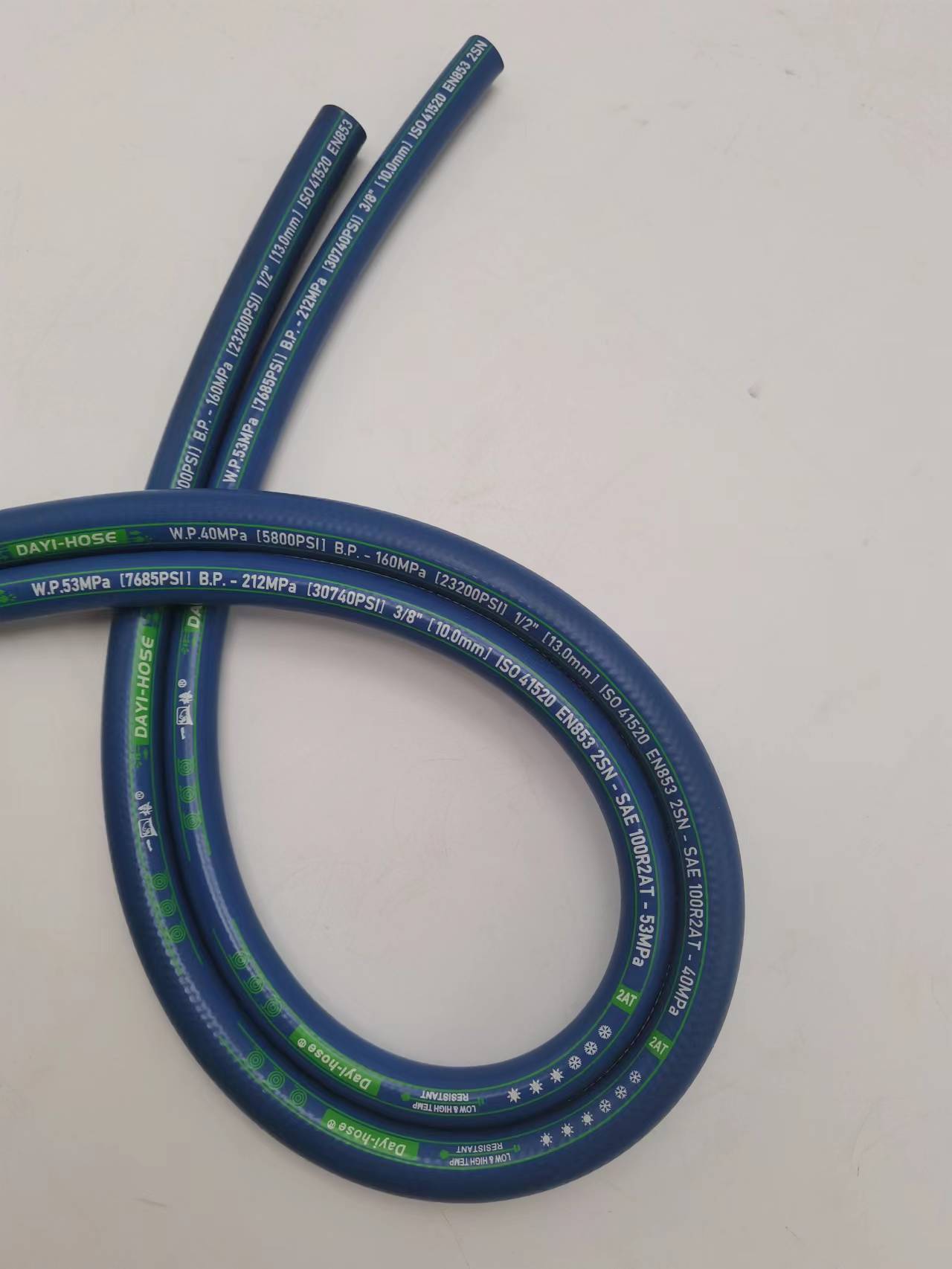
The performance of wrapped surface hydraulic hoses is fundamentally governed by their ability to withstand internal pressure without failure and to maintain flexibility during bending and operation. Force analysis focuses on hoop stress within the hose wall, determined by the internal pressure and hose diameter. Higher pressures necessitate thicker walls and/or more reinforcement layers. Fatigue life is a critical parameter, particularly in applications involving repetitive bending and pressure cycling. Impulse testing, simulating these real-world conditions, assesses the hose's resistance to fatigue cracking. Environmental resistance is also paramount. Exposure to extreme temperatures, ozone, UV radiation, and hydraulic fluids can degrade the rubber compounds, reducing their elasticity and strength.
Engineering considerations extend to fitting compatibility and installation practices. Improperly installed fittings can create stress concentrations, leading to premature failure. Hose assemblies must be designed with adequate bend radii to avoid kinking and excessive stress on the reinforcement layers. Compliance requirements are dictated by industry standards (detailed in the footer), specifying minimum burst pressure, impulse cycle life, and material composition. Proper selection of hose material based on fluid compatibility is essential to prevent swelling, degradation, or contamination of the hydraulic system. Detailed calculations are often performed to determine the appropriate hose size and reinforcement level for specific operating conditions, considering flow rate, pressure drop, and temperature variations. The safety factor is a crucial consideration in the design process, ensuring the hose can withstand transient pressure spikes and unexpected loads.
Technical Specifications
| Parameter | Unit | Standard Specification (SAE 100R4 Type) | Typical Chinese Manufacturer Range |
|---|---|---|---|
| Working Pressure | MPa | 31.5 | 20 – 35 |
| Burst Pressure | MPa | 105 | 80 – 120 |
| Temperature Range | °C | -40 to +100 | -40 to +120 |
| Inner Tube Material | - | NBR | NBR, EPDM |
| Reinforcement | - | 4SP (Spiral Wire) | 2SP, 4SP, 6SP |
| Outer Cover Material | - | Synthetic Rubber | Polyurethane, Synthetic Rubber |
Failure Mode & Maintenance
Common failure modes in wrapped surface hydraulic hoses include burst failure due to exceeding the working pressure, fatigue cracking resulting from repeated bending and pressure cycling, abrasion of the outer cover, and leakage caused by pinholes or cracks in the inner tube. Delamination between layers can occur due to poor adhesion during manufacturing or prolonged exposure to extreme conditions. Corrosion of the steel wire reinforcement can occur in systems containing water or corrosive fluids. Oxidation of the rubber compounds can lead to hardening and cracking, particularly at elevated temperatures.
Maintenance practices should include regular visual inspections for signs of abrasion, cracking, or swelling. Hose assemblies should be replaced if any damage is detected. Proper routing and support are essential to prevent kinking and excessive stress. Flush the hydraulic system regularly to remove contaminants that can accelerate wear. Use compatible fittings and ensure they are properly tightened. Avoid exceeding the working pressure or temperature limits specified by the manufacturer. Periodic pressure testing can identify potential weaknesses before catastrophic failure occurs. Storage of hoses should be in a cool, dry place away from direct sunlight and ozone sources. Correct installation, with adequate bend radius and avoiding twisting, significantly extends hose life.
Industry FAQ
Q: What is the significance of the 'SP' designation in hose reinforcement (e.g., 4SP)?
A: The 'SP' designation refers to 'Spiral Ply,' indicating the number of spiral layers of high-tensile wire reinforcement within the hose. A higher number (e.g., 6SP vs. 4SP) signifies a greater number of reinforcement layers, resulting in a higher working pressure and burst pressure capability. This is crucial for applications requiring robust pressure handling.
Q: How does the choice of inner tube material impact hose performance and compatibility?
A: The inner tube material dictates the hose’s compatibility with various hydraulic fluids. NBR is ideal for petroleum-based fluids, EPDM for phosphate ester fluids, and FKM/Viton for high-temperature and aggressive chemicals. Using an incompatible material can lead to swelling, degradation, and ultimately, hose failure.
Q: What are the key differences between polyurethane and synthetic rubber outer covers?
A: Polyurethane offers superior abrasion resistance and cut resistance, making it suitable for harsh environments. Synthetic rubber (typically a nitrile blend) provides good overall durability and flexibility, often at a lower cost. The choice depends on the specific application and potential exposure to abrasive surfaces.
Q: What role does impulse testing play in evaluating hose quality?
A: Impulse testing simulates the effects of pressure pulsations and cyclical bending, mimicking real-world operating conditions. It assesses the hose's resistance to fatigue cracking and delamination, providing a critical measure of its long-term durability and reliability.
Q: What are the implications of choosing a Chinese manufacturer versus a Western manufacturer for hydraulic hoses?
A: Chinese manufacturers often offer more competitive pricing. However, it is crucial to verify adherence to international quality standards (SAE, EN, DIN) and perform thorough due diligence to ensure consistent product quality and traceability. Reputable Chinese manufacturers are capable of producing hoses meeting or exceeding Western standards.
Conclusion
China wrapped surface hydraulic hoses provide a critical link in a wide range of industrial applications, demanding careful consideration of material properties, manufacturing processes, and performance characteristics. Understanding the interplay between inner tube compatibility, reinforcement layer construction, and outer cover durability is essential for selecting the appropriate hose for a given operating environment. A proactive approach to maintenance and adherence to industry standards are key to maximizing hose lifespan and preventing catastrophic failures.
Looking ahead, advancements in material science and manufacturing techniques will continue to enhance the performance and reliability of these hoses. The growing emphasis on sustainability may drive the development of eco-friendly rubber compounds and biodegradable materials. Continued investment in quality control and rigorous testing will be vital to maintaining the integrity of the global supply chain and ensuring the safe and efficient operation of hydraulic systems worldwide.