
Apr . 01, 2024 17:55 Back to list
china wrapped surface hydraulic hose manufacturers Performance Analysis
Introduction
Wrapped surface hydraulic hoses represent a critical component in fluid power systems across diverse industries, including construction, agriculture, mining, and manufacturing. These hoses, particularly those manufactured in China, have become increasingly prominent due to cost-effectiveness and growing technical capabilities. This technical guide provides a comprehensive overview of these hoses, delving into their material science, manufacturing processes, performance characteristics, potential failure modes, and relevant industry standards. The core performance of a wrapped surface hydraulic hose is determined by its ability to withstand high pressures, resist abrasion and chemical attack, and maintain flexibility over extended periods. The market landscape is often driven by the need for hoses capable of operating in demanding environments, necessitating robust construction and adherence to stringent quality control measures. A significant pain point for procurement managers is ensuring consistent quality and traceability of materials, especially given the complexities of global supply chains. Understanding the intricacies of the wrapping process, reinforcement materials, and rubber compounds is essential for selecting the appropriate hose for specific applications.
Material Science & Manufacturing
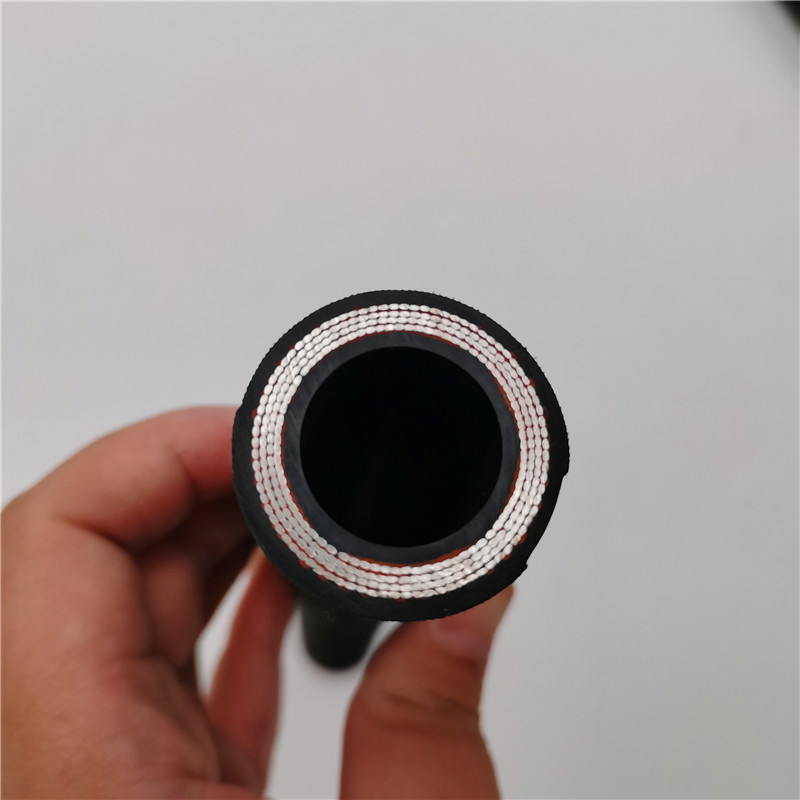
The construction of a wrapped surface hydraulic hose typically involves several layers, each contributing to its overall performance. The innermost layer, the tube, is commonly composed of synthetic rubber compounds like nitrile (NBR), ethylene propylene diene monomer (EPDM), or fluorocarbon (FKM), chosen for their resistance to hydraulic fluids and operating temperatures. NBR offers good abrasion resistance and is suitable for petroleum-based fluids. EPDM provides excellent resistance to heat, ozone, and weathering, making it ideal for outdoor applications. FKM (Viton) exhibits superior resistance to high temperatures and aggressive chemicals but is significantly more expensive. The reinforcement layer is crucial for pressure resistance and is often constructed of multiple high-tensile steel wire spirals or braids. The number of layers and wire diameter directly impact the hose’s working pressure capacity. The ‘wrapped surface’ refers to an external layer of textile braiding (typically polyester or nylon) or spiraling, providing abrasion resistance and protection against external damage. The cover layer, often utilizing similar rubber compounds as the tube, shields the reinforcement from corrosion and environmental degradation. Manufacturing involves extrusion of the inner tube, wrapping of the reinforcement layers (either spirally or braided), and then extrusion of the outer cover. Key parameters in manufacturing include precise control of rubber compound mixing ratios, wire tension during winding, and vulcanization temperature and duration. Improper vulcanization can lead to under-cured rubber with reduced strength or over-cured rubber with brittleness. Quality control at each stage is paramount to ensure dimensional accuracy, consistent material properties, and absence of defects like voids or inclusions.
Performance & Engineering
The performance of wrapped surface hydraulic hoses is dictated by several engineering principles. Burst pressure, working pressure, and safety factor are primary considerations. Burst pressure is the pressure at which the hose fails catastrophically, while working pressure is the maximum pressure for continuous operation. A safety factor (typically 4:1) is applied to the burst pressure to determine the working pressure. Hose flexibility is crucial for ease of routing and installation, particularly in confined spaces. This is influenced by the hose diameter, reinforcement layer construction, and cover material. Environmental resistance, including resistance to ozone, UV radiation, and chemical exposure, is critical for long-term reliability. Fatigue resistance is another important parameter, as hydraulic hoses are subjected to cyclical pressure fluctuations. Finite element analysis (FEA) is often employed during the design phase to optimize hose geometry and reinforcement configuration for maximum performance and durability. Compliance requirements vary by region and industry. For example, SAE J517 (US) and EN 853 (Europe) specify performance requirements for hydraulic hoses. Force analysis determines the tensile strength needed to withstand external loads and prevent kinking. The hose must be able to maintain its integrity under bending and twisting stresses. Proper fitting selection is essential to ensure a secure and leak-free connection and to distribute stress evenly across the hose end.
Technical Specifications
| Parameter | Unit | Typical Value (China Manufactured - SAE 100R2 Equivalent) | Typical Value (China Manufactured - SAE 100R1AT Equivalent) |
|---|---|---|---|
| Working Pressure | MPa | 10 | 20.7 |
| Burst Pressure | MPa | 30 | 62.0 |
| Temperature Range | °C | -40 to +100 | -40 to +121 |
| Inner Tube Material | - | NBR | NBR |
| Reinforcement | - | Single Steel Wire Braid | Double Steel Wire Braid |
| Cover Material | - | Synthetic Rubber (abrasion resistant) | Synthetic Rubber (abrasion & oil resistant) |
Failure Mode & Maintenance
Wrapped surface hydraulic hoses are susceptible to several failure modes. Fatigue cracking, particularly at the crimp connections, is a common issue caused by cyclical pressure fluctuations and vibration. Abrasion damage to the cover layer can expose the reinforcement, leading to corrosion and eventual failure. Kinking, resulting from excessive bending, can restrict fluid flow and damage the internal structure. Internal corrosion or degradation of the tube material can occur due to incompatible hydraulic fluids or contamination. Delamination of the reinforcement layers can reduce pressure resistance. Oxidation of the rubber compounds, especially at elevated temperatures, leads to loss of elasticity and cracking. Maintenance practices are crucial for extending hose life. Regular visual inspections for abrasion, cracking, and leakage are essential. Proper routing and support to prevent kinking and abrasion are important. Using compatible hydraulic fluids and maintaining fluid cleanliness prevent internal degradation. Crimping procedures should be performed by trained personnel using calibrated equipment to ensure secure and reliable connections. Hoses should be replaced at recommended intervals or if any signs of damage are detected. Proper storage conditions, away from direct sunlight and extreme temperatures, can also prolong hose life. A proactive leak detection program and adherence to manufacturer’s recommendations are fundamental to preventing catastrophic failures and ensuring system safety.
Industry FAQ
Q: What is the significance of the steel wire spiral versus braided reinforcement in terms of pressure handling?
A: Steel wire spiral reinforcement generally offers higher pressure handling capabilities compared to braided reinforcement for a given hose diameter. The spiral construction distributes stress more evenly around the circumference of the hose, providing greater resistance to burst. Braided reinforcement, while more flexible, has a lower resistance to axial deformation under pressure.
Q: How do different rubber compounds impact chemical compatibility and service life?
A: The choice of rubber compound directly affects the hose’s resistance to specific hydraulic fluids and chemicals. NBR is suitable for petroleum-based fluids, while EPDM is preferred for phosphate ester fluids and offers better resistance to weathering. FKM provides the highest chemical resistance but at a higher cost. Incompatible fluids can cause swelling, cracking, and premature failure of the tube.
Q: What are the key quality control measures implemented by reputable China-based hydraulic hose manufacturers?
A: Reputable manufacturers employ rigorous quality control measures throughout the production process, including raw material inspection, dimensional accuracy checks, pressure testing (to 1.5 times working pressure), impulse testing, and visual inspection for defects. They should also have ISO 9001 certification and provide material traceability documentation.
Q: What are the implications of exceeding the rated working pressure of a hydraulic hose?
A: Exceeding the rated working pressure significantly reduces the hose’s service life and increases the risk of catastrophic failure. This can lead to sudden release of high-pressure fluid, causing injury to personnel and damage to equipment. It also compromises the hose’s structural integrity, potentially resulting in leaks and reduced system efficiency.
Q: How does temperature affect the performance and lifespan of a hydraulic hose?
A: Elevated temperatures accelerate the degradation of rubber compounds, leading to reduced flexibility, cracking, and decreased pressure resistance. Low temperatures can make the hose brittle and more susceptible to cracking under stress. It’s crucial to select a hose with a temperature rating appropriate for the operating environment and avoid exceeding those limits.
Conclusion
Wrapped surface hydraulic hoses from Chinese manufacturers offer a compelling combination of performance, cost-effectiveness, and availability. However, understanding the nuances of their material science, manufacturing processes, and potential failure modes is essential for selecting the optimal hose for specific applications. A thorough evaluation of technical specifications, adherence to relevant industry standards, and implementation of proactive maintenance practices are critical for ensuring long-term reliability and safety.
The continued development of advanced rubber compounds and reinforcement materials will likely lead to even higher-performance hydraulic hoses in the future. Furthermore, increased emphasis on quality control and traceability within the Chinese manufacturing sector will further enhance the reputation and reliability of these products. Ultimately, informed procurement decisions, coupled with diligent maintenance, will maximize the return on investment and minimize the risk of costly downtime.