
Apr . 01, 2024 17:55 Back to list
china wrapped surface hydraulic hose factory Performance Analysis
Introduction
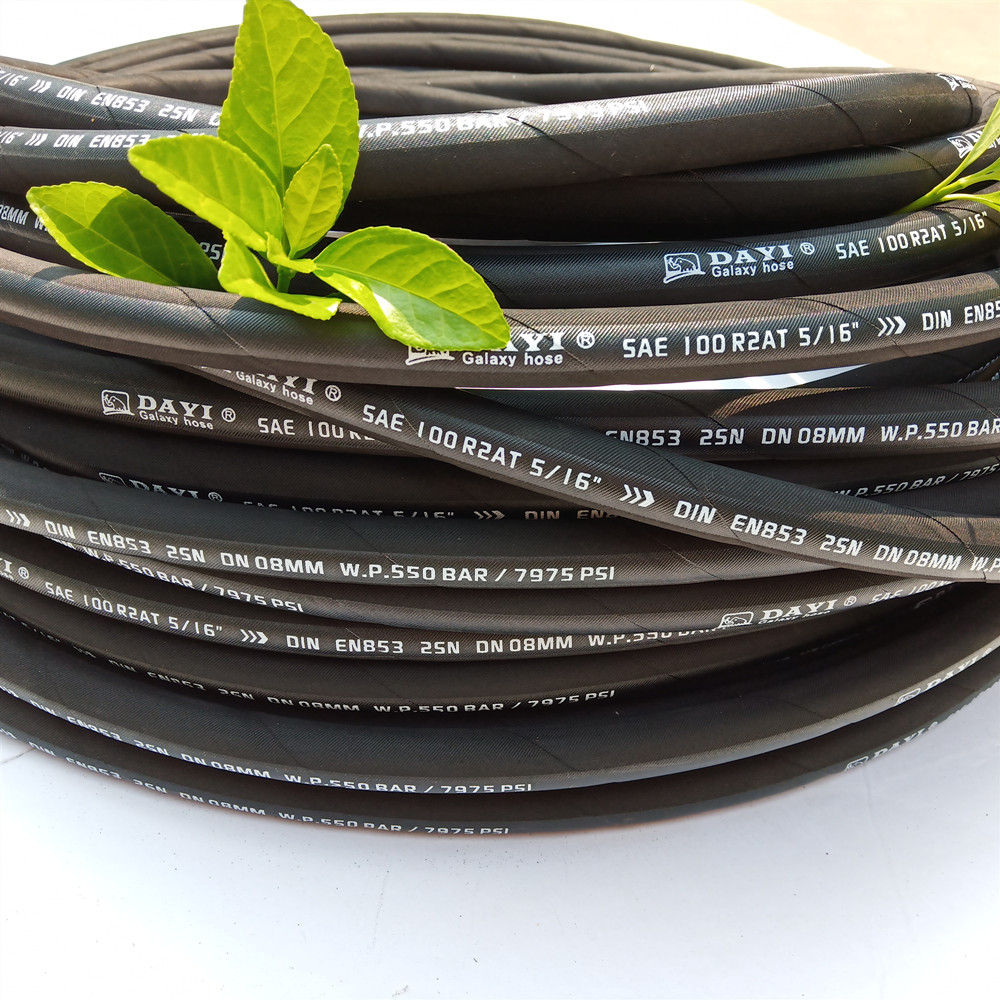
Wrapped surface hydraulic hoses represent a critical component in fluid power systems across diverse industrial applications, including construction, agriculture, mining, and manufacturing. Produced extensively in China, these hoses facilitate the transmission of hydraulic fluid under substantial pressure, enabling the operation of hydraulic machinery. Their design typically incorporates a synthetic rubber inner tube, multiple layers of high-tensile strength reinforcement (often steel wire or spiral steel), and an abrasion-resistant outer cover. The “wrapped surface” designation refers to the external protective layer applied over the reinforcement, providing increased resistance to external damage and environmental factors. Core performance characteristics include pressure rating, temperature range, fluid compatibility, and resistance to kinking and abrasion. The industry is currently grappling with increasing demands for higher pressure capabilities, improved chemical resistance to modern hydraulic fluids (including bio-based options), and enhanced durability to extend service life and reduce downtime – critical pain points for end-users. These factors are driving innovation in materials science and manufacturing processes.
Material Science & Manufacturing
The core material for the inner tube is typically a synthetic rubber compound, often based on nitrile rubber (NBR) or ethylene propylene diene monomer (EPDM) rubber, chosen for their resistance to petroleum-based hydraulic fluids and their flexibility. NBR offers good abrasion resistance and oil resistance, while EPDM provides superior resistance to heat, ozone, and weathering. The reinforcement layers, vital for withstanding high pressure, are predominantly constructed from high-tensile steel wire, spirally wound or braided. The wire gauge and construction method directly influence the hose's burst pressure and flexibility. The outer cover is generally composed of chloroprene rubber (CR) – also known as Neoprene – selected for its excellent resistance to abrasion, ozone, weathering, and oil. Manufacturing begins with the extrusion of the inner tube. Subsequent layers of reinforcement are then applied, with precise tension control being paramount to ensure uniform stress distribution and prevent premature failure. The wrapping process utilizes textile or polymer materials to provide a smooth surface and protect the reinforcement. Key process parameters requiring stringent control include extrusion temperature, reinforcement layer winding tension, wrapping material application rate, and vulcanization time and temperature. Vulcanization, a chemical process involving sulfur, is crucial for crosslinking the rubber molecules, enhancing its strength, elasticity, and resistance to degradation. Inconsistent vulcanization leads to diminished mechanical properties and reduced service life. Post-production testing includes hydrostatic pressure testing to verify burst pressure, impulse testing to assess fatigue resistance, and dimensional checks to ensure compliance with specifications.
Performance & Engineering
The performance of wrapped surface hydraulic hoses is fundamentally dictated by their ability to withstand internal pressure without failure. Force analysis involves calculating hoop stress within the hose wall, considering the internal pressure and the reinforcement layer’s strength. Burst pressure, typically expressed in PSI or MPa, represents the maximum pressure the hose can withstand before rupture. Furthermore, hydraulic hoses are subjected to cyclical pressure fluctuations – impulse pressures – which can lead to fatigue failure over time. Impulse testing, conducted according to standards like ISO 6807, assesses the hose's resistance to these cyclical loads. Environmental resistance is another crucial performance parameter. Exposure to extreme temperatures, UV radiation, and corrosive chemicals can degrade the rubber compounds and compromise the hose’s integrity. Compliance requirements vary depending on the application and geographical region. For example, hoses used in automotive applications must meet stringent safety standards, such as those set by SAE International. In the oil and gas industry, compliance with API standards is mandatory. Functional implementation necessitates careful consideration of hose routing, bend radius, and fitting compatibility. Excessive bending can induce stress concentrations and reduce hose life. Improperly fitted connections can lead to leakage and system failure. Proper hose selection involves matching the hose’s pressure rating, temperature range, and fluid compatibility to the specific application requirements. Consideration must be given to potential exposure to abrasion and impact damage and selection of appropriate outer cover materials.
Technical Specifications
| Parameter | Unit | Standard Specification | Typical Range (China Manufactured) |
|---|---|---|---|
| Working Pressure | MPa | SAE J517 / ISO 6807 | 16 – 70 |
| Burst Pressure | MPa | SAE J517 / ISO 6807 | 48 – 210 |
| Temperature Range | °C | ISO 6807 | -40 to +100 |
| Inner Tube Material | - | ISO 6807 | NBR, EPDM |
| Reinforcement Material | - | SAE J517 | Steel Wire (Spiral/Braided) |
| Outer Cover Material | - | ISO 6807 | CR (Chloroprene) |
Failure Mode & Maintenance
Common failure modes in wrapped surface hydraulic hoses include burst failure due to exceeding the pressure rating, fatigue cracking resulting from cyclical pressure loads, abrasion damage caused by external contact with abrasive surfaces, kinking leading to localized stress concentrations, and degradation of the rubber compounds due to exposure to heat, ozone, or chemicals. Failure analysis frequently reveals that burst failures originate at defects within the reinforcement layers or at the hose ends where stress concentrations are highest. Fatigue cracking typically initiates at the inner surface of the hose, propagating outwards over time. Abrasion damage is often evident as localized wear on the outer cover, exposing the reinforcement layers to corrosion. Kinking is more prevalent in hoses with limited bend radius capabilities. Rubber degradation manifests as cracking, hardening, and loss of elasticity. Preventive maintenance is critical for extending hose life. Regular visual inspections should be conducted to identify signs of wear, damage, or degradation. Hoses should be replaced if any defects are observed. Proper hose routing and support are essential to prevent kinking and abrasion. Fluid contamination can accelerate hose degradation, so maintaining clean hydraulic fluid is vital. Furthermore, correct fitting installation and torque specifications must be adhered to prevent leaks and premature failure. Implementing a scheduled hose replacement program, based on application severity and operating conditions, is a proactive approach to minimize downtime and ensure safe operation.
Industry FAQ
Q: What is the impact of bio-based hydraulic fluids on hose compatibility?
A: Traditional hydraulic fluids are petroleum-based. Increasingly, bio-based alternatives are being used due to environmental concerns. However, these fluids can exhibit different chemical properties and may not be compatible with all hose materials. Bio-based fluids can cause swelling or degradation of certain rubber compounds, leading to reduced hose life and potential failure. EPDM rubber generally offers better compatibility with bio-based fluids than NBR, but it’s crucial to verify the hose manufacturer’s specifications and recommendations.
Q: How does the winding angle of the reinforcement wire affect hose performance?
A: The winding angle of the steel wire reinforcement significantly impacts the hose's pressure rating and flexibility. A steeper winding angle generally provides higher pressure resistance but reduces flexibility. Conversely, a shallower angle increases flexibility but lowers the pressure rating. Hose manufacturers carefully select the optimal winding angle based on the intended application and desired performance characteristics. Precise control of the winding angle during manufacturing is crucial for ensuring consistent performance.
Q: What is the significance of impulse testing, and what standards are commonly used?
A: Impulse testing simulates the cyclical pressure fluctuations experienced in real-world hydraulic systems. It assesses the hose’s ability to withstand repeated pressure surges without failure. ISO 6807 is the most commonly used standard for impulse testing. The test involves subjecting the hose to a specified number of pressure cycles at a defined frequency and amplitude. Failure during impulse testing indicates a lack of fatigue resistance and potential for premature failure in service.
Q: What are the best practices for storing hydraulic hoses to prevent degradation?
A: Proper storage is crucial for maintaining hose quality. Hoses should be stored in a cool, dry, and well-ventilated area, away from direct sunlight, heat sources, and ozone-generating equipment. They should be stored loosely coiled or hung to avoid kinking or compression. Avoid storing hoses in contact with incompatible materials, such as solvents or corrosive chemicals. Rotate stock to ensure that older hoses are used first.
Q: What fitting types are most commonly used with wrapped surface hydraulic hoses, and what considerations are important during installation?
A: Common fitting types include crimped fittings, field-attachable fittings (such as swaged or threaded fittings), and permanent fittings. Crimped fittings are the most reliable and are typically installed using a specialized crimping machine. Field-attachable fittings offer flexibility but require careful installation to ensure a leak-proof seal. Important considerations during installation include selecting the correct fitting size and type, using a properly calibrated crimping machine (for crimped fittings), applying appropriate thread sealant (for threaded fittings), and torquing the fittings to the manufacturer’s specifications.
Conclusion
Wrapped surface hydraulic hoses are essential components in a vast array of industrial applications. Their performance and longevity are critically dependent on material selection, manufacturing precision, and adherence to industry standards. The ongoing demands for higher pressure capabilities, improved chemical resistance, and extended service life are driving continuous innovation in hose design and manufacturing processes. Understanding the fundamental principles of hydraulic hose technology, including material properties, failure modes, and maintenance best practices, is paramount for engineers and procurement managers seeking to optimize system performance and minimize downtime.
Future advancements will likely focus on the development of new rubber compounds with enhanced resistance to bio-based fluids and extreme temperatures. Furthermore, the integration of smart sensing technologies into hydraulic hoses – enabling real-time monitoring of pressure, temperature, and structural integrity – will facilitate predictive maintenance and improve system reliability. Continued collaboration between hose manufacturers, equipment OEMs, and end-users is essential to address the evolving challenges and opportunities in the hydraulic hose industry.