
Apr . 01, 2024 17:55 Back to list
china water suction and discharge rubber hose suppliers Performance Analysis

Introduction
Water suction and discharge rubber hoses are critical components in a vast array of industrial applications, from agricultural irrigation and construction site dewatering to chemical transfer and marine operations. China has emerged as a dominant global supplier of these hoses, offering a wide spectrum of quality, materials, and price points. This guide provides a comprehensive technical overview of these hoses, focusing on material science, manufacturing processes, performance characteristics, failure modes, and relevant industry standards. The prominence of Chinese suppliers necessitates a deep understanding of their manufacturing capabilities, quality control procedures, and the material properties influencing hose longevity and performance. Core performance factors include pressure resistance (both positive and negative), abrasion resistance, chemical compatibility, and flexibility. A key industry pain point is consistently achieving reliable performance under varying operational conditions and ensuring long-term durability against degradation and failure, particularly in aggressive environments.
Material Science & Manufacturing
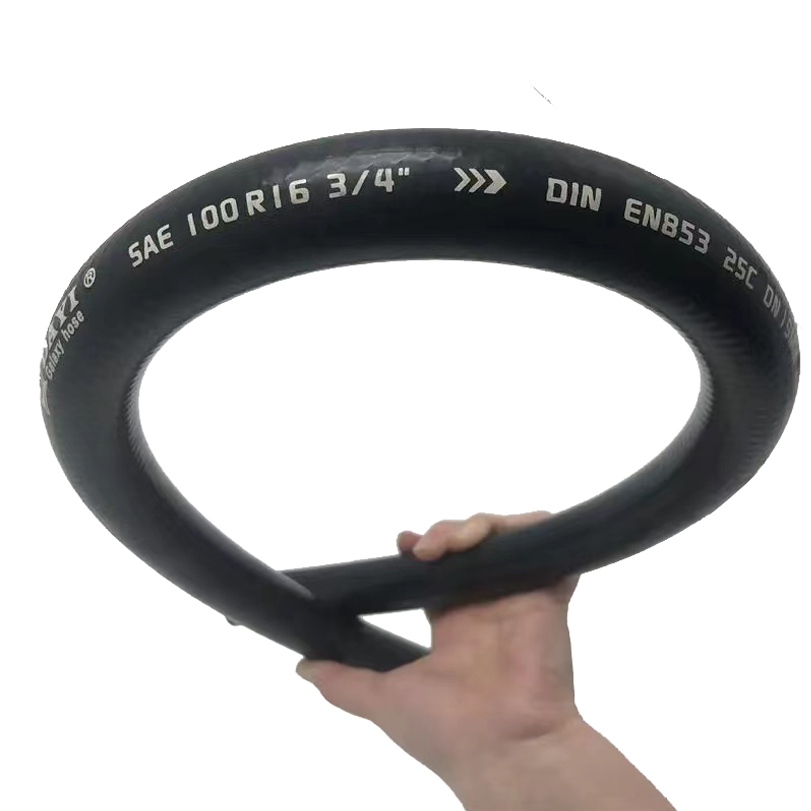
The foundation of any water suction and discharge rubber hose lies in its constituent materials. The most common base polymer is natural rubber (NR), prized for its high elasticity and resilience. However, NR exhibits limitations in oil resistance and UV stability. Consequently, synthetic rubbers like Styrene-Butadiene Rubber (SBR), Ethylene Propylene Diene Monomer (EPDM), Nitrile Rubber (NBR), and Chloroprene Rubber (CR, also known as Neoprene) are frequently employed, either alone or in blends, to enhance specific properties. EPDM excels in weathering and ozone resistance, NBR provides excellent oil resistance, and CR offers a balance of chemical resistance and abrasion resistance. The reinforcement layers are crucial for pressure handling. These typically consist of multiple plies of high-tensile textile fabrics (polyester, nylon) embedded within the rubber matrix. Wire helices (steel wire, stainless steel wire) are often incorporated for enhanced suction capability and to prevent hose collapse under vacuum. Manufacturing processes vary. For lower-pressure hoses, extrusion is common, where the rubber compound is forced through a die to create a continuous tube. Higher-pressure hoses often employ braiding machines to interweave the reinforcement plies around the inner tube. Key parameter control during manufacturing includes rubber compound mixing ratios, curing time and temperature (vulcanization), ply adhesion strength, and helix pitch accuracy. Insufficient curing leads to reduced tensile strength; improper ply adhesion leads to delamination; and incorrect helix pitch compromises suction performance. Careful quality control at each stage is paramount.
Performance & Engineering
The performance of a water suction and discharge hose is governed by a complex interplay of mechanical stresses and environmental factors. Force analysis is critical, particularly in suction applications, where the hose experiences negative pressure. The collapse pressure – the maximum vacuum the hose can withstand without imploding – is a key specification. This is directly related to the reinforcement structure (helix pitch, ply count) and the rubber compound’s compressive strength. Burst pressure, the maximum positive pressure the hose can handle, is determined by the tensile strength of the rubber and reinforcement layers. Environmental resistance encompasses factors like temperature extremes, UV exposure, and chemical compatibility. Exposure to hydrocarbons can cause swelling and degradation of NR and SBR, while prolonged UV exposure can lead to cracking and embrittlement. Therefore, material selection must align with the intended application. Compliance requirements are stringent. Hoses used for potable water must meet standards ensuring non-toxicity and preventing leaching of harmful substances. Hoses used in food processing applications have even stricter requirements, often necessitating FDA compliance. Functional implementation details include considerations for hose bend radius (to avoid kinking), coupling compatibility (ensuring a leak-proof seal), and electrostatic discharge (ESD) prevention in flammable environments. Proper hose assembly and fitting selection are as crucial as the hose itself.
Technical Specifications
| Parameter | Unit | Typical Value (EPDM Lined, Steel Wire Helix) | Testing Standard |
|---|---|---|---|
| Working Pressure | Bar | 10 | ISO 3864 |
| Burst Pressure | Bar | 30 | ISO 3864 |
| Suction Capacity (Vacuum Pressure) | m | 6 | SAE J2064 |
| Tensile Strength | MPa | 15 | ASTM D412 |
| Elongation at Break | % | 400 | ASTM D412 |
| Hardness (Shore A) | - | 65 | ASTM D2240 |
Failure Mode & Maintenance
Failure modes in water suction and discharge hoses are diverse and often interconnected. Fatigue cracking, induced by repeated pressure cycling and bending, is a common issue. This typically initiates at stress concentration points, such as around couplings or imperfections in the reinforcement. Delamination, the separation of reinforcement plies from the rubber matrix, reduces pressure handling capability and can lead to catastrophic failure. Chemical attack can cause rubber degradation, leading to swelling, hardening, or cracking. Oxidation, particularly in NR and SBR, leads to embrittlement and loss of elasticity. Abrasion, caused by solid particles in the fluid or contact with abrasive surfaces, erodes the inner liner. Maintenance is crucial for maximizing hose lifespan. Regular visual inspections should identify any signs of cracking, bulging, or delamination. Hoses should be properly stored when not in use, protected from direct sunlight, extreme temperatures, and ozone sources. Couplings should be tightened periodically to prevent leaks. For hoses used in demanding applications, a preventative maintenance schedule including pressure testing and internal inspection is recommended. After any repair, the hose’s pressure rating should be re-evaluated.
Industry FAQ
Q: What is the significance of the ‘layflat’ characteristic in suction hoses, and how do Chinese suppliers ensure consistent performance in this regard?
A: The layflat characteristic refers to a hose’s ability to return to its original flattened state after being uncoiled. This is essential for easy handling and storage. Chinese suppliers utilize specific helix winding techniques and rubber compound formulations to maintain the hose’s memory. Quality control involves testing the layflat performance after simulated use and storage conditions, ensuring the hose doesn't retain a permanent set.
Q: How do different reinforcement materials (textile vs. wire) affect the hose’s suitability for specific applications?
A: Textile reinforcement provides good flexibility and is suitable for lower-pressure applications. Wire helix reinforcement offers superior collapse resistance and is essential for suction applications and higher-pressure discharges. The choice depends on the operating pressure, vacuum requirements, and the need for flexibility. Chinese suppliers offer hoses with various reinforcement combinations to cater to diverse needs.
Q: What quality control measures do Chinese manufacturers implement to guarantee chemical compatibility and prevent leaching of harmful substances in potable water hoses?
A: Reputable Chinese manufacturers utilize rubber compounds certified for potable water contact (e.g., NSF/ANSI 61). Raw materials are rigorously tested for compliance. The manufacturing process is carefully controlled to prevent contamination. Finished hoses undergo leaching tests to verify that no harmful substances migrate into the water. Documentation and traceability are also vital aspects of their quality control.
Q: What are the common causes of premature failure in rubber discharge hoses used for abrasive slurries?
A: Abrasive slurries cause erosion of the inner liner, leading to thinning and eventual perforation. Contributing factors include high flow velocity, sharp bends, and the size and concentration of abrasive particles. Selecting a hose with a highly abrasion-resistant liner (e.g., high-hardness rubber or polyurethane) and minimizing flow velocity are crucial mitigation strategies.
Q: How does temperature affect the performance of a rubber hose, and what considerations should be made when selecting a hose for high-temperature applications?
A: Elevated temperatures can reduce the tensile strength and elasticity of rubber, increasing the risk of failure. Selecting a rubber compound with a high service temperature rating (e.g., EPDM or Viton) is essential for high-temperature applications. The hose’s pressure rating should also be derated at higher temperatures, as its strength decreases. Chinese suppliers offer specific high-temperature hose options with appropriate material selections.
Conclusion
Water suction and discharge rubber hoses sourced from China represent a significant and versatile solution for a wide range of industrial fluid transfer needs. Understanding the fundamental material science, meticulous manufacturing processes, and critical performance parameters is paramount for selecting the optimal hose for a specific application. The ability to navigate the diverse offerings from Chinese suppliers – considering factors like reinforcement type, rubber compound, and compliance standards – is crucial for achieving long-term reliability and minimizing operational downtime.
Ongoing advancements in rubber technology and manufacturing techniques are continually improving the performance and durability of these hoses. Future trends include the development of more abrasion-resistant liners, enhanced chemical compatibility, and the integration of smart sensors for real-time monitoring of hose condition. Proactive maintenance, combined with careful hose selection, will continue to be essential for maximizing the lifespan and ensuring the safe and efficient operation of fluid transfer systems.