
Apr . 01, 2024 17:55 Back to list
china two wire braided high pressure hydraulic hose factories Performance Analysis

Introduction
Two-wire braided high-pressure hydraulic hoses represent a critical component in fluid power systems across diverse industrial applications. These hoses, frequently manufactured in China to meet global demand, are engineered to transmit hydraulic fluid under extreme pressures and challenging environmental conditions. Their technical position in the industry chain is between the hydraulic pump/valve and the hydraulic actuator, demanding a high degree of reliability and performance. Core performance characteristics center around pressure rating, burst pressure, flexibility, and resistance to abrasion, oil, and temperature fluctuations. A key industry pain point is maintaining consistent quality control across diverse Chinese manufacturers, alongside ensuring adherence to international safety and performance standards. This guide provides an in-depth technical analysis of these hoses, covering materials, manufacturing processes, performance parameters, failure modes, and relevant industry regulations.
Material Science & Manufacturing
The construction of two-wire braided high-pressure hydraulic hoses involves several key material considerations. The inner tube is typically composed of oil-resistant synthetic rubber, most commonly nitrile rubber (NBR) due to its excellent resistance to petroleum-based fluids. Alternatives include chloroprene rubber (CR) for improved ozone and weathering resistance, and ethylene propylene diene monomer (EPDM) for phosphate ester fluids. The reinforcement layer consists of two braids of high-tensile steel wire, precisely wound to provide strength and resist bursting pressure. Steel wire is often specified to meet SAE J517 standards for wire rope. The outer cover is generally made of synthetic rubber, commonly chloroprene rubber (CR) for its abrasion, ozone, and weathering resistance. Manufacturing begins with the extrusion of the inner tube to the required dimensions. The steel wire braids are then applied over the inner tube using a braiding machine, ensuring consistent coverage and braid angle. The outer cover is subsequently extruded over the braided layer. Critical parameter control during manufacturing includes maintaining precise rubber compound formulations, ensuring consistent braid density and angle, and controlling curing temperatures and pressures. Post-production testing involves hydrostatic pressure testing to verify burst pressure, impulse testing to assess fatigue life, and dimensional checks to ensure adherence to specifications. Improper vulcanization can lead to reduced elasticity and premature failure, while inconsistent braid winding can compromise burst strength.
Performance & Engineering
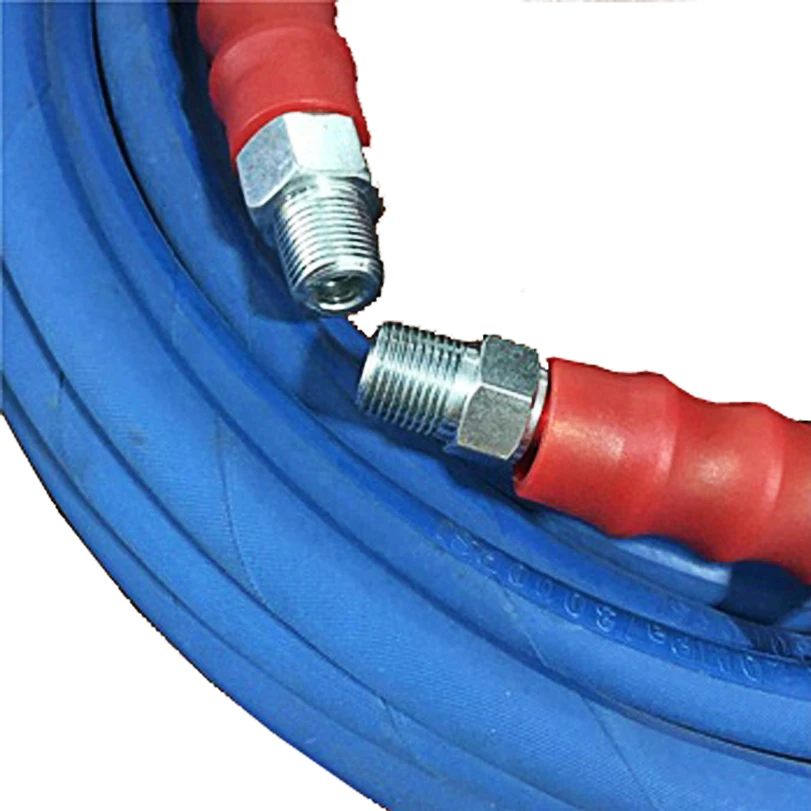
Performance of two-wire braided hydraulic hoses is dictated by several engineering principles. The hose must withstand internal pressure without deformation or failure, governed by the principles of thin-walled pressure vessel theory (Hoop stress). The steel wire braid provides the tensile strength to counteract the internal pressure. Flexibility is essential for routing hoses in confined spaces; this is achieved through the braid angle and the elasticity of the rubber materials. However, tighter bend radii increase stress concentrations in the braid wires, potentially leading to fatigue failure. Environmental resistance is crucial; exposure to oil, chemicals, ozone, and UV radiation can degrade the rubber compounds, reducing their flexibility and strength. Temperature extremes also affect performance; high temperatures accelerate degradation, while low temperatures can reduce flexibility and increase brittleness. Compliance requirements are significant. SAE J517 and EN 856 standards define performance parameters like burst pressure, working pressure, impulse pressure, and temperature range. Force analysis during hose assembly and operation must consider the tensile load on the end fittings and the bending moments induced by hose routing. Improperly crimped fittings can lead to leakage or hose separation, representing a significant safety hazard. Consideration must be given to fluid compatibility; incompatible fluids can cause swelling, degradation, or permeation through the hose materials.
Technical Specifications
| Parameter | Unit | Specification Range (Typical) | Test Standard |
|---|---|---|---|
| Working Pressure | MPa | 10 – 35 | SAE J517, EN 856 |
| Burst Pressure | MPa | 30 – 105 | SAE J517, EN 856 |
| Impulse Pressure | MPa | 20 – 60 | SAE J517, EN 856 |
| Temperature Range | °C | -40 to +100 | SAE J517, EN 856 |
| Inner Tube Material | - | NBR, CR, EPDM | ASTM D2000 |
| Reinforcement Material | - | High-Tensile Steel Wire | SAE J517 |
Failure Mode & Maintenance
Failure modes in two-wire braided hydraulic hoses are varied. Fatigue cracking, particularly at the hose ends or near fittings, is common due to repeated flexing and impulse pressures. Delamination of the rubber layers can occur due to poor adhesion or exposure to incompatible fluids. Abrasion of the outer cover leads to wire exposure and eventual hose failure. Oxidation of the rubber compounds, accelerated by high temperatures and exposure to ozone, causes hardening and cracking. Internal degradation of the rubber tube due to fluid incompatibility or contamination can lead to swelling, softening, and eventual rupture. Fitting failure, including leakage and hose separation, is often caused by improper crimping or corrosion. Maintenance involves regular visual inspections for signs of abrasion, cracking, or leakage. Hose should be replaced if any damage is detected. Ensure proper hose routing to minimize bending and abrasion. Use only compatible fluids. Periodically check fitting tightness. When replacing hoses, use properly crimped fittings and follow manufacturer’s recommendations for torque specifications. Implement a scheduled replacement program based on operating conditions and hose usage to prevent catastrophic failures. Preventative maintenance also includes flushing the hydraulic system to remove contaminants that can accelerate hose degradation.
Industry FAQ
Q: What is the primary difference between two-wire and four-wire braided hydraulic hoses?
A: The primary difference is the level of reinforcement. Four-wire braided hoses offer significantly higher burst pressures and greater resistance to impulse pressures compared to two-wire braided hoses. This is achieved by doubling the amount of steel wire reinforcement. Four-wire hoses are typically used in applications demanding higher safety factors or operating at extremely high pressures.
Q: How does temperature affect the performance of a hydraulic hose?
A: Extreme temperatures significantly impact hose performance. High temperatures accelerate the degradation of rubber compounds, reducing their elasticity and strength. Low temperatures can cause the rubber to become brittle, increasing the risk of cracking. Operating outside the specified temperature range can lead to premature failure.
Q: What is the importance of proper hose fitting crimping?
A: Proper crimping is absolutely critical for hose integrity. An insufficient crimp can lead to leakage and eventual hose separation under pressure. An over-crimp can damage the hose reinforcement, reducing its strength. Crimping must be performed using the correct die and tooling, and torque specifications must be strictly adhered to.
Q: What are the common causes of hydraulic hose leaks?
A: Common causes include damaged or worn seals, improper fitting crimping, abrasion of the outer cover exposing the reinforcement, fatigue cracking, and incompatible fluids causing swelling or degradation of the rubber materials. Internal corrosion can also contribute to leaks.
Q: What is the role of the inner tube material in hydraulic hose selection?
A: The inner tube material must be compatible with the hydraulic fluid being used. Incompatibility can cause swelling, softening, or degradation of the tube, leading to leaks and failure. Nitrile rubber (NBR) is commonly used for petroleum-based fluids, while EPDM is suitable for phosphate ester fluids.
Conclusion
Two-wire braided high-pressure hydraulic hoses are essential components in numerous industrial applications, demanding careful material selection, precise manufacturing control, and diligent maintenance. Understanding the interplay between material properties, engineering principles, and operating conditions is critical for ensuring optimal performance and preventing premature failures. The ongoing demand from industries relying on hydraulic power ensures that China will remain a significant global supplier of these hoses.
Future development efforts will likely focus on improving hose durability, reducing weight, and enhancing resistance to extreme environments. Advanced rubber compounds and innovative reinforcement materials will play a key role in achieving these goals. Furthermore, increasing emphasis on sustainability will drive the development of more environmentally friendly hose materials and manufacturing processes.