
Apr . 01, 2024 17:55 Back to list
china thermoplastic hose sae100r7 suppliers Performance Analysis
Introduction
Thermoplastic hoses conforming to SAE 100R7 specifications represent a critical component in hydraulic systems across diverse industrial applications, ranging from agricultural machinery and construction equipment to material handling and manufacturing processes. China has emerged as a prominent sourcing hub for these hoses, offering a competitive landscape of manufacturers and suppliers. This guide provides an in-depth technical overview of SAE 100R7 thermoplastic hoses, focusing on material science, manufacturing processes, performance characteristics, failure modes, and relevant industry standards, specifically as pertains to sourcing from China. The increasing demand for high-performance, durable, and cost-effective hydraulic solutions has driven innovation in thermoplastic hose technology, requiring a thorough understanding of material properties and quality control procedures. Core industry pain points revolve around ensuring consistent product quality, verifying compliance with international standards, and mitigating the risk of premature failure due to factors like temperature extremes, chemical exposure, and pressure fluctuations. A comprehensive understanding of these factors is crucial for procurement managers and engineers seeking reliable and long-lasting hydraulic hose solutions.
Material Science & Manufacturing
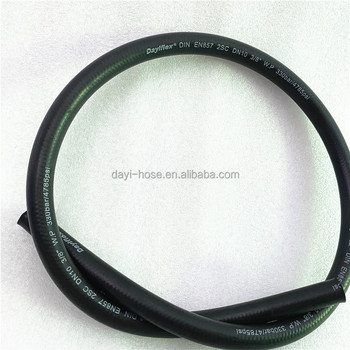
SAE 100R7 thermoplastic hoses are typically constructed from a polyamide (nylon) inner tube, reinforced with multiple layers of high-tensile steel wire. The outer cover is commonly made of polyurethane, providing abrasion, oil, and weather resistance. The polyamide inner tube offers excellent resistance to hydraulic fluids, fuels, and lubricants. Nylon 11 and Nylon 12 are frequently employed for superior flexibility and low-temperature performance compared to Nylon 6. Steel wire reinforcement is crucial for withstanding high pressures; the number and diameter of the steel wires directly correlate with the hose’s pressure rating. Manufacturing involves extrusion of the polyamide inner tube, followed by helical winding of the steel wire reinforcement. The polyurethane outer cover is then extruded over the reinforced inner tube. Critical process parameters include extrusion temperature control (to prevent degradation of the polyamide), precise wire winding tension (to ensure uniform reinforcement), and curing conditions for the polyurethane cover (to achieve optimal physical properties). Maintaining dimensional accuracy during extrusion and ensuring proper adhesion between layers are paramount. Quality control measures typically include tensile testing of the polyamide, wire break strength testing, and adhesion testing between layers. Suppliers in China often utilize automated extrusion lines and robotic wire winding systems to enhance efficiency and consistency. Variations in raw material sourcing and processing conditions can impact the final product’s performance; therefore, robust quality assurance protocols are essential.
Performance & Engineering
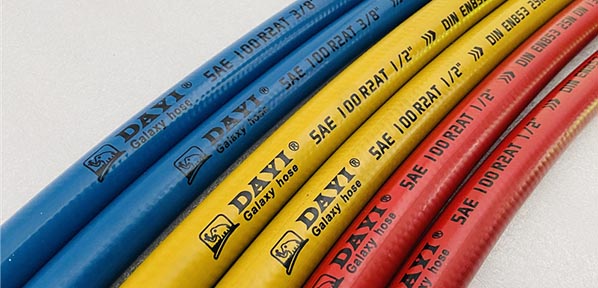
The performance of SAE 100R7 hoses is dictated by several key engineering parameters, including working pressure, burst pressure, temperature range, and fluid compatibility. Working pressure is the maximum continuous operating pressure recommended by the manufacturer, while burst pressure represents the pressure at which the hose will fail catastrophically. Temperature range defines the operational limits, typically from -40°C to +100°C, although specific values depend on the hose construction. Fluid compatibility is crucial; the polyamide inner tube must be resistant to the specific hydraulic fluid being used. Force analysis involves assessing the hoop stress within the hose due to internal pressure, and the axial stress on the steel wire reinforcement. Finite element analysis (FEA) is often employed to optimize hose design and predict performance under various loading conditions. Environmental resistance encompasses resistance to ozone, UV radiation, and abrasion. Compliance requirements include adherence to SAE 100R7 standards, which specify dimensional tolerances, pressure ratings, and performance testing procedures. Suppliers must provide comprehensive testing reports demonstrating compliance. Hose assemblies (hose + fittings) are particularly critical; proper crimping of fittings is essential to prevent leakage and ensure structural integrity. Improper crimping can lead to premature failure and pose a safety hazard. Hose routing and bend radius also influence performance; exceeding the minimum bend radius can induce stress concentrations and reduce hose life.
Technical Specifications
| Parameter | Unit | SAE 100R7 Specification | Typical Range (China Suppliers) |
|---|---|---|---|
| Working Pressure | MPa | Up to 34.5 | 21 – 34.5 |
| Burst Pressure | MPa | ≥ 3 x Working Pressure | 3.5 – 4.5 x Working Pressure |
| Temperature Range | °C | -40 to +100 | -40 to +100 |
| Inner Tube Material | - | Polyamide (Nylon 11, 12) | Nylon 6, Nylon 11, Nylon 12 |
| Reinforcement | Layers | Multiple Steel Wire Helix | 2-6 Spiral Steel Wire |
| Outer Cover Material | - | Polyurethane | Polyurethane |
Failure Mode & Maintenance
Common failure modes in SAE 100R7 thermoplastic hoses include fatigue cracking of the steel wire reinforcement, delamination between layers, degradation of the polyamide inner tube due to fluid incompatibility or excessive heat, and abrasion of the outer cover. Fatigue cracking typically initiates at stress concentrations, such as near fittings or bends, and propagates over time under cyclic loading. Delamination can occur due to poor adhesion between the inner tube and reinforcement, often resulting from inadequate processing conditions. Chemical attack from incompatible fluids can cause swelling and weakening of the polyamide, leading to leakage. Abrasion of the outer cover compromises its protective function, exposing the reinforcement to corrosion. Maintenance practices include regular visual inspection for signs of damage (cracks, abrasions, bulges), pressure testing to detect leaks, and proper hose routing to avoid excessive bending or twisting. Replacing hoses at recommended intervals, even if no visible damage is present, is crucial for preventing catastrophic failures. Proper storage conditions (protected from UV radiation and extreme temperatures) can also extend hose life. When replacing hoses, it is essential to use compatible fittings and ensure proper crimping. Failure analysis, involving microscopic examination of fractured surfaces, can help identify the root cause of failures and prevent recurrence.
Industry FAQ
Q: What are the key differences between Nylon 6, Nylon 11, and Nylon 12 in the context of hydraulic hose inner tubes?
A: Nylon 6 is the most cost-effective option but offers lower flexibility and temperature resistance compared to Nylon 11 and 12. Nylon 11 provides superior flexibility and impact resistance, making it suitable for demanding applications. Nylon 12 exhibits the lowest moisture absorption and best low-temperature performance, ideal for environments with high humidity or cold temperatures. The choice depends on the specific application requirements and budget constraints.
Q: How do I verify that a Chinese supplier's SAE 100R7 hoses meet the required quality standards?
A: Request comprehensive testing reports from the supplier, including tensile strength, burst pressure, impulse testing, and fluid compatibility testing, conducted by a reputable third-party laboratory. Verify that the reports are traceable to specific production batches. Conduct on-site audits of the supplier’s manufacturing facility to assess quality control procedures and production processes. Request samples for independent testing by your own laboratory.
Q: What is the significance of the "lay flat diameter" specification for SAE 100R7 hoses?
A: The lay flat diameter indicates the hose’s flexibility and ease of handling. A smaller lay flat diameter indicates a more flexible hose, making it easier to route and install in tight spaces. It's an important consideration for applications requiring complex hose runs.
Q: What is the impact of improper crimping on hose assembly performance?
A: Improper crimping can lead to leakage, reduced pressure capacity, and premature failure of the hose assembly. Under-crimping results in a loose connection, while over-crimping can damage the hose and fitting. Proper crimping requires specialized equipment and trained personnel.
Q: How does the number of steel wire reinforcement layers affect the hose’s pressure rating?
A: Increasing the number of steel wire reinforcement layers directly increases the hose’s pressure rating. Each layer adds additional tensile strength, allowing the hose to withstand higher internal pressures. However, adding more layers also reduces flexibility, so a balance must be struck between pressure capacity and flexibility.
Conclusion
SAE 100R7 thermoplastic hoses are essential components in numerous hydraulic systems, and sourcing from China presents both opportunities and challenges. Understanding the nuances of material science, manufacturing processes, and performance characteristics is crucial for making informed procurement decisions. Rigorous quality control, comprehensive testing, and adherence to international standards are paramount to ensure the reliability and longevity of these hoses.
The key to successful sourcing lies in establishing strong relationships with reputable suppliers who demonstrate a commitment to quality and compliance. Continued advancements in thermoplastic hose technology will necessitate ongoing evaluation of materials, manufacturing techniques, and performance metrics to meet the evolving demands of diverse industrial applications. Proactive maintenance and regular inspection are vital to maximizing hose lifespan and preventing costly failures.