
Apr . 01, 2024 17:55 Back to list
china teflon hose factory Performance Analysis
Introduction
Polytetrafluoroethylene (PTFE) hose, commonly referred to as Teflon hose, represents a critical component in fluid transfer systems across diverse industrial applications. China teflon hose factory specializes in the manufacturing of these hoses, serving as a key supplier to sectors including automotive, chemical processing, pharmaceuticals, food and beverage, and aerospace. The product's prominence stems from its exceptional chemical inertness, high-temperature resistance, and low coefficient of friction, attributes that distinguish it from traditional rubber and plastic hoses. These hoses are employed in applications demanding the safe and reliable conveyance of corrosive fluids, high-purity materials, and products requiring adherence to stringent hygiene standards. This technical guide provides a comprehensive overview of PTFE hose technology, encompassing material science, manufacturing processes, performance characteristics, potential failure modes, and relevant industry standards, particularly focusing on the capabilities and considerations related to sourcing from China teflon hose factory.
Material Science & Manufacturing
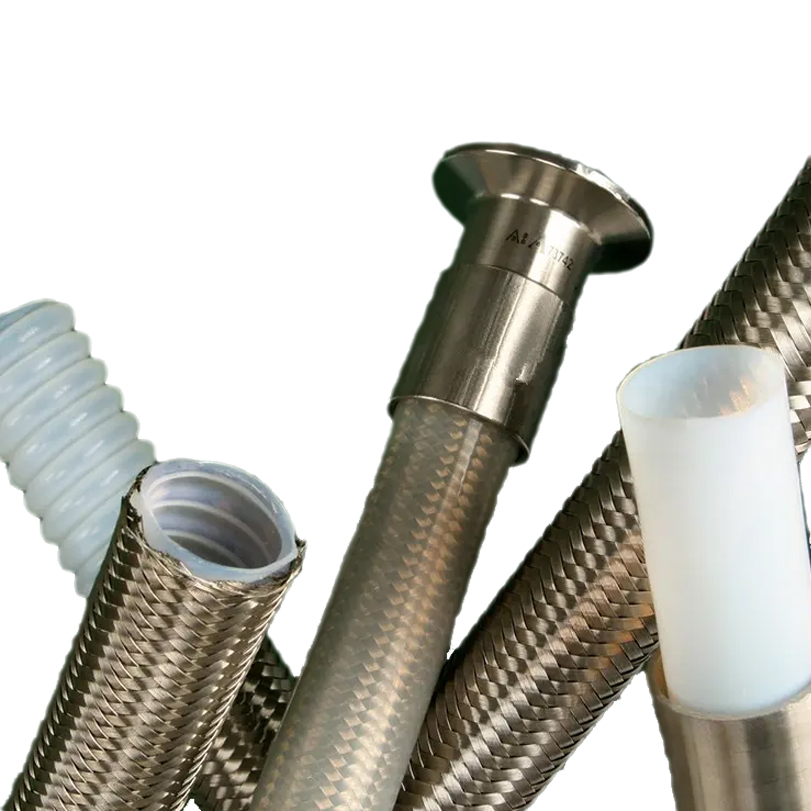
PTFE, (C2F4)n, is a synthetic fluoropolymer of tetrafluoroethylene. Its core properties – exceptional chemical resistance, a wide temperature range (-200°C to +260°C), dielectric strength, and non-stick surface – derive from the strong carbon-fluorine bonds. Raw materials consist of PTFE resin, typically granular or fine powder, along with reinforcing materials like fiberglass braiding or stainless steel wire for enhanced pressure resistance and structural integrity. Manufacturing processes employed by China teflon hose factory primarily include extrusion and sintering. Extrusion forces the PTFE resin through a die, shaping the hose’s basic form. The extruded hose then undergoes a sintering process, a heat treatment without melting, that fuses the PTFE particles, creating a dense, homogenous structure. Key parameter control during sintering is crucial; temperature, time, and cooling rates directly impact the hose’s mechanical properties and chemical resistance. Braiding is often integrated during or after extrusion, with the braid pitch and material directly affecting burst pressure and flexibility. Further processing may include surface treatments to enhance adhesion for specific fittings or applications. Quality control includes rigorous testing of resin purity, sintering parameters, and dimensional accuracy. The use of virgin PTFE vs. recycled PTFE also significantly impacts performance characteristics, with virgin PTFE offering superior properties but at a higher cost. China teflon hose factory commonly offers both options, tailored to specific application requirements.
Performance & Engineering
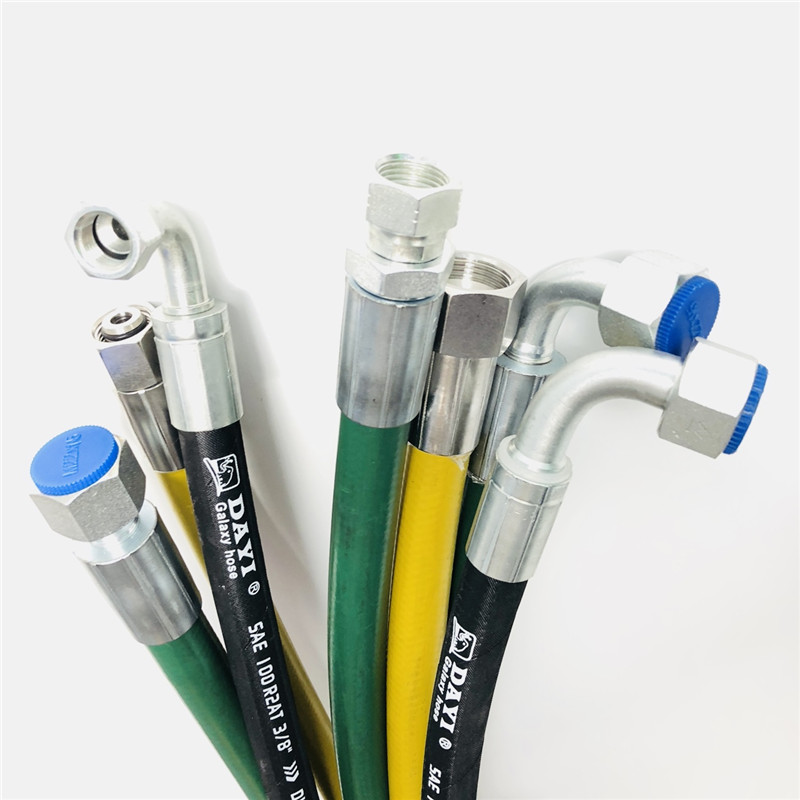
The performance of PTFE hose is governed by a complex interplay of factors including material properties, construction (braiding, wall thickness), and operating conditions. Force analysis considers burst pressure, tensile strength, and elongation at break. Burst pressure, the maximum pressure the hose can withstand before failure, is directly proportional to braid reinforcement and wall thickness. Tensile strength measures the hose’s resistance to stretching, while elongation at break indicates its ductility. Environmental resistance is paramount, particularly concerning chemical exposure. PTFE is virtually inert to most chemicals, however, prolonged exposure to molten alkali metals and certain fluorinated compounds can lead to degradation. Temperature also plays a critical role; exceeding the upper temperature limit can cause softening and loss of mechanical properties. Compliance requirements vary by industry. For food and beverage applications, hoses must comply with FDA standards (21 CFR 177.1550) and EU regulations (Regulation (EC) No 1935/2004). Pharmaceutical applications demand compliance with USP Class VI standards for biocompatibility. Functional implementation relies on proper fitting selection and installation. Incorrect fittings can create stress concentrations, leading to premature failure. Thread sealing tape or appropriate sealant materials are vital to prevent leaks. Furthermore, the hose's flexibility must be considered to prevent kinking or excessive bending, which can compromise flow and structural integrity. China teflon hose factory’s engineering teams offer design and material selection assistance to ensure optimal performance in diverse applications.
Technical Specifications
| Parameter | Unit | Typical Value (Standard Grade PTFE) | Reinforced PTFE (Stainless Steel Braid) |
|---|---|---|---|
| Temperature Range | °C | -200 to +260 | -200 to +260 |
| Pressure Rating (Burst) | PSI | 200 | 400-1000 (depending on braid layers) |
| Tensile Strength | MPa | 20-30 | 35-50 |
| Elongation at Break | % | 200-300 | 150-250 |
| Chemical Resistance | - | Excellent (most chemicals) | Excellent (most chemicals) |
| Dielectric Strength | kV/mm | 100 | 100 |
Failure Mode & Maintenance
PTFE hose, while durable, is susceptible to several failure modes. Fatigue cracking can occur under cyclical pressure or bending, particularly at fitting interfaces. Delamination, the separation of PTFE layers, can result from improper sintering or excessive stress. Chemical attack, though rare, can occur with specific compounds like molten alkali metals. Permeation, the slow passage of gases through the hose wall, can be a concern in applications involving volatile substances. Oxidation at elevated temperatures can lead to embrittlement. To mitigate these risks, regular visual inspections are crucial. Look for signs of cracking, swelling, discoloration, or abrasion. Fittings should be checked for tightness and corrosion. Avoid sharp bends and excessive kinking. When storing PTFE hose, protect it from direct sunlight and extreme temperatures. Cleaning should be performed with mild detergents and water; avoid abrasive cleaners or solvents. If a hose shows signs of significant degradation, it should be replaced immediately. China teflon hose factory provides guidance on preventative maintenance and failure analysis to extend the service life of their products. Furthermore, understanding the specific operating conditions and chemical exposure is crucial for selecting the appropriate PTFE grade and construction for a given application.
Industry FAQ
Q: What is the primary difference between virgin PTFE and filled PTFE hose, and how does that impact cost and performance?
A: Virgin PTFE consists of 100% PTFE resin, offering the highest chemical purity and temperature resistance. Filled PTFE incorporates additives like glass fibers, carbon, or bronze to enhance mechanical properties such as creep resistance and stiffness. Filled PTFE is generally more cost-effective but may exhibit slightly reduced chemical resistance depending on the filler material. China teflon hose factory offers both options to cater to varying performance and budgetary needs.
Q: How do different braiding materials (stainless steel, fiberglass) affect the pressure rating and flexibility of a PTFE hose?
A: Stainless steel braiding provides significantly higher pressure ratings compared to fiberglass braiding due to its superior tensile strength. However, stainless steel braiding also reduces flexibility. Fiberglass braiding offers greater flexibility but lower pressure resistance. The optimal choice depends on the specific application requirements, balancing pressure needs with flexibility considerations. China teflon hose factory can customize braid configurations to meet precise specifications.
Q: What are the key considerations when selecting fittings for PTFE hose to ensure a leak-proof and reliable connection?
A: Fittings must be chemically compatible with both the PTFE hose and the fluid being conveyed. Thread sealing tape (PTFE tape) or an appropriate sealant is essential to prevent leaks. The fitting material should be chosen to avoid galvanic corrosion when in contact with the stainless steel braid (if present). Furthermore, proper torque values must be applied during installation to avoid over-tightening or under-tightening, both of which can lead to failure. China teflon hose factory offers a range of compatible fittings and provides installation guidelines.
Q: What quality control measures does China teflon hose factory implement to ensure the consistency and reliability of its PTFE hoses?
A: China teflon hose factory employs a rigorous quality control system encompassing raw material inspection, in-process monitoring, and final product testing. This includes resin purity analysis, dimensional accuracy checks, burst pressure testing, leak testing, and visual inspection for defects. The factory operates under ISO 9001 quality management standards, ensuring consistent product quality and traceability.
Q: What is the expected service life of a PTFE hose under typical operating conditions, and what factors can significantly shorten it?
A: The service life of a PTFE hose typically ranges from 5 to 10 years under normal operating conditions. However, factors such as exposure to extreme temperatures, aggressive chemicals, excessive pressure, mechanical stress (bending, kinking), and abrasion can significantly shorten its lifespan. Regular inspection and preventative maintenance are crucial for maximizing service life.
Conclusion
PTFE hose, particularly from manufacturers like China teflon hose factory, provides a robust and reliable solution for fluid transfer in demanding industrial environments. Its exceptional chemical resistance, wide temperature range, and low friction characteristics make it indispensable in applications where performance and safety are paramount. Understanding the material science, manufacturing nuances, and potential failure modes is critical for selecting the appropriate hose configuration and ensuring long-term operational reliability.
Future advancements in PTFE hose technology will likely focus on developing new filler materials to enhance mechanical properties further, reducing permeation rates, and improving sustainability through the use of recycled PTFE. Careful consideration of application-specific requirements, combined with adherence to industry standards and best practices, will continue to drive the successful implementation of PTFE hose solutions across diverse industries. China teflon hose factory remains committed to innovation and quality, offering tailored solutions to meet evolving customer needs.

