
Apr . 01, 2024 17:55 Back to list
china teflon flex hose supplier Performance Analysis

Introduction
Polytetrafluoroethylene (PTFE) flex hoses, commonly sourced from China as a cost-effective solution, represent a critical component in numerous industrial fluid transfer applications. These hoses, often referred to as Teflon hoses due to PTFE being a brand name, are valued for their exceptional chemical inertness, high-temperature resistance, and low coefficient of friction. Their technical position within the industrial chain is primarily as a conduit for aggressive chemicals, high-purity fluids, and high-temperature processes where elastomeric or metallic hoses would be unsuitable. Core performance characteristics include fluid compatibility across a broad spectrum of substances, maintaining flexibility over a wide temperature range (-100°C to +260°C), and resisting permeation, crucial for maintaining product integrity and environmental safety. The increasing demand for reliable, chemically resistant fluid handling is driving growth in the Chinese PTFE flex hose supply chain, necessitating a deep understanding of material science, manufacturing processes, and performance parameters.
Material Science & Manufacturing
The core material of these hoses is PTFE, a synthetic fluoropolymer comprised of carbon and fluorine atoms. PTFE exhibits exceptional chemical resistance due to the strong carbon-fluorine bonds, offering nearly universal resistance to acids, bases, solvents, and oxidants. Raw PTFE resin is a fine powder, processed into usable forms through sintering – a process of heating the powder below its melting point to induce fusion. The manufacturing of PTFE flex hoses typically involves several key steps. First, the PTFE resin is paste extruded to create a seamless tube. This extrusion process is critically controlled for wall thickness and dimensional accuracy. Subsequently, the tube is sintered at high temperatures (typically 380°C) to achieve its final strength and properties. Reinforcement layers are crucial for pressure resistance and dimensional stability. Common reinforcements include stainless steel braiding (single or multiple layers) or a spiral-wrapped stainless steel wire. The braiding is applied over the sintered PTFE tube, followed by another sintering step to ensure bonding. Parameter control is paramount. Extrusion temperature and speed directly impact tube dimensions and surface finish. Sintering temperature and duration dictate the crystallinity and mechanical properties of the PTFE. Braiding tension and coverage influence the hose’s pressure rating and flexibility. Quality control measures include dimensional inspection, pressure testing to failure, and chemical resistance verification.
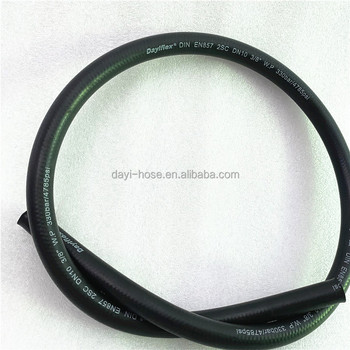
Performance & Engineering
The performance of PTFE flex hoses is governed by a complex interplay of material properties and engineering considerations. Force analysis focuses on hoop stress induced by internal pressure, requiring sufficient reinforcement to prevent burst. The burst pressure is directly proportional to the reinforcement layer’s tensile strength and coverage area. Flexural fatigue is another critical concern, particularly in applications involving repeated bending or vibration. The hose’s bending radius is a crucial parameter; exceeding the minimum bend radius can induce stress concentrations and lead to premature failure. Environmental resistance is paramount. While PTFE is inherently resistant to most chemicals, prolonged exposure to certain strong bases or high temperatures can cause degradation. Permeation, the diffusion of fluids through the hose wall, is minimized by PTFE’s dense structure but can become significant for certain gases or volatile organic compounds. Compliance requirements vary by industry and application. For food and beverage applications, hoses must comply with FDA standards for non-toxicity and leachability. For pharmaceutical applications, USP Class VI certification is often required. In aerospace and automotive applications, hoses must meet stringent flammability and material specifications. Furthermore, electrostatic discharge (ESD) resistance is important in environments where flammable fluids are present, often achieved through conductive reinforcement layers.
Technical Specifications
| Parameter | Unit | Typical Value (China Supplier Range) | Test Standard |
|---|---|---|---|
| Working Pressure | MPa | 1.0 – 25.0 | ISO 3165 |
| Burst Pressure | MPa | 3.0 – 75.0 | ISO 3165 |
| Temperature Range | °C | -100 to +260 | ASTM D348 |
| Inner Diameter | mm | 3.2 – 152.4 | Dimensional Measurement |
| Wall Thickness | mm | 0.8 – 6.4 | Dimensional Measurement |
| Reinforcement | - | Single/Double Stainless Steel Braid, Spiral Wire | Visual Inspection, Tensile Testing |
Failure Mode & Maintenance
PTFE flex hoses, despite their robust properties, are susceptible to several failure modes. Fatigue cracking, particularly in braided reinforcements, occurs due to repeated flexing and stress cycling. Delamination, the separation of PTFE from the reinforcement layer, can occur due to inadequate bonding during manufacturing or prolonged exposure to high temperatures and aggressive chemicals. Chemical attack, though rare, can occur with specific strong bases or highly reactive substances, leading to swelling and loss of mechanical properties. Permeation-induced degradation, specifically when handling highly permeable gases, can result in plasticizer extraction from the PTFE, leading to embrittlement. Oxidation, while PTFE is generally oxidation-resistant, can occur at extremely high temperatures in the presence of oxygen. Maintenance protocols include regular visual inspection for cracks, bulges, or abrasions. Pressure testing should be conducted periodically to verify the hose’s integrity. Avoid exceeding the rated working pressure and temperature. Proper storage is also crucial; hoses should be stored in a cool, dry place away from direct sunlight and chemical exposure. When handling aggressive chemicals, verify compatibility before use. Implement a preventative maintenance schedule based on application severity and operational conditions. If damage is detected, the hose should be replaced immediately.
Industry FAQ
Q: What is the typical lead time for a custom PTFE flex hose order from a Chinese supplier?
A: Lead times vary depending on the complexity of the order, the volume, and the supplier’s current workload. Typically, a standard order with commonly available materials and sizes will take 2-4 weeks. Custom orders requiring specialized materials or reinforcement configurations can take 6-12 weeks or longer. It's vital to clarify lead times during the initial quoting process and factor in potential delays due to unforeseen circumstances.
Q: How do Chinese PTFE flex hose suppliers ensure quality control and traceability?
A: Reputable Chinese suppliers implement rigorous quality control procedures throughout the manufacturing process. This typically includes incoming material inspection, in-process inspection (dimensional checks, pressure testing), and final inspection before shipment. Traceability is often maintained through batch numbers and material certifications. ISO 9001 certification is a good indicator of a robust quality management system, although independent third-party audits are recommended for critical applications.
Q: What are the key differences in price points between different PTFE hose constructions (braided vs. spiral)?
A: Braided hoses are generally less expensive than spiral-wrapped hoses due to the lower material cost and simpler manufacturing process. However, spiral-wrapped hoses offer superior flexibility and pressure ratings. The price difference can range from 20% to 50% depending on the braid count or spiral wire gauge. The optimal construction depends on the specific application requirements and budget constraints.
Q: Can PTFE flex hoses be used with vacuum applications? What considerations are necessary?
A: Yes, PTFE hoses can be used with vacuum applications, but careful consideration is required. The hose must be adequately reinforced to prevent collapse under vacuum pressure. A smooth inner bore is essential to minimize flow restriction. The hose must also be compatible with the fluids being conveyed under vacuum to prevent permeation or outgassing. Ensure the hose is properly sealed to the connections to maintain a leak-tight system.
Q: What certifications should I look for when sourcing PTFE flex hoses from China for pharmaceutical applications?
A: For pharmaceutical applications, the most critical certification is USP Class VI compliance, which demonstrates that the hose materials are biocompatible and meet stringent purity requirements. Additionally, FDA compliance for food contact materials is relevant if the hose may come into contact with pharmaceutical ingredients. Look for suppliers who can provide comprehensive material certifications and batch traceability documentation.
Conclusion
PTFE flex hoses sourced from China provide a viable and cost-effective solution for a wide range of industrial fluid transfer applications. Understanding the nuances of material science, manufacturing processes, and performance characteristics is crucial for selecting the appropriate hose for a given application. Careful consideration of potential failure modes and implementation of preventative maintenance protocols are essential for ensuring long-term reliability and safety.
The continued evolution of PTFE technology and manufacturing capabilities in China is driving innovation and improved performance. As industries increasingly demand higher levels of chemical resistance, temperature stability, and purity, the demand for high-quality PTFE flex hoses is poised to grow. Proactive engagement with reputable suppliers and a thorough understanding of applicable standards and regulations will be key to navigating the complexities of this dynamic market.

