
Apr . 01, 2024 17:55 Back to list
china suction and delivery hose suppliers Performance Analysis
Introduction
Suction and delivery hoses are critical components in numerous industrial applications, facilitating the transfer of fluids – from water and chemicals to abrasive slurries – within processes ranging from agricultural irrigation to construction and mining. China has emerged as a dominant global supplier of these hoses, offering a broad spectrum of products catering to diverse operational demands and budgetary constraints. This technical guide provides a comprehensive examination of suction and delivery hoses sourced from China, focusing on material science, manufacturing techniques, performance characteristics, potential failure modes, and relevant industry standards. The core performance characteristics of these hoses center around pressure resistance (both positive and vacuum), flexibility, chemical compatibility, abrasion resistance, and service life. A key pain point within the industry is ensuring consistent quality and adherence to international safety regulations, particularly given the variability amongst suppliers. This guide aims to address these concerns by providing a detailed technical overview for procurement managers and engineers involved in sourcing these crucial components.
Material Science & Manufacturing
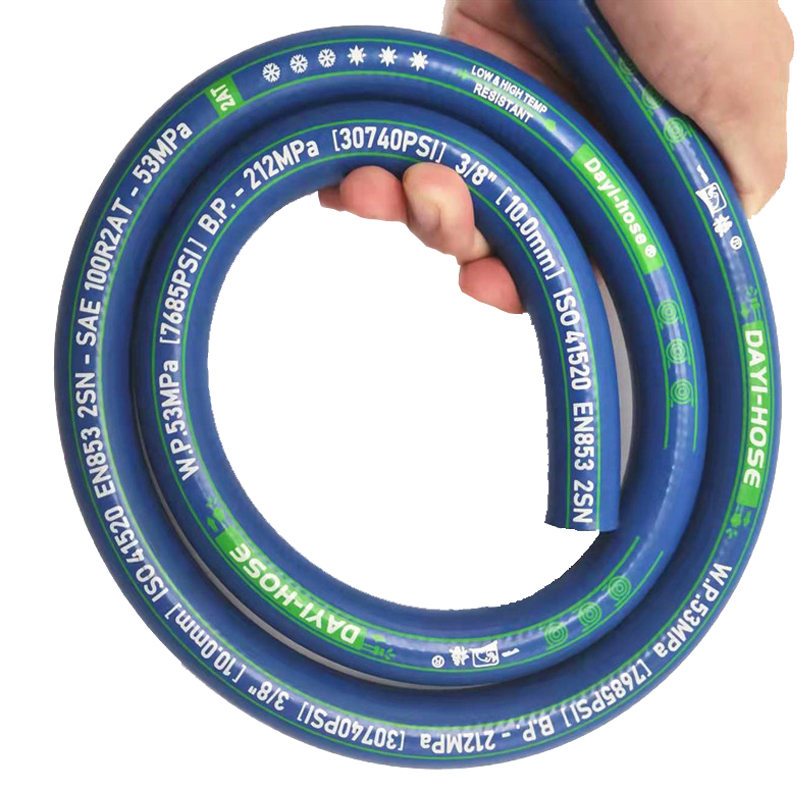
The construction of suction and delivery hoses typically involves several layers, each contributing to the overall performance. Common materials include synthetic rubbers like SBR (Styrene-Butadiene Rubber), NBR (Nitrile Butadiene Rubber), EPDM (Ethylene Propylene Diene Monomer), and PVC (Polyvinyl Chloride). SBR offers good abrasion resistance and cost-effectiveness, suitable for general-purpose water and air transfer. NBR provides superior oil resistance, crucial for handling petroleum-based products. EPDM demonstrates excellent resistance to ozone, weathering, and heat, ideal for outdoor applications and chemical handling. PVC is a rigid yet affordable option often used for lightweight applications where flexibility is less critical. Reinforcement layers are commonly incorporated to enhance pressure resistance and prevent collapse under vacuum. These layers frequently consist of high-tensile textile braids (typically polyester or nylon) or spirally wound steel wire.
Manufacturing processes vary based on hose type and intended application. For rubber hoses, a common method involves extrusion, where the rubber compound is forced through a die to create a continuous tube. This is followed by curing (vulcanization) to crosslink the polymer chains, enhancing strength and elasticity. Steel wire reinforcement is often applied simultaneously during extrusion or in a separate winding process. PVC hoses are typically produced via extrusion or injection molding. Quality control is paramount and includes rigorous testing of raw material properties (tensile strength, elongation at break, hardness, chemical resistance), dimensional accuracy, and bond strength between layers. Key parameters to control include rubber compound formulation, curing temperature and time, extrusion speed, and reinforcement tension. Poor control of these parameters can lead to defects like porosity, uneven wall thickness, and premature failure.
Performance & Engineering
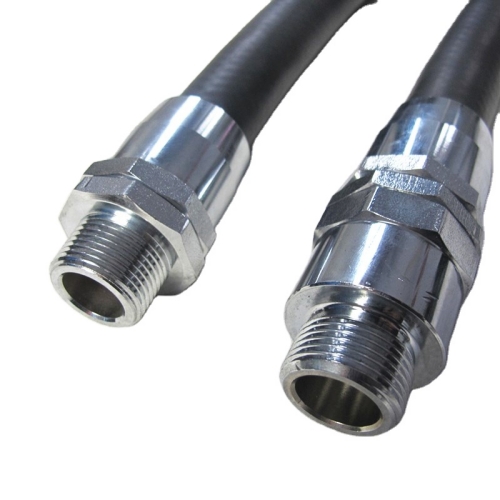
The performance of suction and delivery hoses is governed by several engineering principles. Burst pressure, the maximum pressure the hose can withstand before failure, is a critical parameter determined by reinforcement layer configuration and material strength. Vacuum pressure ratings indicate the hose’s ability to resist collapse under negative pressure. Hose flexibility, measured by bend radius, is essential for ease of installation and maneuvering in confined spaces.
Force analysis involves calculating stresses induced by internal pressure and external forces. Hose wall thickness, reinforcement material, and geometry all contribute to stress distribution. Environmental resistance is another crucial consideration. Exposure to UV radiation, ozone, extreme temperatures, and corrosive chemicals can degrade the hose material, reducing its performance and lifespan. Chemical compatibility charts are essential for selecting the appropriate hose material for specific fluids. Compliance requirements vary by industry and region. For example, hoses used in food and beverage applications must comply with FDA regulations, while those used in the oil and gas industry must meet API standards. Finite Element Analysis (FEA) is increasingly used to model hose behavior under various loading conditions, optimizing designs for improved performance and reliability.
Technical Specifications
| Parameter | Unit | Typical Value (NBR Lined, Steel Wire Reinforced) | Test Standard |
|---|---|---|---|
| Working Pressure | MPa | 1.0 | ISO 3864 |
| Burst Pressure | MPa | 3.0 | ISO 3864 |
| Vacuum Resistance | kPa | -85 | ISO 3864 |
| Tensile Strength | MPa | 20 | ASTM D2370 |
| Elongation at Break | % | 300 | ASTM D2370 |
| Operating Temperature Range | °C | -30 to +100 | ISO 3864 |
Failure Mode & Maintenance
Common failure modes for suction and delivery hoses include fatigue cracking (due to repeated flexing and pressure cycling), delamination (separation of layers due to poor bonding), degradation (chemical attack or UV exposure), and oxidation (rubber aging). Fatigue cracking typically initiates at stress concentration points, such as near fittings or reinforcement layers. Delamination can lead to sudden hose failure under pressure. Chemical degradation manifests as swelling, softening, or cracking of the rubber material. Oxidation causes the rubber to become brittle and lose its elasticity.
Preventive maintenance is crucial for extending hose life. Regular visual inspections should be conducted to identify signs of wear, cracking, or damage. Hoses should be properly stored when not in use, protected from UV radiation, extreme temperatures, and chemical exposure. Avoid sharp bends or kinks that can induce stress concentration. When handling abrasive materials, consider using hoses with abrasion-resistant liners. Periodic pressure testing can help identify potential weaknesses before they lead to catastrophic failure. In case of damage, hoses should be replaced immediately. Repairing damaged hoses is generally not recommended as it can compromise their structural integrity.
Industry FAQ
Q: What is the significance of the reinforcement layer material in determining hose performance?
A: The reinforcement layer is critical for withstanding internal pressure and preventing collapse. Steel wire offers the highest pressure resistance, but can be heavier and less flexible. Textile braids (polyester or nylon) provide a balance between strength, flexibility, and cost. The weave pattern and density of the braid also influence performance.
Q: How does the choice of rubber compound affect chemical compatibility?
A: Different rubber compounds exhibit varying levels of resistance to specific chemicals. NBR is excellent for oils, fuels, and hydraulic fluids. EPDM excels in resistance to ozone, weathering, and a wide range of chemicals. SBR is suitable for water and air, but has limited chemical resistance. Always consult a chemical compatibility chart before selecting a hose for a specific application.
Q: What are the key differences between extrusion and injection molding in hose manufacturing?
A: Extrusion is ideal for creating continuous hoses with consistent cross-sections. It's particularly suitable for rubber hoses. Injection molding is better for producing complex shapes and shorter hose lengths, often used for PVC hoses and fittings. Each process impacts the material properties and potential defects.
Q: What quality control measures should I look for when sourcing from China?
A: Look for suppliers with ISO 9001 certification, demonstrating a commitment to quality management. Request detailed material certifications and test reports. Conduct independent third-party inspections to verify quality before shipment. Consider performing burst pressure and vacuum resistance testing on sample hoses.
Q: How can I mitigate the risk of premature hose failure due to fatigue cracking?
A: Minimize hose bending and flexing. Use hoses with a larger bend radius. Avoid sharp angles and kinks. Ensure proper support and routing to reduce stress. Regularly inspect hoses for signs of cracking, and replace them proactively before failure occurs.
Conclusion
Suction and delivery hoses sourced from China represent a vital component in a multitude of industrial applications. Understanding the nuances of material science, manufacturing processes, and performance parameters is crucial for informed procurement and reliable operation. The selection of the appropriate hose requires a careful consideration of factors such as fluid compatibility, pressure requirements, environmental conditions, and industry-specific regulations. A robust quality control program, encompassing material certification, independent inspection, and periodic testing, is essential for mitigating the risks associated with variability in supplier quality.
Looking ahead, advancements in material science and manufacturing techniques will likely lead to the development of more durable, chemically resistant, and environmentally friendly hoses. Furthermore, the integration of sensor technology and data analytics could enable predictive maintenance strategies, optimizing hose lifespan and reducing downtime. By embracing these innovations and maintaining a rigorous focus on quality assurance, industries can leverage the cost-effectiveness of Chinese suppliers while ensuring the safety and reliability of their fluid transfer systems.