
Apr . 01, 2024 17:55 Back to list
china suction and delivery hose manufacturers Performance Analysis

Introduction
Suction and delivery hoses are critical components in numerous industrial applications, facilitating the transfer of fluids – ranging from water and chemicals to slurries and granular materials. Chinese manufacturers have become a dominant force in this sector, offering a wide range of hose types to meet global demand. This technical guide provides an in-depth analysis of these hoses, covering material science, manufacturing processes, performance characteristics, potential failure modes, and relevant industry standards. The core performance of these hoses is defined by their pressure handling capabilities, chemical resistance, abrasion resistance, and flexibility. Industry pain points include maintaining consistent quality across varying production volumes, ensuring compliance with increasingly stringent environmental regulations (particularly regarding phthalate content and material traceability), and addressing the challenges of hose failure in demanding applications, leading to costly downtime and potential safety hazards.
Material Science & Manufacturing
The foundation of suction and delivery hose performance lies in the materials used in their construction. Common materials include Natural Rubber (NR), Styrene-Butadiene Rubber (SBR), Nitrile Rubber (NBR), Ethylene Propylene Diene Monomer (EPDM), Polyvinyl Chloride (PVC), and Thermoplastic Polyurethane (TPU). NR offers excellent flexibility and abrasion resistance, ideal for general-purpose applications. SBR provides a lower-cost alternative with good abrasion resistance but reduced resistance to oils and chemicals. NBR excels in oil and fuel resistance, making it suitable for automotive and industrial fluid transfer. EPDM boasts superior resistance to weathering, ozone, and heat, commonly employed in agricultural and outdoor applications. PVC provides cost-effectiveness and chemical resistance, often used for water delivery. TPU combines high abrasion resistance with flexibility and chemical resistance, making it suitable for demanding industrial environments.
Manufacturing typically involves several key stages: material compounding, extrusion, reinforcement layering, and end fitting attachment. Compounding involves blending the base rubber with reinforcing fillers (carbon black, silica), plasticizers, antioxidants, and curing agents to achieve desired properties. Extrusion forms the hose body, with precise control of temperature, screw speed, and die geometry crucial for dimensional accuracy and wall thickness consistency. Reinforcement, typically comprising textile plies (polyester, nylon) or steel wire helixes, is added to provide pressure resistance and structural integrity. Parameter control during reinforcement winding is critical to prevent voids and ensure uniform stress distribution. Finally, end fittings (flanges, couplings, quick-disconnects) are securely attached using methods like vulcanization, crimping, or mechanical fastening. Quality control at each stage, including tensile testing, elongation testing, burst pressure testing, and chemical resistance testing, is paramount to ensure product reliability.
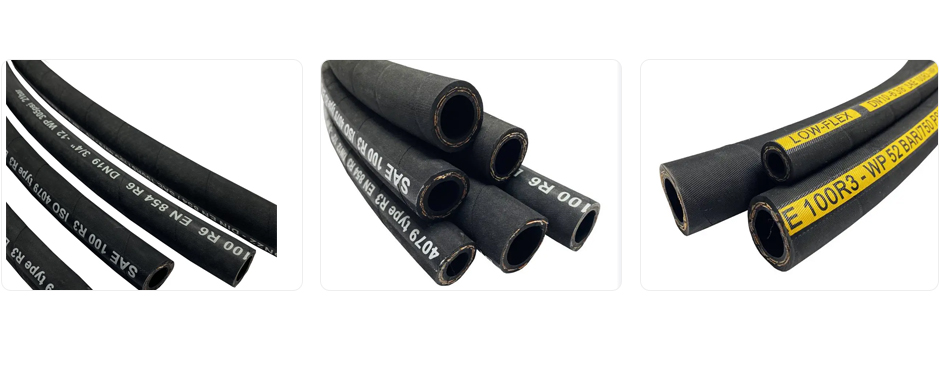
Performance & Engineering
The performance of suction and delivery hoses is governed by a complex interplay of forces and environmental factors. Force analysis focuses on hoop stress (resulting from internal pressure), longitudinal stress (due to pressure and flow velocity), and bending stress (during hose manipulation). Hose wall thickness, reinforcement type, and material properties directly influence the ability to withstand these stresses. Environmental resistance is critical, encompassing temperature extremes, UV exposure, ozone attack, and chemical exposure. EPDM, for instance, exhibits superior resistance to ozone cracking compared to NR. Chemical compatibility is often assessed using immersion testing, where hose samples are exposed to specific chemicals for defined periods and evaluated for changes in physical properties (tensile strength, elongation, hardness). Compliance requirements vary by industry and region. Food-grade hoses must meet FDA regulations (21 CFR 177.2600) concerning material extractables. Potable water hoses must comply with NSF/ANSI 61 standards. Hoses used in hazardous environments may require adherence to ATEX directives for explosion protection. Functional implementation includes considerations for flow rate, pressure drop, and suction lift capability, all of which are affected by hose diameter, length, and internal roughness.
Technical Specifications
| Parameter | Unit | NBR Hose (Typical) | PVC Hose (Typical) | EPDM Hose (Typical) |
|---|---|---|---|---|
| Working Pressure | PSI | 200 | 150 | 180 |
| Burst Pressure | PSI | 600 | 450 | 540 |
| Temperature Range | °F | -40 to 212 | -20 to 150 | -50 to 250 |
| Tensile Strength | MPa | 15 | 10 | 12 |
| Elongation at Break | % | 400 | 300 | 350 |
| Chemical Resistance | Rating (1-5, 5=Excellent) | 4 (Oils, Fuels) | 3 (Acids, Alkalis) | 5 (Ozone, Weathering) |
Failure Mode & Maintenance
Suction and delivery hoses are susceptible to several failure modes. Fatigue cracking, caused by repeated bending and pressure cycling, is a common issue, particularly at connection points. Delamination, the separation of reinforcement layers, can occur due to inadequate bonding or exposure to aggressive chemicals. Degradation, arising from UV exposure, ozone attack, or chemical reaction, leads to embrittlement and loss of mechanical properties. Oxidation, particularly in NR and SBR, causes hardening and cracking. Abrasion, stemming from the transport of abrasive materials, wears away the hose lining. Pinholes can develop due to localized wear or corrosion. To mitigate these failures, regular inspection is crucial, looking for signs of cracking, swelling, discoloration, or leakage. Proper storage, away from direct sunlight and extreme temperatures, is essential. Avoid sharp bends and excessive kinking. Flush the hose after each use to remove residual fluids. Replace hoses at regular intervals, based on manufacturer recommendations and operating conditions. Implement a preventative maintenance program, including pressure testing and visual inspections. For hoses exposed to harsh chemicals, consult a chemical compatibility chart to ensure proper material selection.
Industry FAQ
Q: What is the impact of phthalate content in PVC hoses, and how are Chinese manufacturers addressing this concern?
A: Phthalates, used as plasticizers in PVC, have raised health and environmental concerns. Regulations like REACH in Europe restrict phthalate use. Chinese manufacturers are increasingly transitioning to phthalate-free plasticizers, such as DOTP and DINCH, to meet international compliance standards. Traceability of materials and rigorous testing are also being implemented to ensure phthalate-free formulations.
Q: How do different reinforcement materials (textile vs. steel wire) affect the hose's performance in high-pressure applications?
A: Steel wire reinforcement provides significantly higher pressure resistance compared to textile reinforcement. Textile reinforcement offers greater flexibility, but is limited in its ability to withstand high pressures. Steel wire hoses are typically used in hydraulic applications, while textile-reinforced hoses are suitable for lower-pressure water or air transfer.
Q: What are the critical considerations when selecting a hose for transferring abrasive slurries?
A: Abrasion resistance is paramount. Hoses with a high-hardness rubber lining (e.g., natural rubber or polyurethane) and a thick wall are recommended. The hose diameter should be sufficiently large to minimize flow velocity and reduce abrasive wear. Regular inspection and replacement are essential due to the accelerated wear rate.
Q: What testing standards are commonly used to verify the quality and performance of suction and delivery hoses?
A: Common testing standards include ISO 3864 (hydraulic hoses), SAE J30R3 (fuel transfer hoses), and ASTM D1430 (rubber hoses for water and air). Burst pressure testing, tensile strength testing, elongation testing, and chemical resistance testing are routinely performed.
Q: How do Chinese manufacturers ensure consistent quality control across large-scale production runs?
A: Leading Chinese manufacturers are investing in automated production equipment, statistical process control (SPC), and rigorous quality management systems (ISO 9001). Inline inspection systems, utilizing sensors and vision technology, are implemented to detect defects in real-time. Batch traceability and comprehensive documentation are also essential components of their quality control processes.
Conclusion
Suction and delivery hoses, while seemingly simple components, are critical for a vast array of industrial processes. Understanding the interplay between material science, manufacturing techniques, and performance requirements is vital for selecting the appropriate hose for a given application. Chinese manufacturers have emerged as global leaders in this sector, driven by competitive pricing and increasing investment in quality control and innovation. The ability to meet evolving industry demands, particularly concerning environmental regulations and demanding operating conditions, will define future success.
Moving forward, the trend towards specialized hoses tailored to specific applications will continue. Developments in material science, such as the use of advanced polymers and nanocomposites, will further enhance hose performance and durability. Digitalization and data analytics will play an increasingly important role in optimizing manufacturing processes and predicting hose lifespan. Collaboration between manufacturers, end-users, and research institutions will be essential to drive innovation and address emerging challenges in this dynamic industry.