
Apr . 01, 2024 17:55 Back to list
china suction and delivery hose factories Performance Analysis
Introduction
Suction and delivery hoses are critical components in a wide range of industrial applications, including agriculture, construction, mining, chemical processing, and oil & gas. China has emerged as a dominant global manufacturer of these hoses, serving both domestic and international markets. These hoses are designed to transfer liquids – often abrasive or corrosive – under pressure or vacuum conditions. Their performance is dictated by factors like material composition, reinforcement structure, and manufacturing quality. This guide provides an in-depth technical analysis of suction and delivery hoses manufactured in China, encompassing material science, manufacturing processes, performance characteristics, failure modes, and relevant industry standards. A primary industry pain point is maintaining consistent quality control amidst a highly competitive and fragmented manufacturing landscape, particularly regarding material traceability and adherence to international safety standards. Another is balancing cost-effectiveness with long-term durability and resistance to specific chemical environments.
Material Science & Manufacturing
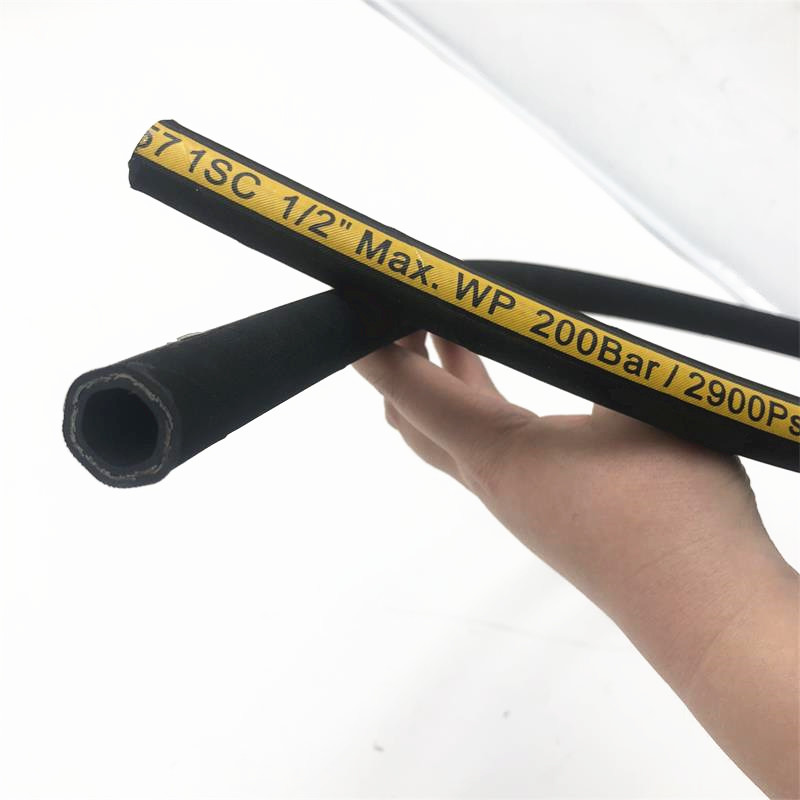
The core material for most suction and delivery hoses is synthetic rubber, with variations depending on the intended application. Common elastomers include Natural Rubber (NR) for general purpose applications, Styrene-Butadiene Rubber (SBR) for cost-effective solutions, Nitrile Rubber (NBR) for oil resistance, Ethylene Propylene Diene Monomer (EPDM) for water, steam, and weathering resistance, and Chloroprene Rubber (CR) – Neoprene – for a broad range of chemical resistance and flame retardancy. Polyvinyl Chloride (PVC) is also widely utilized, especially for lighter-duty applications. The selection of the elastomer is crucial, dictated by the chemical compatibility of the transferred fluid and the operating temperature. Reinforcement layers are integral to hose performance. These typically consist of multiple plies of high-tensile textiles (polyester, nylon) or steel wire helices to provide pressure resistance and prevent collapse under vacuum. Manufacturing processes vary. Rubber hoses are commonly produced through extrusion, layering with reinforcement, and vulcanization. PVC hoses are often manufactured through extrusion or spiral winding followed by fusion. Parameter control during vulcanization is critical; precise temperature and duration are required to achieve optimal cross-linking of the rubber polymers, influencing tensile strength, elongation at break, and hardness. Steel wire helix insertion requires careful tension control to ensure uniform reinforcement without damaging the hose body. Quality control during material sourcing, mixing, and extrusion is paramount to mitigate issues like porosity and inconsistent wall thickness.
Performance & Engineering
Performance of suction and delivery hoses is characterized by several key engineering parameters. Burst pressure, working pressure, and vacuum resistance are critical for safety and operational integrity. Burst pressure testing, typically performed according to ISO 3864, determines the maximum pressure the hose can withstand before failure. Working pressure is a fraction of the burst pressure, establishing the safe operating limit. Vacuum resistance is assessed by applying a vacuum and measuring the hose's ability to resist collapse. Tensile strength and elongation at break, determined using ASTM D412, indicate the hose's resistance to tearing and stretching. Flexibility and bend radius are essential for ease of installation and use; a tighter bend radius generally indicates a more flexible hose. Chemical resistance is assessed through immersion testing, exposing the hose material to the target fluid for extended periods and evaluating changes in physical properties. Abrasion resistance is critical in applications involving abrasive slurries or particulate matter, evaluated using methods like the Taber abrasion test (ASTM D5963). Environmental resistance, including ozone, UV, and weathering resistance, is crucial for outdoor applications. Force analysis during operation involves consideration of internal pressure, external loads, and bending stresses. Finite Element Analysis (FEA) is increasingly used to optimize hose designs and predict performance under various loading conditions.
Technical Specifications
| Parameter | NBR/PVC Suction Hose | EPDM Suction/Delivery Hose | Reinforced Rubber Suction Hose | High-Pressure Steel Wire Reinforced Hose |
|---|---|---|---|---|
| Working Pressure (PSI) | 150 | 100 | 200 | 400 |
| Burst Pressure (PSI) | 450 | 300 | 600 | 1200 |
| Temperature Range (°F) | -40 to 180 | -50 to 250 | -40 to 212 | -40 to 250 |
| Vacuum Resistance (InHg) | 29 | 27 | 29 | 29 |
| Tensile Strength (PSI) | 1200 | 1500 | 2000 | 3000 |
| Elongation at Break (%) | 400 | 500 | 600 | 500 |
Failure Mode & Maintenance
Suction and delivery hoses are susceptible to several failure modes. Fatigue cracking, induced by repeated flexing and pressure cycles, is a common issue, particularly at connection points. Delamination, the separation of reinforcement layers from the rubber matrix, can occur due to inadequate bonding or exposure to harsh chemicals. Degradation, caused by exposure to ozone, UV radiation, or extreme temperatures, leads to loss of elasticity and cracking. Oxidation, particularly in NR-based hoses, results in hardening and brittleness. Abrasion, from internal flow or external contact, wears down the hose wall. Corrosion of steel wire reinforcement can weaken the hose structure. Preventative maintenance is crucial. Regular visual inspections for cracks, bulges, or leaks are essential. Proper storage – avoiding direct sunlight, extreme temperatures, and contact with incompatible chemicals – extends hose lifespan. Hose connections should be regularly tightened and inspected for corrosion. When handling abrasive fluids, consider using hoses with abrasion-resistant liners. For critical applications, scheduled replacement based on operating hours or fluid exposure is recommended. Internal cleaning to remove build-up can prevent blockages and reduce stress on the hose wall. If damage is detected, the hose should be immediately taken out of service and replaced; repair attempts are generally not recommended due to the risk of catastrophic failure.
Industry FAQ
Q: What are the key differences between NBR and EPDM hoses in terms of chemical compatibility?
A: NBR offers excellent resistance to oils, fuels, and hydraulic fluids, making it suitable for automotive and industrial applications involving petroleum-based products. EPDM provides superior resistance to water, steam, weathering, and a wider range of chemicals, including acids and alkalis, making it ideal for water transfer, agricultural spraying, and chemical processing where oil exposure is minimal. NBR is generally not recommended for prolonged exposure to ozone or UV radiation, while EPDM performs well in these environments.
Q: How does the steel wire reinforcement affect the hose’s performance under vacuum?
A: Steel wire reinforcement significantly enhances the hose’s ability to resist collapse under vacuum. The helical steel wire provides structural support, preventing the hose walls from imploding. Without adequate reinforcement, a hose can buckle or collapse, interrupting flow and potentially causing damage.
Q: What is the significance of the “lay flat” characteristic in some suction hoses?
A: The "lay flat" characteristic refers to the hose’s ability to return to a relatively flat shape when not pressurized. This simplifies storage and transportation, minimizing space requirements. This is often achieved through a spiral reinforcement structure.
Q: What quality control standards should I look for when sourcing hoses from Chinese manufacturers?
A: Prioritize manufacturers with ISO 9001 certification for quality management systems. Look for evidence of rigorous testing, including burst pressure testing, tensile strength testing, and chemical resistance testing. Request material certificates verifying the composition of the rubber compounds and reinforcement materials. Traceability documentation linking materials to specific production batches is also crucial. Check for compliance with REACH and RoHS directives regarding hazardous substances.
Q: What are the risks associated with using a hose beyond its specified working pressure?
A: Exceeding the specified working pressure significantly increases the risk of catastrophic failure, potentially leading to hose rupture, fluid leaks, and personal injury. Operating outside the recommended pressure range compromises the hose's structural integrity and reduces its lifespan. Always adhere to the manufacturer’s recommended operating parameters.
Conclusion
Suction and delivery hoses are engineered products requiring careful material selection and manufacturing processes to ensure reliable performance. The Chinese manufacturing sector offers a wide range of options, but diligent quality control and adherence to international standards are essential. Understanding the core material properties, reinforcement structures, and failure modes allows for informed procurement and proactive maintenance, maximizing hose lifespan and minimizing operational risks.
Future advancements in hose technology will likely focus on developing more durable and chemically resistant materials, incorporating smart sensors for real-time performance monitoring, and improving manufacturing processes to reduce environmental impact. Continued emphasis on quality control and traceability within the Chinese manufacturing sector will be critical to maintain its position as a global leader in hose production.