
Apr . 01, 2024 17:55 Back to list
china steel braided teflon hose manufacturers Performance Analysis
Introduction
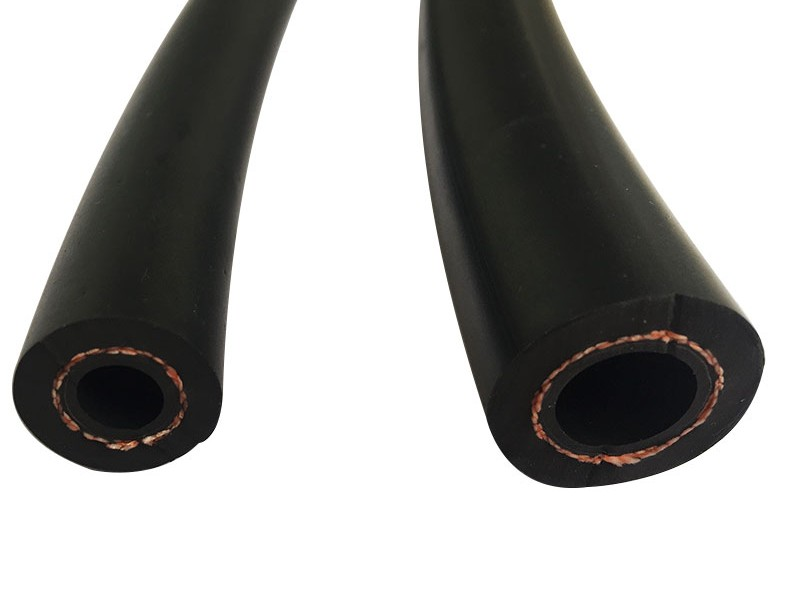
Steel braided Teflon hose, manufactured extensively in China, represents a critical fluid transfer component across diverse industrial applications. These hoses consist of a smooth-bore Teflon (PTFE) inner lining, reinforced with a braided stainless steel outer layer. Their technical positioning within the industry chain falls between raw material suppliers (PTFE resin, stainless steel wire) and end-users in sectors like automotive, aerospace, chemical processing, oil and gas, and medical engineering. Core performance characteristics include exceptional chemical inertness, high-temperature resistance (typically -60°C to +260°C), high-pressure capabilities (up to 6000 PSI or higher, depending on construction), and flexibility facilitating complex routing. A key industry pain point is ensuring consistent PTFE extrusion quality and reliable steel braid adhesion to prevent permeation and failure under extreme conditions. Another significant concern is navigating varying international standards and certifications related to material composition, pressure testing, and fire resistance.
Material Science & Manufacturing
The primary raw material is Polytetrafluoroethylene (PTFE), renowned for its exceptional chemical resistance, low coefficient of friction, and dielectric properties. PTFE resin is typically produced through emulsion or suspension polymerization of tetrafluoroethylene monomer. Key properties include a high degree of crystallinity, contributing to its chemical inertness, and a relatively high molecular weight affecting its melt viscosity during extrusion. The steel braid is typically constructed from 304 or 316 stainless steel, selected for corrosion resistance and tensile strength. Manufacturing begins with PTFE tube extrusion, a process requiring precise temperature control (around 327-361°C) and screw design to prevent degradation and maintain dimensional accuracy. Following extrusion, the steel braid is applied via a mechanical braiding machine. A critical parameter is braid angle (typically 55-70 degrees) which affects hose flexibility and burst pressure. Adhesion between the PTFE liner and steel braid is often enhanced using a bonding agent, typically a modified PTFE compound, applied during or after braiding. Quality control focuses on wall thickness uniformity, braid coverage, and adhesion strength, often assessed through peel tests. Further processing may include end fitting attachment via crimping or swaging, demanding precise tooling and process control to avoid damaging the hose structure.

Performance & Engineering
Performance analysis of steel braided Teflon hose centers on its ability to withstand internal pressure, external mechanical stress, and exposure to corrosive media. Force analysis involves calculating hoop stress within the PTFE liner under pressure, which is directly related to the hose diameter and internal pressure. The steel braid provides reinforcement, resisting circumferential expansion and preventing bursting. Finite Element Analysis (FEA) is frequently employed to model stress distribution and optimize braid construction. Environmental resistance is paramount. PTFE is inherently resistant to most chemicals, but prolonged exposure to strong bases or high temperatures can lead to degradation. Stainless steel offers excellent corrosion resistance in many environments, but susceptibility to pitting corrosion can arise in chloride-rich environments. Compliance requirements vary by application. Automotive hoses must meet FMVSS 106 standards for fuel lines. Aerospace applications necessitate adherence to AMS specifications. Chemical processing demands compliance with relevant ASME standards. Functional implementation requires careful consideration of hose routing, bend radius (typically 5-10 times the hose diameter), and fitting selection. Improper installation can lead to kinking, stress concentrations, and premature failure. Fatigue analysis is crucial for applications involving cyclic pressure or vibration, requiring assessment of the hose's resistance to crack propagation.
Technical Specifications
| Parameter | Unit | Typical Value (China Manufactured) | Testing Standard |
|---|---|---|---|
| Working Pressure | PSI | 2000-5000 | ISO 3862 |
| Burst Pressure | PSI | 8000-20000 | ISO 3862 |
| Temperature Range | °C | -60 to +260 | ASTM D348 |
| Inner Diameter | mm | 6-50 | ISO 1307 |
| Braid Material | - | 304/316 Stainless Steel | ASTM A975 |
| PTFE Liner Thickness | mm | 0.8-2.5 | ASTM D348 |
Failure Mode & Maintenance
Common failure modes in steel braided Teflon hoses include permeation (leakage of fluid through the PTFE liner), braid corrosion, hose kinking, and end fitting failure. Permeation can occur due to defects in the PTFE extrusion, damage to the liner, or exceeding the hose's temperature or pressure limits. Braid corrosion is primarily observed in environments containing chlorides or other corrosive agents, leading to reduced strength and eventual failure. Kinking occurs when the hose is bent beyond its minimum bend radius, causing localized stress concentrations and potential cracking. End fitting failure can result from improper crimping, material incompatibility, or corrosion. Fatigue cracking can occur under cyclical loading, initiating at stress concentrators such as braid terminations or damaged areas. Maintenance involves regular visual inspection for signs of damage, corrosion, or leakage. Hose should be flushed periodically to remove contaminants. Avoid sharp bends and excessive tension during installation and use. Pressure testing should be conducted periodically to verify integrity. If damage is detected, the hose should be replaced immediately. Preventative maintenance includes proper storage in a cool, dry environment, away from direct sunlight and corrosive substances. Selection of compatible fittings is crucial to avoid galvanic corrosion.
Industry FAQ
Q: What is the impact of varying braid angles on hose performance?
A: Braid angle significantly influences hose flexibility and burst pressure. A shallower braid angle (e.g., 30 degrees) provides greater flexibility but lower burst pressure. A steeper angle (e.g., 70 degrees) increases burst pressure but reduces flexibility. Manufacturers typically optimize the braid angle based on the intended application – flexible hoses for tight spaces utilize shallower angles, while high-pressure applications demand steeper angles.
Q: How do different PTFE resin grades affect the hose's chemical resistance?
A: Different PTFE resin grades exhibit varying levels of chemical resistance. Standard PTFE offers broad chemical compatibility, but modified PTFE resins, incorporating additives, can enhance resistance to specific chemicals like strong bases or solvents. The molecular weight and crystallinity of the resin also play a role; higher molecular weight PTFE generally provides better resistance.
Q: What are the critical considerations when selecting end fittings for steel braided hoses?
A: Material compatibility is paramount. Stainless steel fittings are generally preferred to avoid galvanic corrosion. Fitting pressure ratings must exceed the hose's working and burst pressures. Crimping or swaging processes must be carefully controlled to ensure a secure, leak-proof connection without damaging the hose. Thread type and size must be appropriate for the application.
Q: How does temperature affect the working pressure rating of a Teflon hose?
A: The working pressure rating decreases as temperature increases. PTFE's mechanical properties degrade at higher temperatures, reducing its ability to withstand internal pressure. Manufacturers provide derating curves that specify the allowable working pressure at different temperatures. Exceeding these limits can lead to hose failure.
Q: What quality control tests are typically performed on steel braided Teflon hose during manufacturing?
A: Common quality control tests include hydrostatic pressure testing (to verify burst pressure), leak testing (to detect permeation), peel adhesion testing (to assess braid adhesion), dimensional inspection (to ensure accurate sizing), and visual inspection (to identify defects). Material certifications for PTFE resin and stainless steel are also essential.
Conclusion
Steel braided Teflon hose, produced extensively by Chinese manufacturers, represents a sophisticated fluid transfer solution demanding careful consideration of material science, manufacturing processes, and performance characteristics. Achieving reliable performance hinges on maintaining consistent PTFE extrusion quality, robust braid adhesion, and proper fitting selection. Understanding the potential failure modes and implementing preventative maintenance strategies are crucial for ensuring long-term operational integrity and minimizing downtime.
The future of this technology likely involves advancements in PTFE resin formulations to enhance chemical resistance and high-temperature performance, as well as the development of more sophisticated braiding techniques to improve flexibility and burst pressure. Adherence to international standards and rigorous quality control procedures will remain paramount to ensuring the continued reliability and safety of these critical components.