
Apr . 01, 2024 17:55 Back to list
china steel braided teflon hose factory Performance Analysis
Introduction
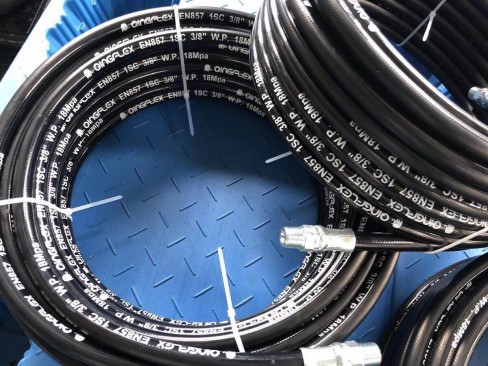
Steel braided Teflon hose represents a critical component in fluid transfer systems across diverse industrial applications, including automotive, aerospace, chemical processing, and oil & gas. This guide details the engineering principles, material science, manufacturing processes, performance characteristics, failure modes, and industry standards relevant to these hoses, specifically focusing on those produced by china steel braided teflon hose factory. These hoses are prized for their ability to withstand extreme temperatures, pressures, and corrosive environments while maintaining flexibility. Their construction – a Teflon (PTFE) inner core reinforced with a stainless steel braid – addresses the limitations of both purely polymeric hoses (low pressure/temperature resistance) and rigid metallic tubing (inflexibility). The inherent chemical inertness of PTFE further broadens their applicability. A key industry pain point lies in ensuring consistent braid coverage and adhesion to the PTFE liner, directly impacting burst pressure and service life. This guide aims to provide a comprehensive technical overview for procurement professionals, engineers, and maintenance personnel involved in specifying, using, and maintaining these essential components.
Material Science & Manufacturing
The core materials of steel braided Teflon hose dictate its performance characteristics. The inner liner is typically comprised of Polytetrafluoroethylene (PTFE), chosen for its exceptional chemical resistance, a low coefficient of friction, and a wide operating temperature range (-200°C to +260°C). PTFE is a fluoropolymer, meaning it’s highly resistant to degradation from most chemicals, solvents, and corrosive agents. However, PTFE has relatively low tensile strength and creep resistance on its own. The reinforcement braid is almost invariably 304 or 316 stainless steel, selected for its corrosion resistance, high tensile strength, and flexibility. 316 stainless steel offers superior resistance to chloride corrosion compared to 304. The manufacturing process begins with PTFE extrusion. Granular PTFE resin is compacted and sintered, then extruded through a die to form the seamless hose liner. Critical parameters include die temperature, extrusion speed, and sintering time, all of which influence liner wall thickness, surface finish, and crystalline structure. The stainless steel braid is then helically wound around the PTFE liner. Crucially, proper adhesion between the braid and liner is vital. This is often achieved through a surface treatment of the PTFE (etching or plasma treatment) to increase surface energy and allow for mechanical interlocking with the braid wires. Braid coverage, expressed as a percentage, is a critical quality control parameter. Higher braid coverage translates to higher burst pressure capability. Finally, end fittings are attached, typically via crimping or swaging, with careful attention paid to maintaining the integrity of both the PTFE liner and the steel braid at the termination points.
Performance & Engineering
The performance of steel braided Teflon hose is dictated by several key engineering considerations. Burst pressure is paramount, determined by the PTFE liner thickness, the steel braid coverage, and the material strength of both components. Hydrostatic testing is standard to verify burst pressure compliance. Flexibility, measured as bend radius, is crucial for installation in confined spaces. The tighter the bend radius, the more demanding the requirements on both the PTFE liner (resistance to cracking) and the steel braid (fatigue resistance). Temperature resistance is another critical factor. While PTFE itself has a broad temperature range, the end fittings may impose limitations. Pressure drop within the hose is governed by the internal diameter, fluid viscosity, and flow rate. Engineers must perform calculations based on the Darcy-Weisbach equation to accurately predict pressure loss. Furthermore, consideration must be given to fluid compatibility. While PTFE is highly inert, certain aggressive chemicals (e.g., molten alkali metals) can attack it. The hose’s resistance to permeation – the leakage of fluids through the hose wall – is also important in applications where environmental contamination is a concern. Finite element analysis (FEA) is frequently employed to model stress distribution within the hose under various loading conditions, optimizing braid coverage and liner thickness to maximize performance and predict potential failure points. Compliance with industry standards, such as SAE J526 for automotive applications, is also essential.
Technical Specifications
| Parameter | Unit | Typical Value (china steel braided teflon hose factory - Standard Grade) | Typical Value (china steel braided teflon hose factory - High-Pressure Grade) |
|---|---|---|---|
| Inner Diameter | mm | 6.35 | 12.7 |
| Outer Diameter | mm | 12.7 | 25.4 |
| Working Pressure | MPa | 2.1 | 4.2 |
| Burst Pressure | MPa | 6.3 | 12.6 |
| Temperature Range | °C | -60 to +260 | -60 to +260 |
| Braid Coverage | % | 60 | 80 |
| Material (Liner) | - | PTFE (Virgin) | PTFE (Virgin) |
| Material (Braid) | - | 304 Stainless Steel | 316 Stainless Steel |
Failure Mode & Maintenance
Failure modes in steel braided Teflon hose can be categorized as follows: burst failure (due to exceeding pressure limits or liner defects), braid degradation (corrosion, fatigue cracking from repeated bending), liner cracking (from severe bending or chemical attack), and connection failure (at the crimped or swaged fittings). Fatigue cracking in the steel braid is a common failure mechanism in applications involving vibration or frequent flexing. Corrosion, particularly in environments containing chlorides, can weaken the braid and lead to premature failure. Liner degradation can occur due to prolonged exposure to aggressive chemicals, causing swelling, cracking, and loss of mechanical properties. Oxidation of the PTFE liner at very high temperatures can also lead to embrittlement. Maintenance practices should include regular visual inspection for signs of damage (cracks, corrosion, abrasion). Pressure testing should be performed periodically to verify hose integrity. Avoid sharp bends and exceeding the specified working pressure. Proper storage is crucial; hoses should be stored in a cool, dry place away from direct sunlight and chemicals. When replacing hoses, ensure the new hose has the correct specifications for the application and that the end fittings are properly installed. Use of incompatible fluids can accelerate degradation; always verify chemical compatibility prior to use. Failure analysis should involve microscopic examination of the fractured surfaces to determine the root cause of failure.
Industry FAQ
Q: What is the impact of braid material (304 vs. 316 stainless steel) on hose life in a seawater environment?
A: 304 stainless steel is susceptible to pitting corrosion in seawater, significantly reducing its lifespan. 316 stainless steel, containing molybdenum, offers significantly improved resistance to chloride corrosion and is the preferred choice for marine applications. The lifespan improvement can be several times longer, depending on the severity of the exposure.
Q: How does increasing braid coverage affect the hose's resistance to kinking?
A: Higher braid coverage generally increases resistance to kinking. The braid provides structural support, preventing the liner from collapsing under pressure or bending stress. However, extremely high braid coverage can reduce flexibility; a balance must be struck between kink resistance and bend radius requirements.
Q: What is the significance of PTFE’s weight percentage of fluorine?
A: The percentage of fluorine in PTFE directly correlates to its chemical inertness and temperature resistance. Higher fluorine content typically indicates a higher grade of PTFE with superior performance characteristics. Variations in fluorine content can result from different manufacturing processes.
Q: What testing methods are used to verify the adhesion between the PTFE liner and the steel braid?
A: Peel adhesion tests are commonly used to quantify the bond strength between the liner and the braid. A standardized force is applied to peel the braid away from the liner, and the force required to initiate and propagate the peel is measured. Visual inspection post-testing reveals the mode of failure (liner tearing vs. adhesive failure).
Q: Can steel braided Teflon hose be used for vacuum applications? What are the limitations?
A: Yes, but with limitations. PTFE has good inherent vacuum properties. However, the steel braid can be susceptible to collapse under vacuum if the hose is not adequately supported. Reinforcement with an internal spring or a thicker liner may be required for sustained vacuum applications.
Conclusion
Steel braided Teflon hose remains a vital component for fluid transfer in demanding industrial environments. Its unique combination of chemical resistance, temperature stability, and flexibility makes it a superior choice over alternative materials in many applications. Understanding the interplay between material science, manufacturing processes, and engineering principles is crucial for selecting the appropriate hose for a given application and ensuring long-term reliability. China steel braided teflon hose factory’s ability to consistently deliver products meeting stringent quality control standards is pivotal to the performance and longevity of these systems.
Future development focuses on improving braid adhesion techniques, utilizing advanced PTFE formulations with enhanced creep resistance, and developing smart hose systems with integrated sensors for real-time monitoring of pressure, temperature, and structural integrity. Proper maintenance, including regular inspection and adherence to operating guidelines, remains the cornerstone of maximizing service life and preventing catastrophic failures.