
Apr . 01, 2024 17:55 Back to list
china steel braided hydraulic hose manufacturers Performance Analysis
Introduction
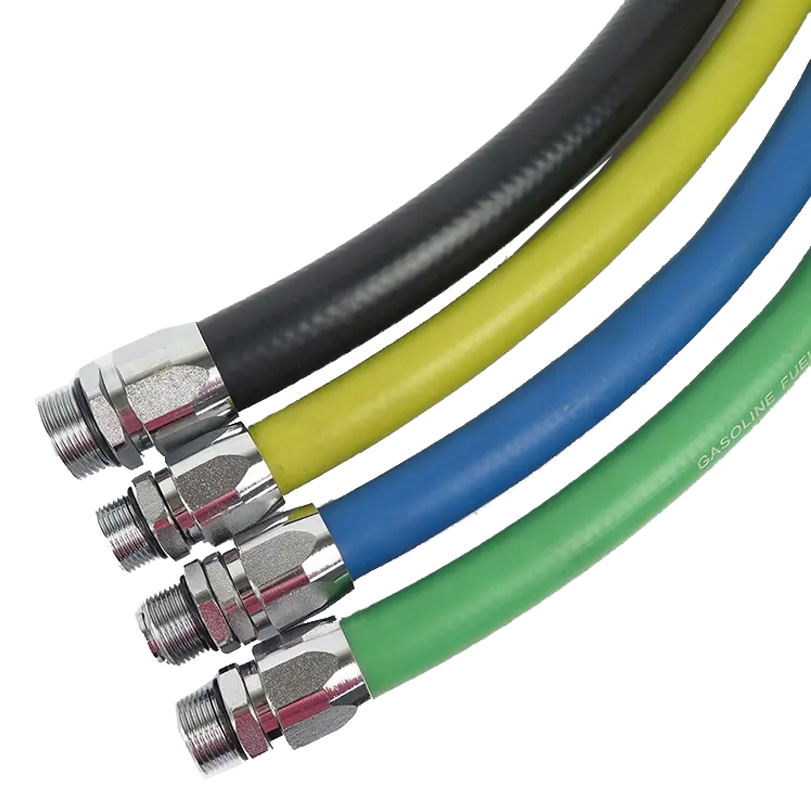
Steel braided hydraulic hose, manufactured extensively in China, represents a critical component in fluid power systems across diverse industries including construction, agriculture, automotive, and industrial machinery. These hoses facilitate the transmission of hydraulic fluid under high pressure, enabling the operation of hydraulic cylinders, motors, and other actuators. The Chinese manufacturing sector has become a global leader in this segment, driven by competitive pricing, increasing production capacity, and adherence to international quality standards. This guide provides a comprehensive technical overview of steel braided hydraulic hose, encompassing material science, manufacturing processes, performance characteristics, failure modes, and relevant industry standards. Core performance is defined by pressure rating, burst pressure, temperature range, and fluid compatibility. A significant pain point in the industry is consistently achieving and verifying these parameters while managing material cost fluctuations and maintaining rigorous quality control.
Material Science & Manufacturing
The construction of steel braided hydraulic hose involves several key materials and processes. The inner tube is typically composed of synthetic rubber compounds, specifically nitrile rubber (NBR) for oil-based fluids, or ethylene propylene diene monomer (EPDM) for water-based fluids. NBR offers excellent resistance to petroleum-based oils, fuels, and hydraulic fluids, with a typical operating temperature range of -40°C to +100°C. EPDM provides superior resistance to heat, ozone, and weathering, and is suitable for applications involving water-glycol fluids. The reinforcement layer consists of one or more braids of high-strength steel wire, typically carbon steel. The wire's tensile strength, measured in MPa, is a critical parameter influencing burst pressure. The outer cover is usually a synthetic rubber, such as chloroprene rubber (CR) which provides abrasion, ozone, and weathering resistance. Manufacturing begins with extrusion of the inner tube, followed by the winding of steel wire braid onto the tube. The braid angle is precisely controlled (typically 30-55 degrees) to optimize pressure resistance and flexibility. A bonding adhesive is applied between the tube and braid to ensure proper adhesion and prevent separation. Finally, the outer cover is extruded, and the hose is subjected to vulcanization (curing) to crosslink the rubber compounds, enhancing their mechanical properties and chemical resistance. Key parameter control includes wire diameter consistency, braid coverage percentage, adhesive application uniformity, and curing temperature/time.

Performance & Engineering
The performance of steel braided hydraulic hose is governed by several engineering principles. Burst pressure is the maximum pressure the hose can withstand before failure and is directly proportional to the steel wire's tensile strength, the number of braid layers, and the braid angle. A force analysis reveals that hoop stress within the hose wall increases with internal pressure. The steel braid provides the necessary tensile strength to counteract this stress. Flexibility is another critical parameter, defined by the hose’s bend radius. A smaller bend radius indicates greater flexibility, which is important for complex routing within machinery. Environmental resistance is crucial, particularly in harsh operating conditions. Exposure to extreme temperatures, ozone, UV radiation, and corrosive fluids can degrade the rubber compounds, reducing the hose’s lifespan. Compliance requirements, such as those outlined in SAE J517, dictate the minimum performance standards for hydraulic hoses, including pressure rating, temperature range, and fluid compatibility. Functional implementation requires careful consideration of hose length, end fitting type (e.g., crimped, swaged, threaded), and hose routing to minimize stress and vibration. Finite Element Analysis (FEA) is often employed to optimize hose design and predict performance under various loading conditions.
Technical Specifications
| Parameter | Unit | Typical Value (China Manufacturing) | Industry Standard (SAE J517) |
|---|---|---|---|
| Working Pressure | MPa | 16-35 | 10-35 |
| Burst Pressure | MPa | 48-105 | 30-105 |
| Temperature Range | °C | -40 to +100 | -40 to +100 |
| Inner Tube Material | - | NBR/EPDM | NBR/EPDM/PVC |
| Reinforcement Material | - | Steel Wire Braid (1/2/4 Layer) | Steel Wire Braid |
| Outer Cover Material | - | CR | CR/PVC |
Failure Mode & Maintenance
Steel braided hydraulic hose is susceptible to several failure modes. Fatigue cracking, caused by repeated flexing and pressure cycling, is a common failure mechanism, often initiating at points of high stress concentration. Delamination, the separation of the rubber compounds from the steel braid, can occur due to inadequate bonding or exposure to harsh chemicals. Degradation of the rubber compounds, resulting from exposure to heat, ozone, UV radiation, or incompatible fluids, leads to loss of flexibility and reduced pressure resistance. Oxidation can cause the rubber to become brittle and crack. Pinholes in the inner tube can result in fluid leakage. External abrasion from contact with other components can damage the outer cover, exposing the steel braid to corrosion. Maintenance solutions include regular visual inspection for cracks, abrasions, and leaks. Pressure testing should be performed periodically to verify the hose’s integrity. Hose routing should be optimized to minimize bending stress and vibration. Fluid compatibility should be verified before use. Damaged hoses should be replaced immediately. Correct installation with properly crimped fittings is crucial to prevent premature failure. Avoid over-bending the hose, and protect it from excessive heat and chemical exposure.
Industry FAQ
Q: What is the impact of steel wire surface treatment on hose lifespan?
A: Steel wire surface treatment, specifically galvanization or passivation, significantly impacts hose lifespan. Untreated steel is prone to corrosion, especially when exposed to moisture and corrosive fluids. Corrosion weakens the steel wire, reducing the hose’s burst pressure and increasing the risk of fatigue failure. Galvanization provides a protective zinc coating, while passivation forms a protective oxide layer. These treatments enhance corrosion resistance and extend the hose’s service life.
Q: How does braid angle affect both pressure rating and flexibility?
A: Braid angle is a critical design parameter. A shallower braid angle (e.g., 30 degrees) provides greater flexibility but lower pressure resistance. A steeper braid angle (e.g., 55 degrees) offers higher pressure resistance but reduced flexibility. An optimal braid angle is selected based on the specific application requirements, balancing the need for pressure containment and ease of routing.
Q: What are the key differences between NBR and EPDM inner tube materials, and when would you choose one over the other?
A: NBR excels in resisting petroleum-based oils, fuels, and hydraulic fluids, while EPDM offers superior resistance to heat, ozone, and weathering, and is ideal for water-glycol based fluids. Choose NBR when the hose will primarily convey oil-based fluids. Select EPDM for applications involving water, steam, or where exposure to ozone and UV radiation is significant.
Q: What quality control measures do Chinese manufacturers typically employ to ensure consistent hose performance?
A: Reputable Chinese manufacturers employ rigorous quality control measures including raw material inspection (steel wire tensile strength, rubber compound hardness), dimensional checks during manufacturing, pressure testing to 1.5 times working pressure, impulse testing to simulate real-world pressure fluctuations, and destructive burst testing to verify ultimate strength. Many are now ISO 9001 certified, demonstrating a commitment to quality management systems.
Q: How does hose fitting selection impact performance and reliability?
A: Incorrectly sized or improperly crimped fittings are a primary cause of hose failure. Fittings must be compatible with the hose’s inner tube, reinforcement, and outer cover. Crimping must be performed with calibrated tools and procedures to ensure a secure, leak-free connection. Using the wrong fitting material (e.g., steel with aluminum hose) can lead to galvanic corrosion and premature failure.
Conclusion
Steel braided hydraulic hose, as produced by Chinese manufacturers, remains a vital component in numerous industrial applications. Achieving consistent, reliable performance hinges on a deep understanding of material science, rigorous manufacturing process control, and adherence to international standards. The interplay between material selection (rubber compound, steel grade), braid construction (angle, layers), and proper installation is paramount to ensuring optimal hose lifespan and preventing catastrophic failure.
Looking ahead, advancements in rubber compound technology, coupled with more precise manufacturing techniques, will further enhance the performance and durability of these hoses. Greater emphasis on non-destructive testing methods, such as ultrasonic inspection, will enable more comprehensive quality control. Maintaining a collaborative approach between manufacturers, end-users, and standards organizations is crucial for driving innovation and ensuring the continued reliability of steel braided hydraulic hose in demanding applications.