
Apr . 01, 2024 17:55 Back to list
china smooth cover steel wire braided hydraulic hose factories Performance Analysis
Introduction
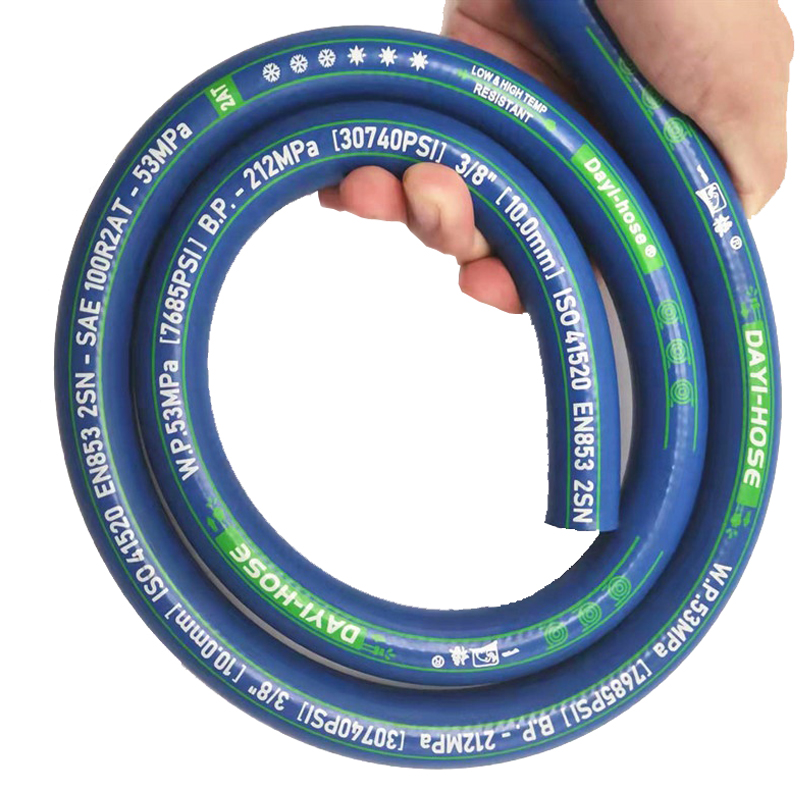
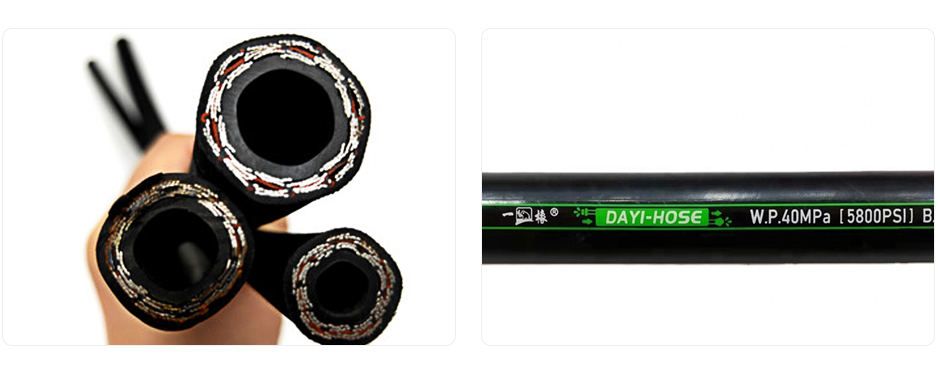
Steel wire braided hydraulic hoses with smooth covers represent a critical component in fluid power systems across numerous industries, including construction, agriculture, mining, and manufacturing. These hoses are engineered to transmit hydraulic fluid under high pressure, enabling the efficient operation of heavy machinery and equipment. Chinese manufacturers have become significant players in the global hydraulic hose market, specializing in the production of these complex assemblies. The core function of these hoses lies in their ability to reliably convey fluid while maintaining structural integrity under demanding conditions. Their construction involves multiple layers – an inner tube providing fluid compatibility, multiple layers of high-tensile steel wire for reinforcement against pressure, and an outer cover offering abrasion and environmental resistance. Smooth cover hoses distinguish themselves through reduced friction loss and increased flexibility compared to textured cover variants. Understanding their material composition, manufacturing processes, performance characteristics, and potential failure modes is paramount for ensuring safe and efficient operation.
Material Science & Manufacturing
The manufacturing of steel wire braided hydraulic hoses involves a precise sequence of material selection and processing steps. The inner tube is typically composed of oil-resistant synthetic rubber compounds, such as nitrile rubber (NBR), chloroprene rubber (CR), or ethylene propylene diene monomer (EPDM), chosen for their compatibility with the intended hydraulic fluid. NBR exhibits excellent resistance to petroleum-based fluids, CR offers good resistance to ozone and weathering, and EPDM provides superior resistance to heat and water. The reinforcement layer consists of high-strength steel wire, typically carbon steel, formed into a helical braid. The wire’s tensile strength, yield strength, and elongation properties are critical parameters. The cover material is usually a synthetic rubber blend, often a combination of SBR (styrene-butadiene rubber) and NBR, designed to withstand abrasion, ozone, UV exposure, and temperature fluctuations.
The manufacturing process begins with the extrusion of the inner tube to the specified dimensions. The steel wire is then spirally wound around the inner tube using automated braiding machines. The braid angle and wire density are precisely controlled to achieve the desired pressure rating and flexibility. Following braiding, the outer cover is extruded over the reinforcement layer, encapsulating the hose structure. Curing, or vulcanization, is a crucial step where the rubber compounds are cross-linked using heat and pressure, imparting the final mechanical properties. Quality control checks throughout the process include dimensional inspection, pressure testing, and visual inspection for defects. Key parameters include consistent rubber compound mixing ratios, precise braid tension control, and accurate curing temperatures and times. Improper control of these parameters can lead to premature failure.
Performance & Engineering
The performance of steel wire braided hydraulic hoses is governed by several critical engineering parameters. Burst pressure, working pressure, and impulse pressure ratings are paramount, dictating the hose’s ability to withstand extreme hydraulic forces. Burst pressure represents the pressure at which the hose fails catastrophically, while working pressure is the maximum allowable pressure for continuous operation, typically a fraction of the burst pressure. Impulse pressure refers to the hose’s ability to withstand pressure surges or spikes. Flexibility, measured by the bend radius, dictates the hose’s ability to navigate tight spaces. Tensile strength measures the resistance to stretching and breakage.
Force analysis reveals that the steel wire braid primarily bears the hoop stress generated by internal pressure. The number of braids and wire diameter significantly influence the hose’s pressure-holding capacity. Finite element analysis (FEA) is frequently employed to model stress distribution under various loading conditions. Environmental resistance is crucial; hoses must withstand exposure to oil, chemicals, temperature extremes, and UV radiation. Compliance with industry standards, such as SAE J517, EN 853, and DIN EN 489, is mandatory to ensure safety and reliability. These standards specify testing procedures for burst pressure, impulse pressure, temperature resistance, and dimensional accuracy. Understanding hydraulic fluid compatibility is also vital; incompatible fluids can cause swelling, degradation, or corrosion of the hose materials, leading to failure.
Technical Specifications
| Parameter | Unit | Specification Range (Typical) | Testing Standard |
|---|---|---|---|
| Working Pressure | MPa | 16 - 63 | SAE J517 |
| Burst Pressure | MPa | 48 - 190 | SAE J517 |
| Inner Tube Material | - | NBR, CR, EPDM | ASTM D2000 |
| Reinforcement Material | - | High-Tensile Steel Wire | ASTM A228 |
| Cover Material | - | SBR/NBR Blend | ASTM D2000 |
| Temperature Range | °C | -40 to +100 | SAE J517 |
Failure Mode & Maintenance
Steel wire braided hydraulic hoses are susceptible to several failure modes. Fatigue cracking, arising from repeated flexing and pressure cycling, is a common occurrence, particularly near the connections. Wire breakage within the braid can lead to sudden hose rupture. Abrasion and erosion of the outer cover can expose the reinforcement layer to corrosion. Chemical degradation, caused by incompatible hydraulic fluids, results in swelling, softening, or cracking of the rubber compounds. Improper installation, such as excessive bending or twisting, can induce stress concentrations and accelerate failure.
Preventive maintenance is crucial for extending hose lifespan and ensuring safety. Regular visual inspections should be conducted to identify signs of abrasion, cracking, swelling, or leakage. Hose connections should be checked for tightness and corrosion. Hydraulic fluid should be regularly analyzed for contamination and replaced as needed. Avoid exceeding the hose’s working pressure and temperature limits. When replacing hoses, ensure compatibility with the hydraulic fluid and application requirements. Proper storage conditions – cool, dry, and away from direct sunlight – can also prolong hose life. If a hose shows signs of damage, it should be immediately replaced. Failure analysis, including metallurgical examination of the steel wire and chemical analysis of the rubber compounds, can help determine the root cause of failure and prevent recurrence.
Industry FAQ
Q: What is the primary difference between 1SP, 2SP, and 4SP hose designations?
A: The ‘SP’ designation indicates steel wire braided hose. The number preceding ‘SP’ denotes the number of steel wire spiral layers. 1SP has one layer, offering lower pressure ratings and flexibility. 2SP has two layers, providing increased pressure capacity and moderate flexibility. 4SP incorporates four layers for the highest pressure ratings and reduced flexibility. The selection depends on the system's operating pressure and routing requirements.
Q: How does the hose cover material affect its service life?
A: The cover material protects the reinforcement layer from environmental factors. SBR offers good abrasion resistance for general-purpose applications. NBR provides enhanced oil resistance. A blend of SBR/NBR offers a balance of properties. Specialized covers, such as those incorporating polyurethane, provide superior abrasion and chemical resistance for demanding environments, extending service life.
Q: What is the impact of improper hose routing on performance?
A: Improper routing – excessive bending, twisting, or kinking – induces stress concentrations in the hose, leading to premature fatigue failure. Maintain a minimum bend radius specified by the manufacturer. Avoid sharp angles and ensure the hose is adequately supported to prevent sagging and vibration.
Q: How can I determine if a hydraulic fluid is compatible with a specific hose?
A: Refer to the hose manufacturer’s chemical compatibility chart. These charts list the compatibility of various hydraulic fluids with the hose’s inner tube material. Incompatibility can cause swelling, softening, or cracking, leading to leaks and failure. Always verify compatibility before use.
Q: What are the best practices for storing hydraulic hoses?
A: Store hoses in a cool, dry, and well-ventilated area, away from direct sunlight, ozone sources, and extreme temperatures. Coil hoses loosely and avoid sharp bends. Protect them from physical damage and contamination. Ideally, store them in their original packaging.
Conclusion
Steel wire braided hydraulic hoses with smooth covers are essential components in numerous industrial applications, demanding a comprehensive understanding of their material science, manufacturing processes, performance characteristics, and potential failure modes. Chinese manufacturers play a significant role in the global supply chain, offering a range of quality and price points. Optimizing hose selection, installation, and maintenance practices, coupled with adherence to relevant industry standards, is critical for ensuring safe, reliable, and efficient operation of hydraulic systems.
Future advancements in hydraulic hose technology will likely focus on the development of lighter-weight materials, improved abrasion resistance, and enhanced chemical compatibility. Smart hoses, incorporating sensors to monitor pressure, temperature, and leakage, are also emerging as a potential solution for predictive maintenance and improved system reliability. Continued research and development efforts will be essential for meeting the evolving demands of the hydraulic power industry.