
Apr . 01, 2024 17:55 Back to list
china sae100r9 manufacturers Performance Analysis
Introduction
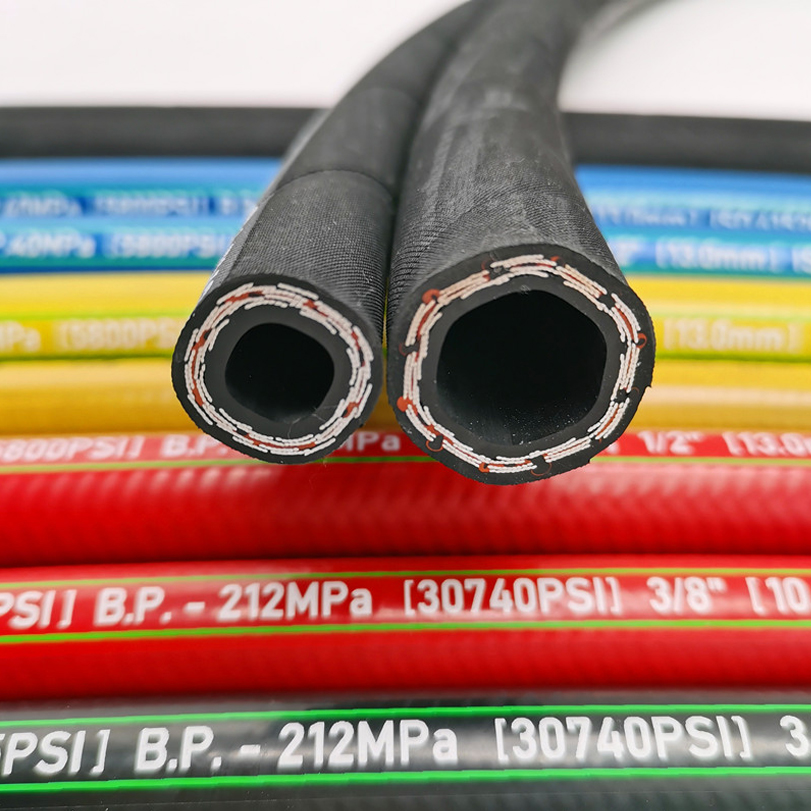
SAE 100R9 is a Society of Automotive Engineers (SAE) standard specifying requirements for non-reinforced hydraulic hose. These hoses are critical components in hydraulic systems across diverse industries, including construction, agriculture, mining, and manufacturing. china sae100r9 manufacturers play a substantial role in the global supply chain, often offering cost-competitive solutions. The core performance characteristics of SAE 100R9 hose include its ability to withstand specified working pressures, temperature ranges, and fluid compatibility. A significant industry pain point revolves around maintaining consistent quality control and adherence to the stringent requirements of the SAE standard, particularly concerning dimensional accuracy, burst pressure, and aging resistance. The hose consists primarily of a synthetic rubber tube, reinforced by textile braiding, and covered with a protective rubber outer layer. This guide provides a comprehensive technical overview of SAE 100R9 hose, from material science and manufacturing processes to performance characteristics, failure modes, and relevant industry standards.
Material Science & Manufacturing
The core material for SAE 100R9 hose is synthetic rubber, most commonly Nitrile Rubber (NBR) due to its excellent resistance to petroleum-based hydraulic fluids. Alternative rubber compounds like Ethylene Propylene Diene Monomer (EPDM) are employed for applications requiring enhanced heat or chemical resistance. The physical properties of NBR include a tensile strength ranging from 15 to 30 MPa, elongation at break between 300% and 500%, and a hardness between 60 and 90 Shore A. Manufacturing begins with the extrusion of the inner tube using a rubber mixing process where raw rubber is compounded with reinforcing fillers (carbon black), plasticizers, and curing agents. Textile braiding, typically constructed from high-tenacity polyester or nylon fibers, provides reinforcement. The braid angle is critical; a typical angle is 55-65 degrees, influencing the hose’s pressure resistance and flexibility. The braiding process utilizes automated braiding machines ensuring consistent fiber density and coverage. A protective outer cover, also extruded rubber (often SBR or NBR blends), is applied to shield the braid from abrasion, ozone, and UV degradation. Key parameter control during manufacturing includes rubber compound viscosity monitoring, braid tension control, and curing time/temperature regulation to achieve optimal cross-linking and mechanical properties. Dimensional tolerances are tightly controlled, particularly inner diameter and outer diameter, to ensure proper fitting compatibility. Post-curing inspections involve burst pressure testing, dimensional measurements, and visual defect analysis.

Performance & Engineering
The performance of SAE 100R9 hose is governed by its ability to withstand internal pressure without failure. Force analysis involves calculating hoop stress within the hose wall based on internal pressure and radius. The textile braid provides the necessary tensile strength to counter this stress. The working pressure is typically rated at 100 bar (1450 psi), while the burst pressure is at least four times the working pressure. Temperature resistance is also critical, with standard SAE 100R9 hose rated for -40°C to +100°C (-40°F to +212°F). However, specific rubber compounds can extend this range. Environmental resistance considerations include resistance to ozone cracking, UV degradation, and exposure to hydraulic fluids. Fluid compatibility is paramount; NBR is generally compatible with mineral oils, but EPDM is preferred for phosphate ester fluids. Compliance requirements include meeting the dimensional tolerances, pressure ratings, and material specifications outlined in the SAE 100R9 standard. Functional implementation involves ensuring proper hose assembly with compatible fittings, avoiding excessive bending radii to prevent kinking, and implementing regular inspection schedules to identify wear or damage. Fatigue life, defined as the number of pressure cycles the hose can endure before failure, is also a key engineering consideration, often influenced by factors such as fluid temperature and pressure pulsations.
Technical Specifications
| Parameter | Units | Specification | Test Method |
|---|---|---|---|
| Working Pressure | bar (psi) | 100 (1450) | SAE J517 |
| Burst Pressure | bar (psi) | 400 (5800) min. | SAE J517 |
| Temperature Range | °C (°F) | -40 to +100 (-40 to +212) | SAE J517 |
| Inner Tube Material | - | Nitrile Rubber (NBR) or EPDM | ASTM D2000 |
| Reinforcement | - | Textile Braid (Polyester or Nylon) | SAE J517 |
| Outer Cover Material | - | Synthetic Rubber (SBR or NBR Blend) | ASTM D2000 |
Failure Mode & Maintenance
Common failure modes in SAE 100R9 hose include fatigue cracking, particularly near fittings due to bending stress. Delamination of the rubber cover from the braid can occur due to poor bonding or environmental degradation. Hose rupture is often a result of exceeding the working pressure or exposure to incompatible fluids. Oxidation and ozone cracking can degrade the rubber compounds over time, leading to loss of flexibility and eventual failure. Internal abrasion can occur if the hose is used with fluids containing abrasive particles. Failure analysis typically involves visual inspection to identify crack locations and morphology, followed by microscopic examination to assess material degradation. Maintenance solutions include regular visual inspections for signs of wear, abrasion, or cracking. Hose assemblies should be replaced if any damage is detected. Proper storage in a cool, dry, and dark environment can minimize ozone degradation. Hydraulic fluid should be regularly filtered to remove abrasive particles. Hose routing should avoid sharp bends and contact with hot surfaces. Preventative maintenance programs, including periodic pressure testing, can help identify potential failures before they occur. The use of appropriate fitting tightening torque is crucial to prevent both loosening and over-compression, both of which can lead to leaks or premature failure.
Industry FAQ
Q: What is the primary difference between SAE 100R9 and SAE 100R10 hose?
A: SAE 100R10 hose incorporates a steel wire spiral reinforcement, offering significantly higher pressure ratings and improved kink resistance compared to the textile-braided SAE 100R9. However, 100R10 is less flexible and generally more expensive.
Q: How does fluid temperature impact the service life of SAE 100R9 hose?
A: Elevated temperatures accelerate the degradation of rubber compounds, reducing the hose’s flexibility and tensile strength. Operating at temperatures exceeding the specified maximum rating will dramatically shorten the hose’s service life. Conversely, extremely low temperatures can cause the rubber to become brittle.
Q: What type of fittings are compatible with SAE 100R9 hose?
A: SAE 100R9 hose is typically used with crimped fittings conforming to SAE J514 standards. Proper crimp specifications are essential to ensure a secure and leak-proof connection. The fitting material should be compatible with both the hose and the hydraulic fluid.
Q: How can I identify counterfeit or non-compliant SAE 100R9 hose?
A: Look for clear markings indicating the manufacturer, SAE specification (100R9), working pressure, and date of manufacture. Inspect the hose for inconsistencies in dimensions, material quality, and braid coverage. Verify the manufacturer’s reputation and request documentation proving compliance with SAE standards.
Q: What is the recommended hose replacement schedule?
A: A fixed replacement schedule is difficult to define as it depends on operating conditions. However, a general guideline is to replace the hose every 3-5 years, or sooner if any signs of damage or degradation are observed. Regular inspections and a documented maintenance program are essential.
Conclusion
SAE 100R9 hydraulic hose remains a critical, widely-used component in numerous industrial applications. Understanding its material science, manufacturing processes, and performance characteristics is essential for ensuring reliable operation and preventing costly failures. china sae100r9 manufacturers must prioritize stringent quality control and adherence to SAE standards to maintain competitiveness in the global market.
Future trends in hydraulic hose technology focus on developing more durable and environmentally friendly materials, as well as incorporating smart sensors for real-time condition monitoring. Continued advancements in rubber compounding and braiding techniques will further enhance the performance and longevity of SAE 100R9 hose and related products.