
Apr . 01, 2024 17:55 Back to list
china sae100r9 manufacturer Performance Analysis
Introduction
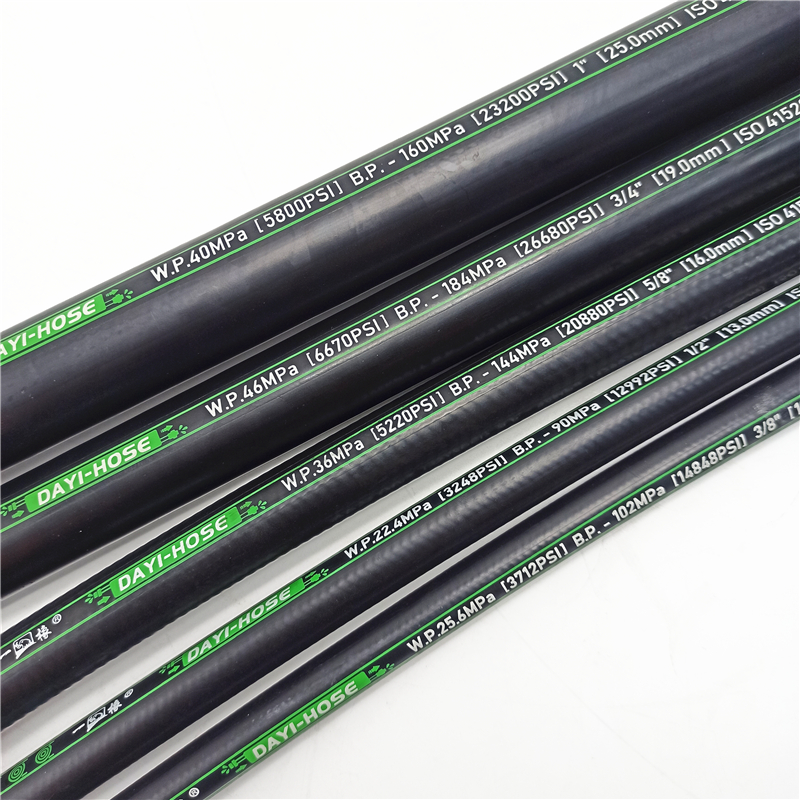
SAE 100R9 is a Society of Automotive Engineers (SAE) standard specifying requirements for non-reinforced rubber hoses used for the conveyance of petroleum-based hydraulic fluids. These hoses find extensive application in hydraulic systems across diverse industries including construction machinery, agricultural equipment, material handling, and manufacturing. China SAE 100R9 manufacturers represent a significant portion of the global supply chain for these critical components. This guide provides an in-depth technical overview of SAE 100R9 hose, encompassing material science, manufacturing processes, performance characteristics, failure modes, and relevant industry standards. A key industry pain point lies in ensuring consistent quality control and adherence to stringent standards, particularly concerning fluid compatibility and pressure ratings, given the prevalence of counterfeit or substandard products. Understanding the nuances of rubber compound selection, extrusion processes, and quality assurance protocols is paramount for reliable system performance and operator safety.
Material Science & Manufacturing
SAE 100R9 hoses are typically constructed from a synthetic rubber compound, most commonly nitrile rubber (NBR) due to its excellent resistance to petroleum-based fluids. Other compounds like styrene-butadiene rubber (SBR) may be utilized for specific applications, but NBR offers a superior balance of properties. The raw material selection critically influences the hose's performance. NBR’s acrylonitrile content dictates its oil resistance, with higher content generally correlating to better resistance but reduced flexibility at low temperatures. Manufacturing begins with the compounding process – precisely blending NBR with reinforcing fillers (typically carbon black), plasticizers (to enhance flexibility), processing aids, and curing agents (sulfur-based systems are common). This mixture undergoes rigorous mixing and milling to achieve a homogenous consistency. Extrusion is then employed to form the hose tube. Critical parameters during extrusion include die temperature, screw speed, and extrusion pressure, which impact the hose’s wall thickness, surface finish, and dimensional accuracy. Following extrusion, the hose is cured (vulcanized) in an autoclave under controlled temperature and pressure. Curing transforms the rubber compound from a plastic state to an elastic state, establishing its final mechanical properties. Post-curing, the hose undergoes inspection for dimensional accuracy, surface defects, and hardness. Maintaining consistent batch-to-batch compound formulation and precisely controlling extrusion parameters are essential to preventing issues like reversion (over-curing) or under-curing, both of which degrade hose performance. Further testing involves burst pressure testing and impulse testing to validate the hose's capability to withstand dynamic fluid pressure.
Performance & Engineering
The performance of an SAE 100R9 hose is fundamentally governed by its ability to withstand internal pressure without failure and to maintain its integrity under dynamic loading. Force analysis centers around hoop stress calculations based on the hose’s internal pressure and diameter, dictating the minimum required wall thickness to prevent bursting. Environmental resistance is also crucial. Prolonged exposure to high temperatures, ozone, UV radiation, and certain chemicals can degrade the rubber compound, leading to cracking, hardening, and reduced flexibility. Engineering considerations involve selecting the appropriate hose size (internal diameter) based on flow rate requirements and minimizing pressure drop. The hose’s bend radius also matters; excessive bending can induce stress concentrations and shorten the hose’s lifespan. Compliance requirements necessitate adherence to SAE 100R9 standards, which specify dimensional tolerances, burst pressure requirements, impulse pressure testing protocols, and fluid compatibility standards. Specifically, the standard outlines the requirements for hydraulic fluids with varying viscosity and operating temperatures. Furthermore, electrostatic discharge (ESD) is a factor; proper grounding may be required in certain applications to prevent static buildup and potential ignition of flammable fluids. The selection of fittings and their attachment method (crimping, swaging) are crucial to ensuring a leak-free and robust connection.
Technical Specifications
| Parameter | Unit | Typical Value (SAE 100R9) | Test Method |
|---|---|---|---|
| Working Pressure | MPa | 10.5 | SAE J517 |
| Burst Pressure | MPa | 31.5 | SAE J517 |
| Temperature Range | °C | -40 to +100 | SAE J517 |
| Inner Tube Material | - | Nitrile Rubber (NBR) | ASTM D2000 |
| Reinforcement | - | None | Visual Inspection |
| Cover Material | - | Nitrile Rubber (NBR) | ASTM D2000 |
| Fluid Compatibility | - | Petroleum-based Hydraulic Fluids | SAE J517 |
Failure Mode & Maintenance
SAE 100R9 hoses are susceptible to several failure modes. Fatigue cracking, particularly at the hose ends near the fittings, is common due to cyclic pressure loading and bending. This is often initiated by microscopic defects in the rubber compound or stress concentrations at the fitting interface. Another prevalent failure mode is abrasion damage, resulting from contact with abrasive surfaces or internal particle erosion. Chemical degradation can occur if the hose is exposed to incompatible fluids, leading to swelling, softening, or cracking. Ozone cracking is a concern in outdoor applications, especially with NBR compounds. Internal erosion can occur if the hydraulic fluid contains contaminants or cavitation. Delamination, while less common in non-reinforced hoses, can occur if the rubber compound is improperly cured. Maintenance best practices include regular visual inspection for cracks, abrasions, swelling, or discoloration. Hoses should be replaced if any signs of damage are detected. Avoid excessive bending or kinking. Ensure proper fluid filtration to minimize contamination. Store hoses in a cool, dry, and dark environment away from ozone sources. Implement a scheduled replacement program based on operating conditions and manufacturer recommendations. Proper crimping of fittings is critical; ensure that crimp dimensions are within specifications. Following these procedures will dramatically improve service life and reduce unexpected failures.
Industry FAQ
Q: What is the primary difference between SAE 100R9 and SAE 100R10 hose?
A: SAE 100R10 hose includes a braided reinforcement layer (typically steel wire) which provides significantly higher pressure ratings and improved impulse performance compared to the non-reinforced SAE 100R9 hose. R10 is used in applications with higher operating pressures and more severe dynamic loading conditions.
Q: How does the acrylonitrile content in NBR affect hose performance?
A: Higher acrylonitrile content increases oil resistance but typically reduces low-temperature flexibility and can increase the hardness of the compound. A balance must be struck based on the specific application requirements.
Q: What impact does improper crimping have on hose reliability?
A: Improper crimping – either under-crimping or over-crimping – can lead to leakage, fatigue failure, and even catastrophic hose rupture. Under-crimping results in a loose connection, while over-crimping can damage the hose reinforcement and create stress concentrations.
Q: What is the acceptable bend radius for SAE 100R9 hose?
A: Generally, the minimum bend radius should be at least 4 times the hose’s internal diameter. Exceeding this limit can induce excessive stress and reduce hose life.
Q: Can SAE 100R9 hose be used with biodegradable hydraulic fluids?
A: Generally no. While NBR offers good compatibility with mineral oils, most biodegradable hydraulic fluids are based on different chemistries (e.g., vegetable oils, synthetic esters) that can cause significant swelling and degradation of the NBR rubber. Specific fluid compatibility testing is crucial before using SAE 100R9 hose with biodegradable fluids.
Conclusion
The SAE 100R9 standard provides a crucial framework for the manufacture and application of non-reinforced hydraulic hoses. Understanding the material science principles governing rubber compound selection, the intricacies of the extrusion and curing processes, and the critical performance parameters outlined in the standard is essential for ensuring reliable and safe operation. Addressing the industry pain points related to quality control and counterfeit products requires diligent adherence to established standards and rigorous testing protocols.
Looking forward, advancements in rubber technology, such as the development of novel polymer blends and improved curing agents, promise to enhance the performance and longevity of SAE 100R9 hoses. Continued research into fluid compatibility and resistance to environmental degradation will be vital to meeting the evolving demands of increasingly complex hydraulic systems. Careful consideration of these factors will enable manufacturers and end-users to optimize hose selection, installation, and maintenance for maximum efficiency and durability.