
Apr . 01, 2024 17:55 Back to list
china sae100r9 factory Performance Analysis

Introduction
SAE 100R9 is a standardized specification for non-reinforced hydraulic hose used in medium-pressure applications. China SAE 100R9 factories play a crucial role in the global supply chain for this essential component, serving industries ranging from construction and agriculture to manufacturing and material handling. This guide provides an in-depth technical overview of SAE 100R9 hose, covering material science, manufacturing processes, performance characteristics, failure modes, and relevant industry standards. The increasing demand for reliable hydraulic systems necessitates a thorough understanding of this hose type, particularly considering the variances in manufacturing quality and material composition among different Chinese suppliers. The core performance aspects center around burst pressure, working pressure, temperature range, and fluid compatibility, all critical for ensuring system safety and longevity. A key pain point in procurement is consistently verifying adherence to the SAE 100R9 standard and accurately assessing the long-term durability of hoses sourced from various manufacturers.
Material Science & Manufacturing
SAE 100R9 hose is typically constructed from a synthetic rubber compound, primarily nitrile rubber (NBR) due to its excellent resistance to petroleum-based fluids. Other rubber polymers such as SBR (styrene-butadiene rubber) may be incorporated to enhance specific properties. The rubber compound formulation is critical; the ratio of NBR to other components directly impacts the hose’s resistance to abrasion, ozone, and temperature extremes. Manufacturing begins with the compounding of the rubber, followed by extrusion through a die to form the inner tube. This extrusion process requires precise control of temperature, pressure, and screw speed to ensure consistent wall thickness and a smooth inner surface. Following extrusion, the hose is cured (vulcanized) to cross-link the rubber molecules, imparting elasticity and strength. Critical parameters during curing include temperature uniformity, cure time, and pressure – deviations can lead to under-curing (resulting in low tensile strength) or over-curing (leading to brittleness). Chinese factories often employ continuous vulcanization processes for high-volume production. Quality control at this stage involves rigorous testing of the rubber compound’s hardness, tensile strength, and elongation at break, adhering to standards like ASTM D2000 for rubber testing. Furthermore, maintaining batch-to-batch consistency in the rubber compound is a significant challenge, requiring meticulous raw material sourcing and process control. The inner tube surface finish is paramount, as roughness increases fluid friction and potential for localized wear.
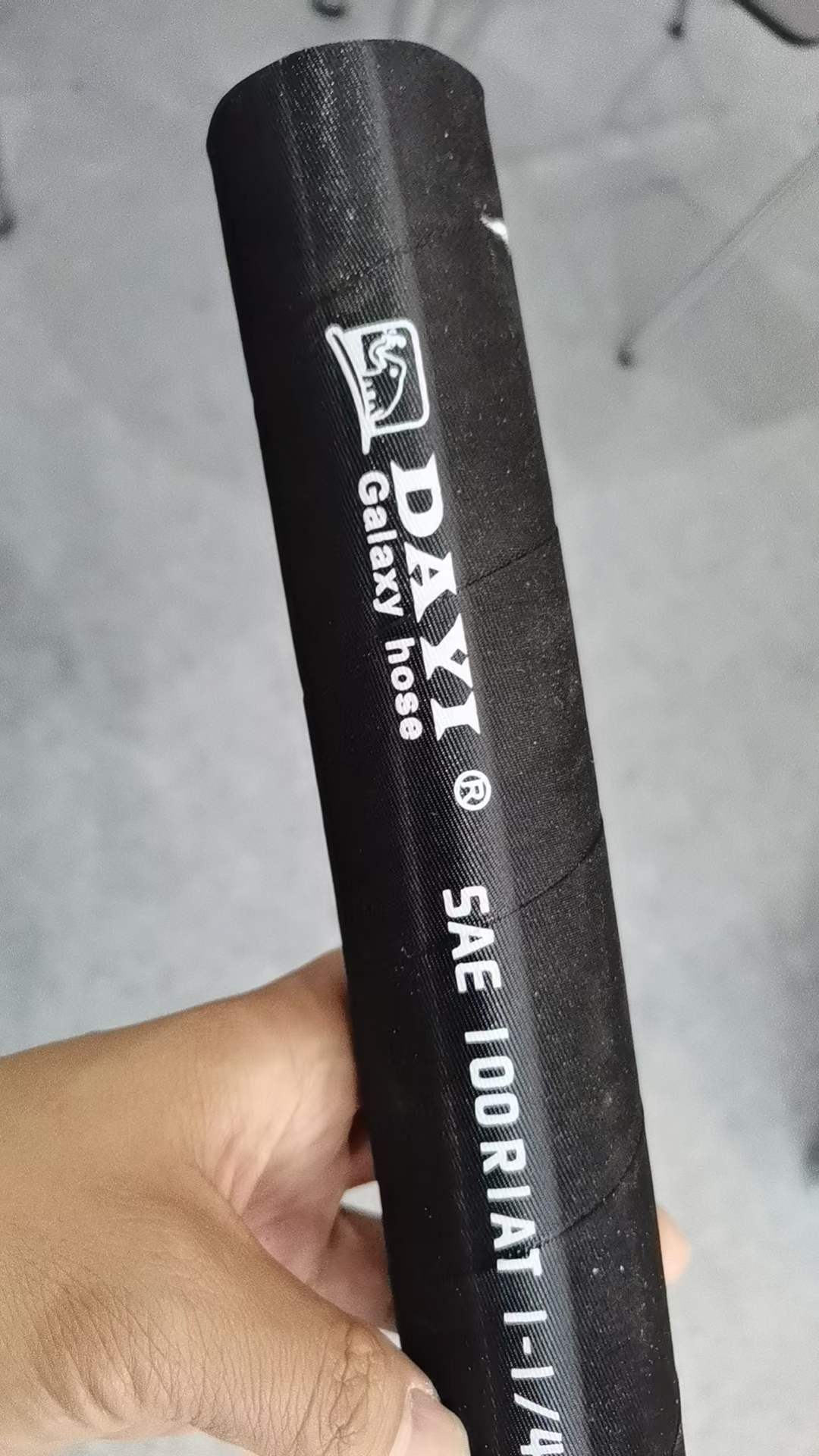
Performance & Engineering
The performance of SAE 100R9 hose is fundamentally dictated by its ability to withstand internal pressure without failure. Burst pressure, typically four times the working pressure, is a primary specification. Force analysis involves calculating hoop stress in the hose wall under pressure, considering the rubber’s tensile strength and elongation. Environmental resistance is also crucial. Prolonged exposure to UV radiation, ozone, and extreme temperatures can degrade the rubber, reducing its flexibility and strength. Testing for these effects includes accelerated aging tests as per ASTM D573. Fluid compatibility is another key consideration; NBR exhibits good resistance to many hydraulic fluids, but compatibility must be verified for specific fluid types, particularly those containing additives. Hose end termination, typically using crimped fittings, is a critical engineering aspect. Crimping pressure must be precisely controlled to ensure a secure and leak-free connection without damaging the hose. Improper crimping can lead to early failure. Furthermore, bend radius is a significant factor. Exceeding the minimum bend radius induces stress concentration, increasing the risk of fatigue cracking. SAE J517 provides guidelines for minimum bend radii based on hose size. Compliance requirements include adherence to REACH and RoHS directives regarding the restriction of hazardous substances in materials and manufacturing processes. The operational temperature range, typically -40°C to +100°C, dictates the material selection and compound formulation to maintain flexibility and prevent hardening or softening.
Technical Specifications
| Parameter | Unit | Typical Value | Test Standard |
|---|---|---|---|
| Working Pressure | MPa | 10 | SAE J517 |
| Burst Pressure | MPa | 40 | SAE J517 |
| Temperature Range | °C | -40 to +100 | SAE J517 |
| Inner Tube Material | - | Nitrile Rubber (NBR) | ASTM D2000 |
| Reinforcement | - | None | SAE J517 |
| Cover Material | - | Nitrile Rubber (NBR) | ASTM D2000 |
Failure Mode & Maintenance
Common failure modes in SAE 100R9 hose include fatigue cracking, particularly near fittings due to cyclic stress. This is exacerbated by improper crimping or exceeding the bend radius. Another frequent failure is due to fluid incompatibility, leading to swelling and degradation of the rubber. Abrasion from external sources, such as rubbing against machinery, can also cause premature failure. Oxidation and ozone cracking are prevalent in outdoor applications, especially if the hose is exposed to prolonged sunlight. Internal corrosion can occur if the hose is used with fluids containing corrosive contaminants. Failure analysis often involves microscopic examination of the fractured surface to determine the root cause. Maintenance procedures include regular visual inspection for cracks, abrasions, and leaks. Hose should be replaced immediately if any damage is detected. Proper storage is also essential; hoses should be stored in a cool, dry, and dark location to minimize degradation. Avoid storing hoses in direct sunlight or near ozone-generating equipment. Regularly checking and maintaining proper crimp connections is vital. Implementing a preventative maintenance schedule, including scheduled hose replacements, can significantly reduce downtime and enhance safety. A key challenge is identifying subtle degradation before catastrophic failure occurs, often requiring specialized testing equipment.
Industry FAQ
Q: What is the impact of different NBR formulations on the hose’s resistance to specific hydraulic fluids?
A: Different NBR formulations exhibit varying levels of compatibility with different hydraulic fluids. Higher acrylonitrile content generally improves resistance to petroleum-based fluids, but reduces flexibility at low temperatures. Fluids containing polar additives, such as glycol ethers, can cause swelling in standard NBR compounds. Therefore, selecting an NBR formulation specifically designed for the intended fluid is crucial to prevent degradation and maintain hose integrity. Fluid resistance charts provided by rubber manufacturers should be consulted.
Q: How does the manufacturing process influence the consistency of the inner tube thickness and its impact on burst pressure?
A: The extrusion process is critical for ensuring consistent inner tube thickness. Variations in extrusion temperature, pressure, and screw speed can lead to uneven wall thickness. Thinner sections are more prone to failure under pressure. High-quality manufacturing facilities employ automated process control systems and frequent in-line thickness measurements to minimize these variations. Deviation from specified tolerances can significantly reduce burst pressure and compromise hose safety.
Q: What are the typical failure mechanisms observed in SAE 100R9 hose subjected to high-frequency vibration?
A: High-frequency vibration can induce fatigue cracking, particularly at the hose ends near the crimped fittings. This is due to repeated stress concentration caused by the vibration. The absence of reinforcement in SAE 100R9 hose makes it more susceptible to this type of failure compared to reinforced hoses. Proper mounting and vibration dampening are essential to mitigate this risk. Regular inspection for cracks near the fittings is also crucial.
Q: How important is the surface finish of the inner tube, and what techniques are used to assess it?
A: The inner tube surface finish is vital as it directly impacts fluid friction and the potential for abrasive wear. A rough surface increases friction, leading to higher energy loss and heat generation. It also accelerates wear of internal components. Surface finish is typically assessed using surface roughness testers, measuring parameters like Ra (average roughness). Lower Ra values indicate a smoother surface. Maintaining a smooth surface requires precise control of the extrusion die and post-processing techniques.
Q: What quality control procedures should be implemented to verify adherence to SAE 100R9 specifications from a Chinese supplier?
A: Rigorous quality control is paramount. This includes verifying the supplier’s certifications (ISO 9001, etc.), conducting incoming material inspection (rubber compound composition), performing destructive testing (burst pressure, tensile strength) according to SAE J517, and conducting dimensional checks. Independent third-party testing is highly recommended to ensure objectivity. Auditing the supplier’s manufacturing facility is crucial to assess their process control and quality management systems.
Conclusion
SAE 100R9 hose remains a cornerstone in numerous hydraulic systems, offering a cost-effective solution for medium-pressure applications. However, maintaining reliability demands a thorough understanding of its material properties, manufacturing processes, and potential failure modes. Sourcing from China SAE 100R9 factories requires diligent quality control and verification of adherence to the SAE J517 standard.
Future advancements in rubber compound technology and manufacturing techniques will likely focus on enhancing the hose's resistance to degradation, reducing weight, and improving flexibility. Implementing robust preventative maintenance programs and utilizing advanced failure analysis techniques will continue to be vital for ensuring the long-term performance and safety of hydraulic systems employing SAE 100R9 hose.

