
Apr . 01, 2024 17:55 Back to list
china sae100r6 manufacturer Performance Analysis
Introduction
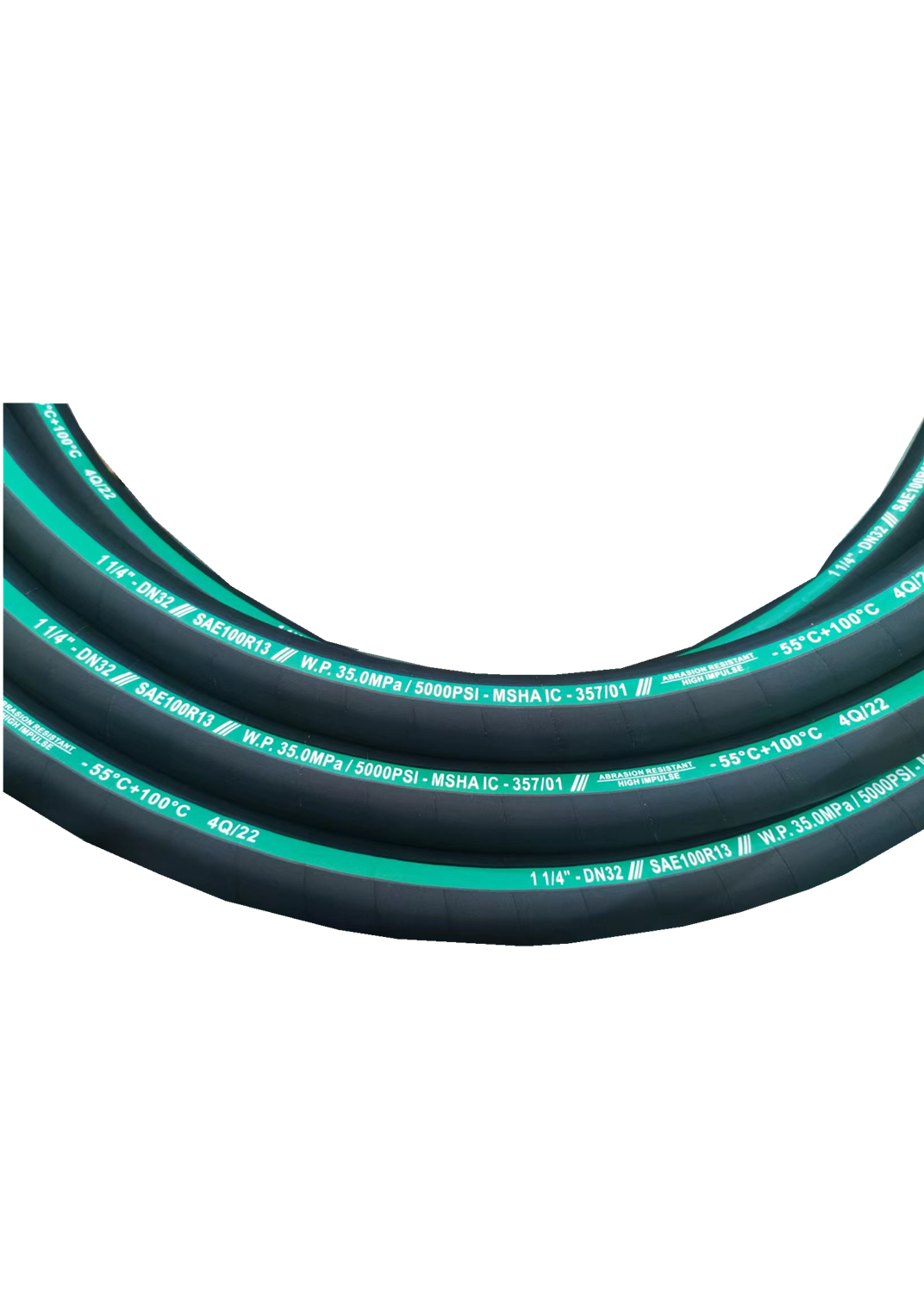
SAE 100R6 is a Society of Automotive Engineers (SAE) standard specifying requirements for non-reinforced rubber hose for use under pressure. This guide focuses on the capabilities of china sae100r6 manufacturers, detailing the material science, manufacturing processes, performance characteristics, failure modes, and maintenance practices associated with this critical component. The hose finds widespread application in hydraulic systems across diverse industries, including construction equipment, agricultural machinery, industrial manufacturing, and automotive applications. Its primary function is the reliable and safe transmission of hydraulic fluid under pressure, demanding consistent quality and adherence to stringent industry standards. The selection of a china sae100r6 manufacturer necessitates careful consideration of material composition, manufacturing control, and demonstrable compliance with SAE J517 and ISO 6898 standards, addressing the core industry pain points of premature failure, fluid leakage, and operational downtime. This detailed guide aims to provide a comprehensive understanding for procurement professionals, engineers, and maintenance personnel.
Material Science & Manufacturing
The core material for SAE 100R6 hose is typically a synthetic rubber compound, primarily utilizing nitrile rubber (NBR) due to its excellent resistance to petroleum-based hydraulic fluids. However, variations incorporating ethylene propylene diene monomer (EPDM) rubber are common for applications requiring higher temperature resistance and compatibility with phosphate ester fluids. The physical properties of NBR are crucial: a typical hardness range is 60-90 Shore A, tensile strength between 15-30 MPa, and elongation at break between 300-500%. Manufacturing begins with the compounding process, carefully blending the base rubber with reinforcing fillers (carbon black), plasticizers (phthalates or adipates), curing agents (sulfur or peroxides), and antioxidants to enhance durability and prevent degradation. Extrusion is the primary forming method, forcing the rubber compound through a die to create a seamless tube. Critical parameters during extrusion include die temperature (120-160°C), extrusion speed (2-10 m/min), and precise dimensional control to ensure consistent inner diameter (ID) and outer diameter (OD). Following extrusion, the hose undergoes vulcanization – a curing process involving heat (140-180°C) and pressure – to crosslink the rubber molecules, imparting elasticity, strength, and resistance to swelling. Quality control checks at this stage include dimensional measurements, hardness testing, and initial tensile strength assessment. Surface finish is also important, with manufacturers aiming for a smooth, consistent outer surface to minimize abrasion and facilitate clamp adhesion. Chemical compatibility testing with target hydraulic fluids is paramount to validate material selection and long-term performance.
Performance & Engineering
SAE 100R6 hose performance is dictated by its ability to withstand internal pressure, external pressure, and temperature fluctuations without failure. Burst pressure, defined as the pressure at which the hose ruptures, is a critical performance metric, typically ranging from 6 to 10 MPa, dependent on hose ID. Working pressure, generally 1/4 of the burst pressure, represents the maximum recommended operating pressure. Force analysis involves calculating hoop stress within the hose wall under internal pressure, utilizing the thin-walled cylinder formula (σ = Pr/t, where P is pressure, r is inner radius, and t is wall thickness). Environmental resistance is also vital. NBR exhibits good oil resistance but limited ozone and UV resistance, necessitating antioxidant addition and potential protective outer layers. EPDM offers superior ozone and UV resistance. Compliance requirements are primarily governed by SAE J517, which details physical and performance test methods for hydraulic hose, and ISO 6898, the international equivalent. Hydraulic fluid velocity within the hose must be carefully considered to prevent erosion and cavitation. Bending radius is critical, with excessive bending causing kinking and reduced flow. China sae100r6 manufacturers must demonstrate conformance through rigorous testing, including burst pressure testing, impulse testing (cyclic pressure application), and temperature cycling to ensure consistent performance under simulated operating conditions. The effect of fluid temperature on viscosity, and subsequently on pressure drop, must be factored into system design.
Technical Specifications
| Parameter | Unit | SAE 100R6 Standard Range | Typical China Manufacturer Offering |
|---|---|---|---|
| Inner Diameter (ID) | mm | 6.35 - 25.4 | 6.35 – 25.4 |
| Outer Diameter (OD) | mm | 12.7 – 38.1 | 12.7 – 38.1 |
| Working Pressure | MPa | Up to 10 | Up to 10 |
| Burst Pressure | MPa | 4 x Working Pressure | 4 x Working Pressure |
| Temperature Range | °C | -40 to +100 (NBR) / -40 to +121 (EPDM) | -40 to +100 (NBR) / -40 to +121 (EPDM) |
| Material | - | NBR or EPDM | NBR or EPDM |
Failure Mode & Maintenance
Common failure modes for SAE 100R6 hose include fatigue cracking due to repeated pressure cycling, pinhole leaks caused by material defects or abrasion, and hose splitting resulting from overpressure or exceeding the bending radius. Delamination, the separation of rubber layers, can occur due to improper vulcanization or chemical incompatibility. Oxidation and weathering contribute to rubber degradation, reducing flexibility and increasing the risk of cracking. Failure analysis often reveals that the root cause is a combination of factors. Fatigue cracking initiates at stress concentration points, such as fittings or abrasions. Impulse testing failures highlight material weakness or inadequate reinforcement. Maintenance is crucial for extending hose lifespan. Regular visual inspections are essential to identify signs of wear, cracking, or abrasion. Hose should be replaced if any damage is detected. Proper hose routing is vital, avoiding sharp bends, contact with hot surfaces, and exposure to corrosive chemicals. Securely tightened fittings are critical to prevent leakage. Hydraulic fluid should be regularly monitored and filtered to remove contaminants that can accelerate wear. China sae100r6 manufacturers often provide guidance on appropriate fluid types and maintenance schedules. Pressure testing should be performed periodically to verify system integrity. Implementing a preventative maintenance program based on operational hours and environmental conditions is highly recommended.
Industry FAQ
Q: What is the difference between NBR and EPDM rubber in SAE 100R6 hose, and which is better for my application?
A: NBR (Nitrile Butadiene Rubber) offers excellent resistance to petroleum-based hydraulic fluids and is generally more cost-effective. However, it has limited resistance to ozone, UV radiation, and extreme temperatures. EPDM (Ethylene Propylene Diene Monomer) excels in ozone, UV, and temperature resistance, making it suitable for outdoor applications and phosphate ester fluids. The "better" choice depends on the specific hydraulic fluid, operating environment, and temperature range. If your system uses mineral oil and operates indoors, NBR is often sufficient. For systems exposed to the elements or utilizing phosphate ester fluids, EPDM is preferable.
Q: How important is impulse testing, and what does it tell me about the hose quality?
A: Impulse testing is critically important. It simulates the pressure pulsations commonly found in hydraulic systems, subjecting the hose to cyclic pressure loads. A high-quality hose will withstand a significant number of impulse cycles without failure. Impulse failures indicate weaknesses in the hose construction, such as inadequate reinforcement or poor bonding between layers. Manufacturers providing comprehensive impulse test data demonstrate a commitment to product reliability.
Q: What are the common causes of premature hose failure, and how can I mitigate them?
A: Common causes include overpressure, exceeding the bending radius, abrasion, chemical incompatibility, and improper installation. Mitigation strategies involve operating within the specified pressure limits, adhering to recommended bending radii, protecting the hose from abrasion, using compatible hydraulic fluids, and ensuring proper fitting installation and tightening.
Q: How does temperature affect the performance of SAE 100R6 hose?
A: Temperature affects both the physical properties of the rubber and the viscosity of the hydraulic fluid. High temperatures can accelerate rubber degradation and reduce its tensile strength. Low temperatures can decrease flexibility and increase the risk of cracking. Hydraulic fluid viscosity changes with temperature, impacting flow rate and pressure drop. China sae100r6 manufacturers specify operating temperature ranges for their hoses to ensure optimal performance and longevity.
Q: What certifications should I look for when selecting a china sae100r6 manufacturer?
A: Look for manufacturers certified to ISO 9001 (quality management system) and demonstrating compliance with SAE J517 and ISO 6898 standards. Third-party testing reports validating performance characteristics are also valuable. Certifications demonstrate a commitment to quality control and adherence to industry best practices.
Conclusion
The selection of a suitable SAE 100R6 hose from a china sae100r6 manufacturer necessitates a thorough understanding of material properties, manufacturing processes, performance characteristics, and potential failure modes. The critical parameters – burst pressure, working pressure, temperature range, and fluid compatibility – must align with the specific demands of the hydraulic system. Prioritizing manufacturers demonstrating consistent quality control through certifications like ISO 9001 and adherence to SAE J517 and ISO 6898 standards is paramount.
Implementing a robust preventative maintenance program, including regular inspections, proper hose routing, and timely replacement of damaged components, will significantly extend hose lifespan and minimize operational downtime. By carefully considering these technical aspects and partnering with a reliable china sae100r6 manufacturer, businesses can ensure the safe and efficient operation of their hydraulic systems.