
Apr . 01, 2024 17:55 Back to list
china sae100r2at suppliers Performance Analysis
Introduction
SAE 100R2AT hose represents a critical component in hydraulic systems across diverse industrial applications, including construction machinery, agricultural equipment, and material handling. These hoses are engineered for medium-pressure applications, specifically rated for working pressures up to 1000 psi and burst pressures up to 3000 psi. China SAE 100R2AT suppliers have become prominent in the global market, providing both standard and custom hose solutions. The technical position within the supply chain necessitates a deep understanding of rubber compound formulation, reinforcement materials, and adherence to rigorous quality control protocols. Core performance characteristics include fluid compatibility, flexibility at low temperatures, and resistance to abrasion and ozone degradation. A prevalent industry pain point is maintaining consistent quality across large-scale production runs while meeting increasingly stringent environmental regulations regarding phthalate content and overall material sustainability. Furthermore, cost optimization without compromising performance remains a key challenge for both manufacturers and end-users.
Material Science & Manufacturing
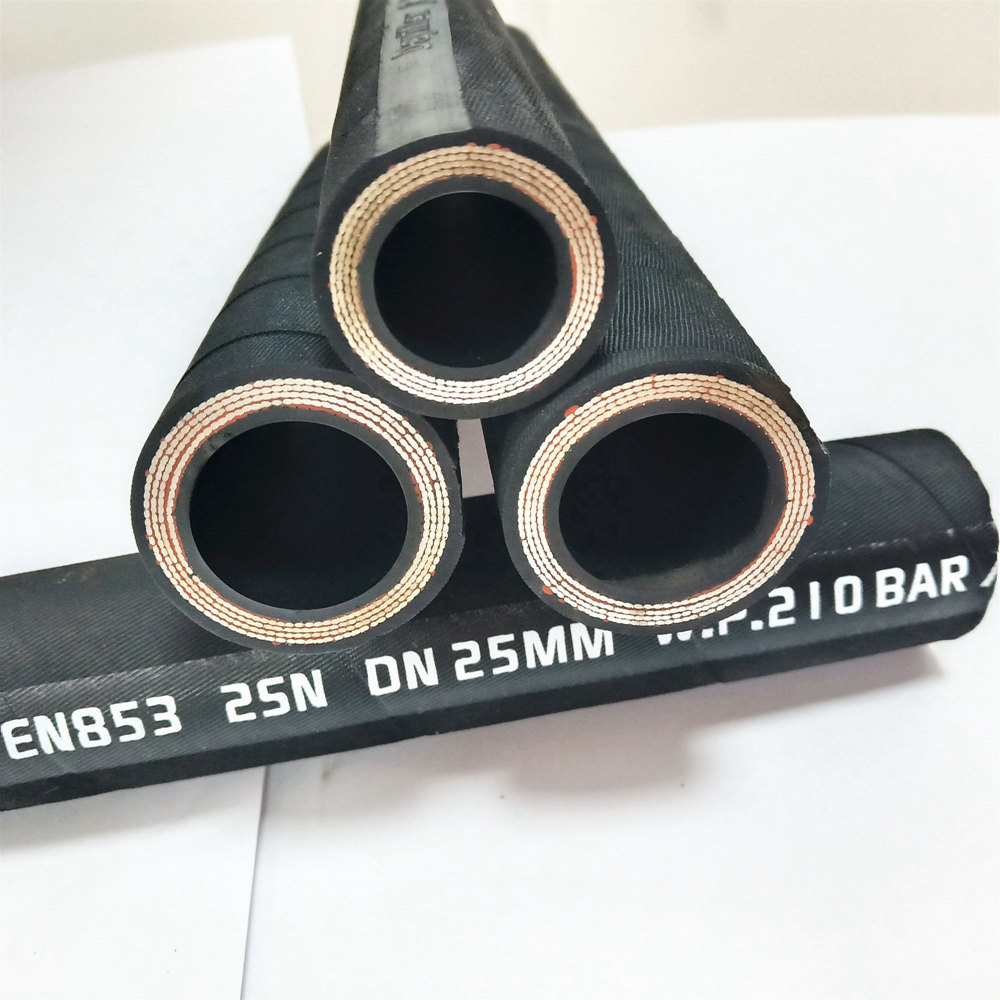
The construction of SAE 100R2AT hose fundamentally relies on a multi-layered design. The inner tube, typically composed of a synthetic rubber compound – commonly nitrile rubber (NBR) for oil resistance or ethylene propylene diene monomer (EPDM) for water-based fluids – dictates fluid compatibility. NBR provides excellent resistance to petroleum-based oils, fuels, and hydraulic fluids. EPDM, conversely, excels in applications involving water, glycol-based brake fluids, and phosphate ester fluids. Manufacturing involves extrusion of the inner tube, carefully controlling temperature and pressure to ensure dimensional accuracy and homogeneity. The reinforcement layer, crucial for pressure containment, usually comprises one or multiple braids of high-tensile steel wire. The number of braids directly correlates to the hose’s pressure rating. Wire drawing, braiding, and pre-forming are critical steps, demanding precise control of wire diameter and braid angle. The cover, typically a synthetic rubber like Chloroprene (CR) or a blend of CR and NBR, provides abrasion resistance, weather protection, and resistance to ozone cracking. Manufacturing processes like vulcanization are key to achieving the desired physical and chemical properties of the rubber compounds. Vulcanization involves cross-linking polymer chains using sulfur or peroxide-based curing agents, improving elasticity, tensile strength, and resistance to degradation. Parameter control during vulcanization – temperature, time, and pressure – are vital for consistent performance. Post-vulcanization processes include dimensional inspection, pressure testing, and surface treatment.
Performance & Engineering
SAE 100R2AT hose performance is governed by several engineering principles. Force analysis focuses on hoop stress within the hose wall under internal pressure. The reinforcement layer bears the brunt of this stress, requiring precise calculation of wire diameter and braid angle to prevent burst failures. Fatigue analysis is also crucial, considering cyclical pressure fluctuations and bending stresses encountered during operation. Environmental resistance is paramount. Exposure to extreme temperatures (both high and low) can significantly impact rubber compound properties. Cold flexibility is especially important, dictating the hose’s ability to bend and maneuver without cracking at low temperatures. Ozone resistance is enhanced through the addition of antioxidants and protective cover compounds. Compliance requirements under SAE J517 specify performance criteria for pressure rating, temperature range, and fluid compatibility. Furthermore, REACH and RoHS regulations restrict the use of hazardous substances, mandating careful selection of rubber compounds and additives. Functional implementation requires proper hose assembly, utilizing appropriate fittings and crimping techniques to ensure leak-free connections and prevent premature failure. Improper crimping can lead to excessive stress concentrations and eventual hose rupture.
Technical Specifications
| Parameter | Unit | SAE 100R2AT (Typical) | China Supplier Range (Observed) |
|---|---|---|---|
| Working Pressure | psi | 1000 | 800 – 1200 |
| Burst Pressure | psi | 3000 | 2400 – 3600 |
| Temperature Range | °F | -40 to +212 | -40 to +230 |
| Inner Tube Material | - | NBR/EPDM | NBR/EPDM/SBR |
| Reinforcement | - | Single Wire Braid | Single/Double Wire Braid |
| Cover Material | - | CR | CR/CR+NBR |
Failure Mode & Maintenance
SAE 100R2AT hose failure can manifest in several ways. Fatigue cracking, often initiated at the hose end near the fitting, is a common failure mode due to cyclical pressure and bending. Delamination, separation of the reinforcement layer from the rubber matrix, can occur due to improper bonding during manufacturing or exposure to harsh chemicals. Abrasion damage, resulting from external contact with abrasive surfaces, can compromise the cover and expose the reinforcement layer to corrosion. Ozone cracking, characterized by surface fissures, occurs due to ozone attack on the rubber compounds. Internal degradation, caused by fluid incompatibility or contamination, can lead to softening and swelling of the inner tube. Maintenance is crucial for extending hose life. Regular visual inspection for cracks, abrasions, and leaks is essential. Hose should be replaced if any signs of damage are detected. Proper hose routing, avoiding sharp bends and abrasive contact, can minimize stress and wear. Correct fitting selection and crimping are paramount to prevent leaks and ensure secure connections. Periodic fluid analysis can identify contamination that could accelerate hose degradation. Storage conditions should be controlled to avoid exposure to direct sunlight, extreme temperatures, and ozone-generating equipment.
Industry FAQ
Q: What is the primary difference between SAE 100R2AT and SAE 100R1AT hose?
A: The primary difference lies in the reinforcement. SAE 100R1AT utilizes a single wire braid, while SAE 100R2AT employs multiple braids, resulting in a higher pressure rating and enhanced durability. 100R2AT is engineered for applications demanding greater pressure containment and fatigue resistance.
Q: How does the choice of inner tube material (NBR vs. EPDM) impact the hose’s performance?
A: NBR provides superior resistance to petroleum-based fluids, making it ideal for hydraulic systems utilizing mineral oils and synthetic lubricants. EPDM excels in applications involving water-based fluids, such as brake fluid or phosphate ester hydraulic fluids. Choosing the incorrect material can lead to swelling, softening, and eventual hose failure.
Q: What is the role of the cover material in hose longevity?
A: The cover material provides critical protection against abrasion, ozone degradation, and UV exposure. CR (Chloroprene) is commonly used for its excellent weathering resistance. However, blends of CR and NBR can offer enhanced oil resistance and abrasion protection. A compromised cover can expose the reinforcement layer, leading to corrosion and premature failure.
Q: What are the key quality control checks performed by reputable china sae100r2at suppliers?
A: Reputable suppliers perform rigorous testing, including hydrostatic pressure testing, impulse testing, and temperature cycling. They also conduct material composition analysis, dimensional inspections, and visual checks for defects. Adherence to ISO 9001 quality management standards is a strong indicator of commitment to quality control.
Q: What is the impact of improper crimping on hose performance and safety?
A: Improper crimping can create stress concentrations at the fitting interface, leading to premature failure. Under-crimping can result in leaks, while over-crimping can damage the hose and compromise its structural integrity. Using calibrated crimping tools and following manufacturer’s specifications are critical for ensuring safe and reliable hose connections.
Conclusion
SAE 100R2AT hose represents a foundational element in numerous hydraulic systems, demanding careful consideration of material selection, manufacturing processes, and operational conditions. China SAE 100R2AT suppliers play a significant role in the global supply chain, offering a range of solutions to meet diverse application requirements. Maintaining consistent quality, adhering to industry standards, and prioritizing proactive maintenance are crucial for maximizing hose lifespan and ensuring system reliability.
Future advancements in hose technology are likely to focus on developing more sustainable rubber compounds, enhancing abrasion resistance through nanotechnology, and implementing smart monitoring systems for real-time performance assessment. Selecting a supplier capable of consistently delivering high-quality, compliant hoses is paramount for avoiding costly downtime and maintaining operational efficiency.