
Apr . 01, 2024 17:55 Back to list
china sae100r17 factory Performance Analysis
Introduction
SAE 100R17 is a Society of Automotive Engineers (SAE) standard defining specifications for non-conductive, synthetic rubber hydraulic hose with a single wire braid reinforcement. These hoses are commonly employed in hydraulic systems across a vast range of industries including construction, agriculture, forestry, material handling, and various manufacturing processes. Chinese manufacturers specializing in SAE 100R17 hoses, such as china sae100r17 factory, play a significant role in the global supply chain due to their production capacity and cost-effectiveness. The core performance characteristics of these hoses revolve around pressure rating (typically up to 2,250 psi), temperature range (-40°C to +100°C), and fluid compatibility. A key industry pain point lies in consistently maintaining dimensional accuracy and material consistency to guarantee long-term reliability and prevent catastrophic failure, particularly given variations in raw material sourcing and manufacturing processes across different suppliers. Quality control and adherence to stringent testing protocols are therefore paramount concerns for end-users sourcing from these factories.
Material Science & Manufacturing
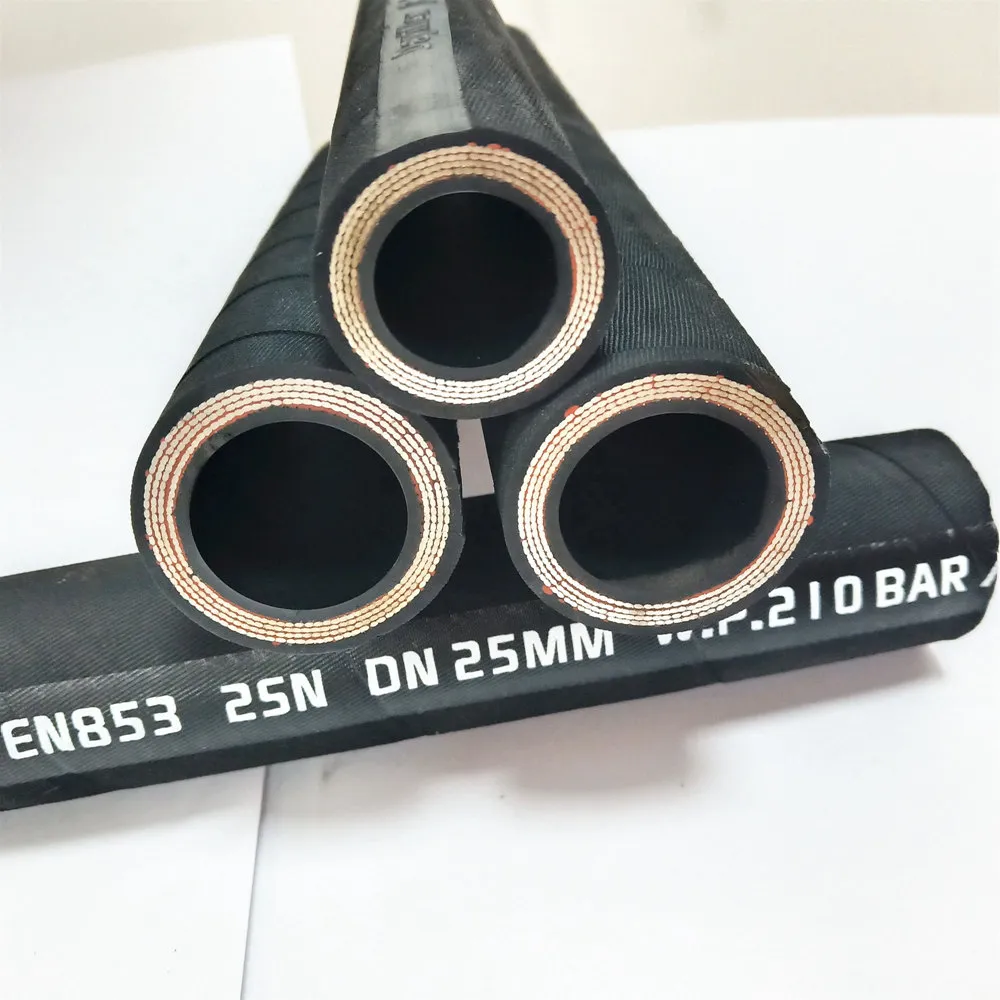
The primary material for SAE 100R17 hose construction is a synthetic rubber compound, typically based on Neoprene (Polychloroprene) or Nitrile Rubber (NBR). Neoprene offers excellent resistance to oils, weathering, and ozone, while NBR provides superior resistance to petroleum-based fluids. The choice depends on the specific application and anticipated fluid exposure. The single wire braid reinforcement is typically constructed from high-tensile steel wire, contributing significantly to the hose’s burst pressure capacity. The manufacturing process involves several key steps: rubber compounding (precise mixing of polymers, plasticizers, fillers, and curatives), inner tube extrusion, braid application (helically winding the steel wire around the inner tube), outer cover extrusion, and final curing. Critical parameter control during compounding includes maintaining precise ratios of ingredients, ensuring proper dispersion, and controlling temperature to optimize crosslinking. During extrusion, consistent wall thickness and dimensional accuracy are crucial. Curing, a vulcanization process, is essential to develop the rubber’s elasticity, strength, and resistance to degradation. Failure to control temperature and time during curing can lead to under-cured or over-cured rubber, impacting performance and longevity. Quality Chinese manufacturers like china sae100r17 factory must prioritize raw material traceability and implement rigorous process control systems to mitigate these risks.
Performance & Engineering
The performance of SAE 100R17 hoses is primarily dictated by their ability to withstand internal pressure, external abrasion, and fluid compatibility. Force analysis centers around the hoop stress developed within the hose wall due to internal pressure, resisted by the tensile strength of the reinforcement braid. The burst pressure is typically rated at four times the working pressure, providing a safety factor. Environmental resistance is a critical consideration. Exposure to ultraviolet (UV) radiation, ozone, and extreme temperatures can lead to rubber degradation and reduced flexibility. Therefore, the outer cover often incorporates UV stabilizers and antioxidants. Fluid compatibility is equally important; incompatible fluids can cause swelling, softening, or cracking of the rubber. SAE 100R17 hoses must meet specific requirements outlined in SAE J517, which details fluid type compatibility. Furthermore, the hoses undergo rigorous testing including pressure testing (hydrostatic and impulse testing), temperature cycling, and fluid resistance tests. Fatigue life is a key engineering consideration, particularly in applications involving repeated flexing. The number of flex cycles a hose can endure before failure is dependent on the bend radius, operating pressure, and fluid type. Optimizing hose routing to minimize bending stress is crucial for maximizing service life. china sae100r17 factory must demonstrate adherence to these performance criteria through comprehensive testing and certification.
Technical Specifications
| Parameter | Unit | SAE 100R17 Specification | Typical Range (China SAE 100R17 Factory) |
|---|---|---|---|
| Working Pressure | psi | Up to 2,250 | 1,500 – 2,250 |
| Burst Pressure | psi | 4 x Working Pressure | 6,000 – 9,000 |
| Temperature Range | °C | -40 to +100 | -40 to +100 |
| Inner Tube Material | - | Neoprene or NBR | NBR (most common) or Neoprene |
| Reinforcement | - | Single Wire Braid | High-Tensile Steel Wire |
| Outer Cover Material | - | Synthetic Rubber (abrasion resistant) | Neoprene or SBR |
Failure Mode & Maintenance
Common failure modes in SAE 100R17 hoses include pinhole leaks, burst failure, and degradation of the rubber material. Pinhole leaks often originate from internal abrasion caused by fluid contaminants or improper fluid selection. Burst failure is typically a result of exceeding the working pressure or fatigue cracking due to repeated flexing. Rubber degradation can manifest as cracking, hardening, or swelling, stemming from exposure to UV radiation, ozone, extreme temperatures, or incompatible fluids. Fatigue cracking is a progressive process initiated by microscopic flaws in the steel wire braid or the rubber matrix, exacerbated by cyclic loading. Delamination can occur between the inner tube, reinforcement braid, and outer cover due to poor bonding during manufacturing or exposure to aggressive chemicals. Maintenance recommendations include regular visual inspections for cracks, abrasions, and leaks. Hoses should be replaced if any damage is observed. Proper hose routing is essential to minimize bending stress and avoid abrasion. Contamination control through the use of appropriate filters is critical to prevent internal abrasion. Avoid exceeding the maximum working pressure and ensure fluid compatibility. china sae100r17 factory should provide clear guidance on proper storage and handling to prevent premature degradation. Periodic pressure testing can also identify potential weaknesses before catastrophic failure.
Industry FAQ
Q: What is the impact of fluid velocity on the service life of SAE 100R17 hoses?
A: Higher fluid velocity increases the risk of internal abrasion, particularly if the fluid contains abrasive particles. This accelerates wear and tear on the inner tube, potentially leading to pinhole leaks. Selecting a hose with a larger inner diameter to reduce fluid velocity, and implementing effective filtration, are key mitigation strategies.
Q: How do different steel wire braid constructions affect burst pressure and flexibility?
A: A tighter braid configuration generally results in a higher burst pressure but reduced flexibility. The number of wires per inch and the wire diameter both contribute to the braid's strength and stiffness. The trade-off between burst pressure and flexibility needs to be carefully considered based on the application requirements.
Q: What measures do reputable china sae100r17 factory employ to ensure consistent rubber compound quality?
A: Reputable factories implement rigorous quality control procedures, including raw material inspection, precise batch mixing, and statistical process control (SPC). They also employ advanced testing methods to verify the physical and chemical properties of the rubber compound, ensuring it meets the SAE 100R17 specification.
Q: What is the significance of impulse testing for hydraulic hoses?
A: Impulse testing simulates the pulsating pressure fluctuations commonly encountered in hydraulic systems. This testing helps to identify potential weaknesses in the hose construction and ensure it can withstand repeated pressure surges without failure. It's a crucial indicator of long-term reliability.
Q: How does the choice of outer cover material impact the hose's lifespan in outdoor applications?
A: The outer cover material provides protection against abrasion, weathering, and UV radiation. Neoprene offers excellent resistance to these factors, while SBR is a more cost-effective option with slightly lower resistance. Selecting the appropriate cover material based on the environmental conditions is crucial for maximizing service life.
Conclusion
SAE 100R17 hydraulic hoses are critical components in a wide range of industrial applications. Their performance and reliability are heavily influenced by material selection, manufacturing processes, and adherence to stringent quality control standards. Understanding the potential failure modes and implementing proper maintenance practices are essential for maximizing service life and preventing costly downtime. The rise of China as a major manufacturing hub necessitates diligent sourcing and careful evaluation of suppliers, such as china sae100r17 factory, to ensure consistent product quality and compliance with international standards.
Future advancements in hydraulic hose technology will likely focus on developing more durable rubber compounds, incorporating advanced reinforcement materials (e.g., spiral-wound reinforcement), and implementing smart sensing technologies for real-time monitoring of hose condition. Maintaining a comprehensive understanding of these evolving technologies and regulatory requirements will be crucial for both manufacturers and end-users to optimize the performance and longevity of SAE 100R17 hydraulic hoses.

