
Apr . 01, 2024 17:55 Back to list
china sae100r17 factories Performance Analysis
Introduction
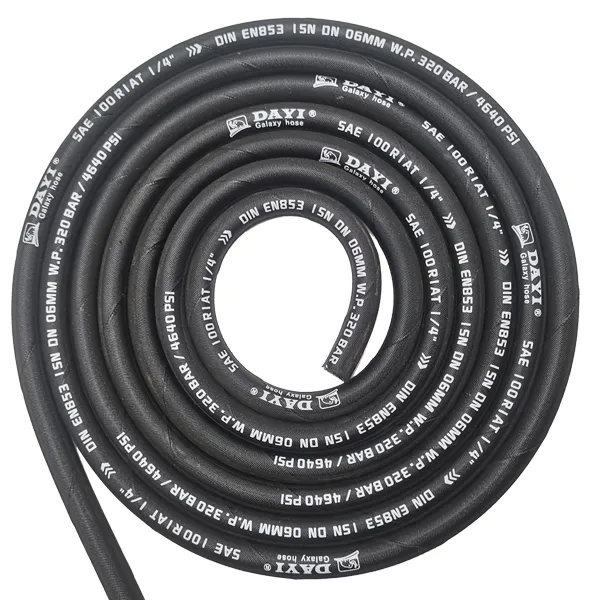
SAE 100R17, commonly referred to as hydraulic hose R17, represents a critical component within fluid power systems across diverse industrial applications. China’s emergence as a global manufacturing hub has resulted in a significant concentration of SAE 100R17 factories, catering to both domestic demand and international export markets. These hoses are engineered to convey hydraulic fluid under high pressure, typically utilized in applications such as construction machinery, agricultural equipment, material handling, and industrial processing. The core performance characteristics – burst pressure, working pressure, and temperature range – are dictated by the SAE J517 standard. A primary concern within the industry stems from ensuring consistent quality control across numerous manufacturing facilities, along with verifying compliance with evolving international standards related to material composition and environmental impact. Furthermore, achieving optimal hose performance necessitates careful consideration of fluid compatibility, proper installation techniques, and preventative maintenance protocols to mitigate potential failure modes.
Material Science & Manufacturing
The construction of SAE 100R17 hoses fundamentally relies on a multi-layered design, each layer contributing to the hose's overall performance and durability. The innermost layer, the tube, is typically composed of a synthetic rubber compound, predominantly nitrile rubber (NBR) due to its excellent resistance to petroleum-based hydraulic fluids. Ethylene Propylene Diene Monomer (EPDM) is also utilized for compatibility with phosphate ester fluids. The reinforcement layer is critical for withstanding high pressures and is traditionally constructed from multiple plies of high-strength steel wire, spirally wound. The number and diameter of these wires directly correlate with the hose’s burst pressure rating. An exterior cover, usually a synthetic rubber blend like Chloroprene (Neoprene) or Polyurethane, provides protection against abrasion, weathering, and oil exposure.
Manufacturing processes begin with tube extrusion, where the rubber compound is forced through a die to create a seamless inner liner. Precise control of temperature and extrusion speed is paramount to ensure consistent wall thickness and avoid defects. Wire winding is a highly automated process employing specialized machinery to apply the steel wire reinforcement with controlled tension and pitch. The outer cover is applied via a similar extrusion process, followed by vulcanization – a curing process utilizing heat and pressure to crosslink the rubber polymers, enhancing their strength, elasticity, and resistance to degradation. Key parameters requiring meticulous control include vulcanization temperature, duration, and pressure, as these significantly impact the final physical properties of the hose. Post-production testing, including burst pressure testing, impulse testing, and dimensional checks, is crucial for quality assurance.
Performance & Engineering
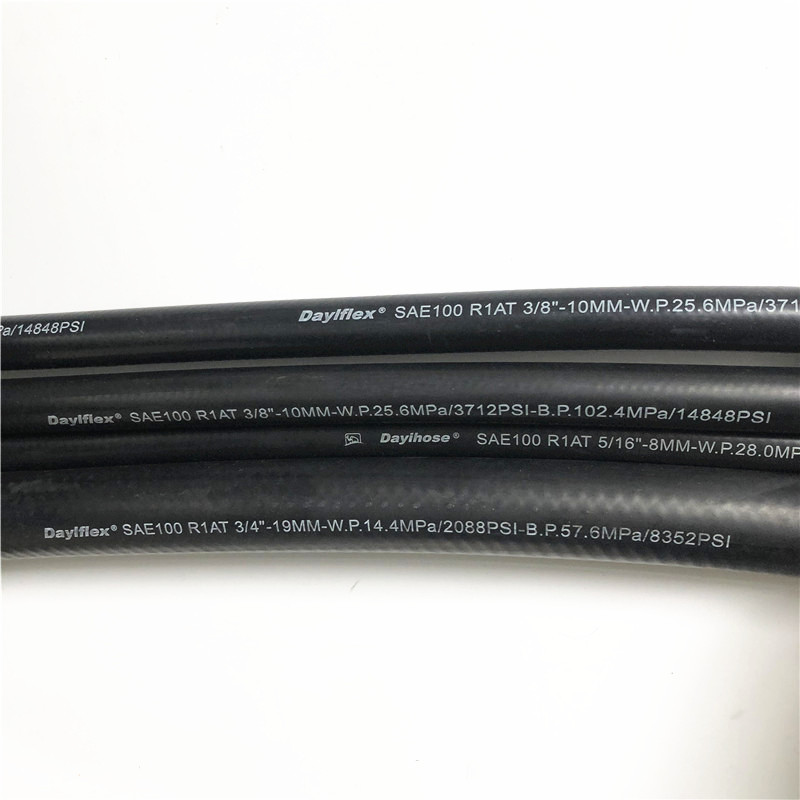
The performance of SAE 100R17 hoses is dictated by several engineering principles. Burst pressure, a primary specification, represents the maximum pressure the hose can withstand before catastrophic failure and is determined using hydrostatic testing according to SAE J517. Working pressure, typically defined as 50% of the burst pressure, represents the recommended operating pressure for sustained use. Fatigue resistance is also a critical parameter, assessing the hose's ability to withstand repeated pressure cycles without failure. This is evaluated through impulse testing, subjecting the hose to pulsating pressures.
Environmental resistance is another crucial performance aspect. Exposure to extreme temperatures, UV radiation, ozone, and various chemicals can lead to degradation of the rubber compounds, reducing the hose’s lifespan. Material selection plays a significant role in mitigating these effects; for instance, using antioxidant additives and UV stabilizers in the rubber formulations. The hose’s bend radius is also an engineering consideration. Exceeding the minimum bend radius can induce stress concentrations, leading to premature failure. Furthermore, proper hose assembly – including correct crimping of fittings – is essential to ensure a secure and leak-free connection. Finite Element Analysis (FEA) is increasingly employed by manufacturers to optimize hose designs and predict performance under various operating conditions.
Technical Specifications
| Parameter | Unit | SAE 100R17 Specification | Typical Chinese Factory Offering |
|---|---|---|---|
| Working Pressure | MPa | Up to 35 | 20-35 |
| Burst Pressure | MPa | Up to 105 | 60-105 |
| Temperature Range | °C | -40 to +100 | -40 to +100 |
| Reinforcement | Ply | Multiple Steel Wire | 4SP, 6SP (Spiral) |
| Tube Material | - | NBR, EPDM | NBR (Most Common), EPDM |
| Cover Material | - | Neoprene, Polyurethane | Neoprene (Standard), Polyurethane (Abrasion Resistant) |
Failure Mode & Maintenance
SAE 100R17 hoses are susceptible to several failure modes. Fatigue cracking, occurring after repeated pressure cycling, is a common issue, particularly in applications with high-frequency pulsations. This often initiates at the wire reinforcement layer, propagating through the rubber matrix. Abrasion, caused by external contact with abrasive surfaces, can wear away the outer cover, exposing the reinforcement and accelerating corrosion. Pinholes, small punctures in the tube, can result from internal damage or external abrasion, leading to fluid leakage. Furthermore, degradation of the rubber compounds due to exposure to extreme temperatures, UV radiation, or incompatible fluids can reduce the hose’s flexibility and strength, eventually leading to failure.
Preventative maintenance is crucial for maximizing hose lifespan and preventing catastrophic failures. Regular visual inspections should be conducted to identify signs of wear, abrasion, or cracking. Hoses should be replaced if any damage is observed. Proper installation practices, including avoiding excessive bending and ensuring correct fitting crimping, are essential. Fluid compatibility must be verified to prevent chemical attack on the rubber compounds. Regularly checking the fluid level and cleanliness can also help prevent premature hose failure. If a hose rupture occurs, a thorough failure analysis should be performed to identify the root cause and prevent recurrence. This might involve microscopic examination of the fractured surfaces and chemical analysis of the rubber compounds.
Industry FAQ
Q: What is the primary difference between 4SP and 6SP SAE 100R17 hoses?
A: 4SP and 6SP refer to the number of spiral wire layers in the reinforcement. A 6SP hose contains six layers of spiral wire, providing a significantly higher burst pressure and fatigue resistance compared to a 4SP hose which has four layers. 6SP is typically used in more demanding applications requiring higher operating pressures and greater durability.
Q: How does temperature affect the performance of an SAE 100R17 hose?
A: Extreme temperatures can significantly degrade the rubber compounds. High temperatures accelerate oxidation and can cause the rubber to become brittle and lose its elasticity. Low temperatures can reduce the hose’s flexibility, increasing the risk of cracking. Maintaining temperatures within the specified range (-40°C to +100°C) is crucial for optimal performance.
Q: What are the potential consequences of using an incompatible hydraulic fluid with an SAE 100R17 hose?
A: Using an incompatible fluid can cause the rubber compounds to swell, soften, or degrade, leading to leakage, reduced burst pressure, and premature failure. It’s essential to verify fluid compatibility with the hose’s tube material (NBR or EPDM) before use.
Q: What is the role of proper crimping in hose assembly?
A: Proper crimping ensures a secure and leak-free connection between the hose and the fittings. Insufficient crimping can lead to fitting blow-off under pressure, while excessive crimping can damage the hose reinforcement. Utilizing calibrated crimping equipment and following the manufacturer's specifications are critical.
Q: How do Chinese manufacturers ensure SAE 100R17 hose quality and compliance?
A: Reputable Chinese manufacturers implement robust quality control systems, including raw material testing, in-process inspections, and final product testing according to SAE J517 standards. Many have obtained ISO 9001 certification, demonstrating their commitment to quality management. Independent third-party testing and certification are also increasingly common to verify compliance and build customer confidence.
Conclusion
The SAE 100R17 hydraulic hose remains a fundamental component in countless industrial applications. The proliferation of manufacturers in China underscores the global demand for these critical components, but also highlights the importance of rigorous quality control and adherence to international standards. Understanding the material science, manufacturing processes, performance characteristics, and potential failure modes is essential for procuring and maintaining these hoses effectively.
Looking forward, advancements in rubber technology and manufacturing techniques will likely lead to the development of even more durable and reliable SAE 100R17 hoses. Furthermore, increasing emphasis on environmental sustainability will drive the adoption of more eco-friendly materials and manufacturing processes. Prioritizing preventative maintenance and conducting regular inspections will remain crucial for maximizing hose lifespan and ensuring the safe and efficient operation of hydraulic systems.