
Apr . 01, 2024 17:55 Back to list
china sae100r15 supplier Technical Analysis
Introduction
SAE 100R15 hose, a non-reinforced hydraulic hose, represents a critical component in fluid power systems across diverse industrial applications. Chinese suppliers have emerged as significant players in this market, offering cost-competitive solutions alongside increasing quality standards. This guide provides an in-depth technical analysis of SAE 100R15 hose, covering material science, manufacturing processes, performance characteristics, failure modes, and relevant industry standards. The core performance attributes center around flexibility, burst pressure capability, and resistance to hydraulic fluids. Understanding these aspects is crucial for procurement managers and engineers to ensure reliable system operation and minimize downtime. A primary industry pain point is ensuring consistent quality control from overseas suppliers and verifying adherence to stringent SAE specifications. This document aims to address those concerns with a comprehensive technical overview.
Material Science & Manufacturing
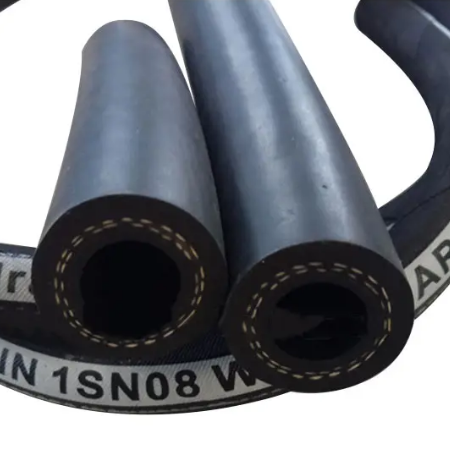
SAE 100R15 hose construction fundamentally relies on a synthetic rubber compound, typically based on nitrile rubber (NBR) due to its excellent resistance to petroleum-based hydraulic fluids. The NBR formulation includes reinforcing fillers such as carbon black to enhance tensile strength and abrasion resistance. Plasticizers are added to improve flexibility, while stabilizers protect against degradation from heat, ozone, and UV exposure. Manufacturing begins with the compounding of these raw materials using high-shear mixers to achieve a homogenous blend. The compound is then extruded through a die to form a seamless tube. Critical parameters during extrusion include die temperature, screw speed, and volumetric flow rate, which influence wall thickness and surface finish. Following extrusion, the hose undergoes vulcanization – a curing process employing heat and pressure – to crosslink the rubber molecules, resulting in elasticity and desired mechanical properties. Post-vulcanization, dimensional checks are performed to ensure compliance with SAE specifications. The internal surface finish is particularly important to minimize fluid friction and prevent internal degradation. Quality control at this stage focuses on hardness, tensile strength, elongation at break, and fluid resistance testing according to SAE J200 standards.

Performance & Engineering
The performance of SAE 100R15 hose is dictated by its ability to withstand internal pressure and external environmental factors. Burst pressure, a key performance indicator, is determined by the tensile strength of the rubber compound and the hose’s wall thickness. Engineering calculations, based on Barlow’s formula (P = 2St/D, where P is pressure, S is tensile strength, t is wall thickness, and D is diameter), are used to design hoses with adequate safety factors. Flex fatigue, or the resistance to cracking under repeated bending, is another critical performance parameter. This is assessed through flex-cycle testing, subjecting the hose to continuous bending at specified angles and radii. Environmental resistance is crucial, particularly in applications exposed to extreme temperatures, UV radiation, and corrosive substances. NBR compounds typically perform well within a temperature range of -40°C to +100°C, but performance can degrade outside these limits. Furthermore, compatibility with the hydraulic fluid is paramount; incompatible fluids can cause swelling, softening, or cracking of the rubber. Hose assemblies require proper fitting selection and crimping procedures to ensure a leak-free connection. Incorrect crimping can lead to premature failure due to fitting slippage or hose rupture. Compliance with ISO 4413 hydraulic fluid power – general rules relating to systems standards is crucial.
Technical Specifications
| Parameter | Unit | Typical Value (SAE 100R15) | Testing Standard |
|---|---|---|---|
| Working Pressure | MPa | 10.5 | SAE J517 |
| Burst Pressure | MPa | 31.5 | SAE J517 |
| Temperature Range | °C | -40 to +100 | SAE J200 |
| Inner Tube Material | - | Nitrile Rubber (NBR) | ASTM D2000 |
| Outer Cover Material | - | Nitrile Rubber (NBR) | ASTM D2000 |
| Reinforcement | - | None (Non-reinforced) | SAE J517 |
Failure Mode & Maintenance
SAE 100R15 hose, lacking reinforcement, is susceptible to several failure modes. Pinholes and cracking can occur due to abrasion from internal fluid contaminants or external contact with abrasive surfaces. Ozone cracking, a form of surface degradation, is prevalent in environments with high ozone concentrations. Flex fatigue, resulting from repeated bending, leads to crack initiation and propagation at the bend radius. Hydrolytic degradation, caused by the interaction of moisture with the rubber compound, reduces its tensile strength and elasticity. Compatibility issues with the hydraulic fluid can induce swelling or softening, compromising the hose’s integrity. Maintenance protocols should include regular visual inspections for signs of cracking, abrasion, or swelling. Hose assemblies should be replaced if any damage is detected. Maintaining a clean hydraulic system, employing proper filtration, and utilizing compatible fluids are crucial preventative measures. Crimped fittings should be inspected for corrosion or looseness. Avoid exceeding the maximum working pressure and temperature limits specified by the manufacturer. A regular schedule of replacement based on operating hours or calendar time, aligned with OEM recommendations, is vital to preventing catastrophic failures.
Industry FAQ
Q: What are the key differences between SAE 100R15 and SAE 100R2AT hose?
A: SAE 100R2AT hoses are reinforced with two steel wire braids, providing significantly higher pressure ratings and improved durability compared to the non-reinforced SAE 100R15. While 100R15 is suitable for lower-pressure applications, 100R2AT is preferred for demanding hydraulic systems requiring increased safety and longevity. The increased reinforcement also makes 100R2AT more resistant to flex fatigue.
Q: How does the nitrile rubber (NBR) composition affect the hydraulic fluid compatibility of SAE 100R15 hoses?
A: NBR offers excellent resistance to most petroleum-based hydraulic fluids, making it a common choice for 100R15 hoses. However, prolonged exposure to phosphate ester fluids can cause swelling and degradation. Careful fluid compatibility assessment is crucial to ensure optimal performance and prevent premature failure. Always consult the fluid manufacturer's compatibility charts.
Q: What is the acceptable bend radius for SAE 100R15 hose to prevent flex fatigue?
A: The minimum bend radius is typically specified by the hose manufacturer, but a general guideline is to maintain a bend radius of at least 8-10 times the hose inside diameter. Exceeding this limit can induce excessive stress and accelerate flex fatigue cracking.
Q: What quality control measures should I look for when sourcing SAE 100R15 hose from Chinese suppliers?
A: Prioritize suppliers with ISO 9001 certification and a documented quality management system. Request detailed test reports for each batch, including burst pressure, tensile strength, and elongation at break. Conduct on-site audits or utilize third-party inspection services to verify manufacturing processes and quality control procedures. Verify the supplier’s adherence to SAE J200 standards.
Q: How do I properly store SAE 100R15 hoses to extend their service life?
A: Store hoses in a cool, dry, and dark environment away from direct sunlight, ozone sources, and extreme temperatures. Avoid storing hoses bent or kinked. Protect them from physical damage and contaminants. Utilize hose racks or reels to prevent flattening and maintain their original shape.
Conclusion
SAE 100R15 hose remains a viable solution for lower-pressure hydraulic applications, provided careful consideration is given to material selection, manufacturing quality, and operational parameters. Understanding the inherent limitations of a non-reinforced hose, such as susceptibility to flex fatigue and environmental degradation, is crucial for ensuring reliable system performance. Selecting a reputable supplier, particularly one demonstrating a commitment to stringent quality control and adherence to industry standards like SAE J200, is paramount.
Future developments in rubber compounding technology may lead to improved NBR formulations with enhanced resistance to heat, ozone, and hydrolysis, further extending the service life of SAE 100R15 hoses. Continuous monitoring of hydraulic system conditions, coupled with proactive maintenance and timely hose replacement, will minimize the risk of failures and maximize operational efficiency.

