
Apr . 01, 2024 17:55 Back to list
china sae100r15 manufacturers Performance Analysis
Introduction
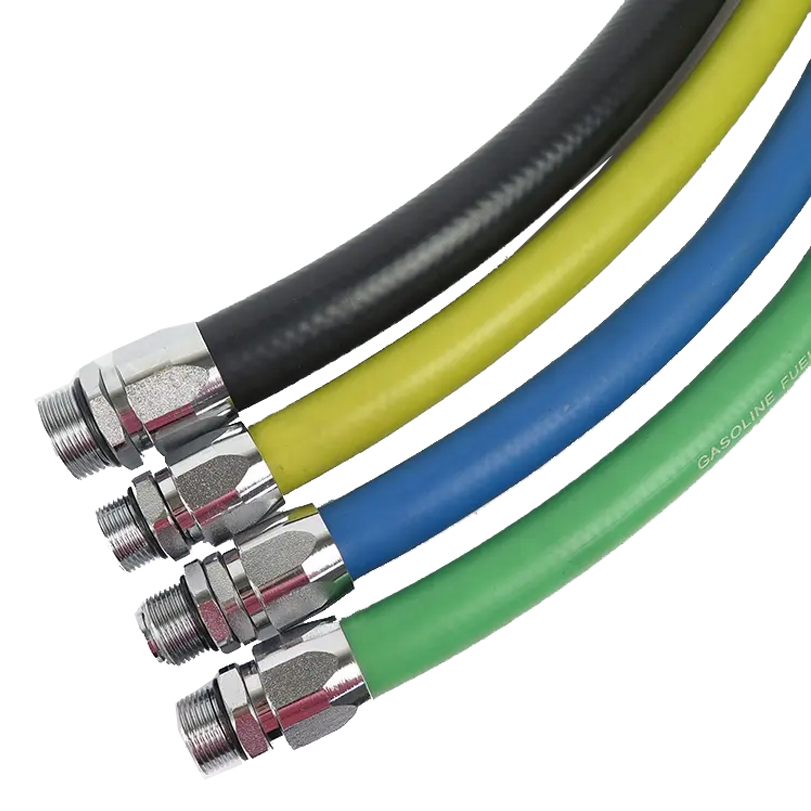
SAE 100R15 rubber hose represents a critical component in hydraulic systems across a diverse range of industries, including construction, agriculture, mining, and manufacturing. These hoses are specifically engineered for the conveyance of hydraulic fluid under high pressure, typically up to 4,000 PSI (276 bar) with temperature ranges varying depending on the hose construction. China's emergence as a leading global manufacturer of SAE 100R15 hoses presents both opportunities and challenges. Chinese manufacturers have rapidly scaled production capacity, often offering competitive pricing. However, maintaining consistent quality control, adhering to stringent international standards, and understanding nuanced application requirements are key areas of focus for buyers. This guide provides an in-depth technical analysis of SAE 100R15 hoses, covering material science, manufacturing processes, performance characteristics, failure modes, and industry best practices, specifically within the context of sourcing from China.
Material Science & Manufacturing
The core construction of an SAE 100R15 hose fundamentally relies on several key materials. The inner tube is typically composed of synthetic rubber, most commonly nitrile (NBR) due to its excellent resistance to petroleum-based hydraulic fluids. However, other elastomers like chloroprene (CR) may be used for applications requiring broader temperature ranges or compatibility with specific fluid types. Reinforcement layers are critical for withstanding high pressures and consist of multiple plies of high-tensile steel wire, typically spirally wound. The cover, protecting the reinforcement from environmental damage and abrasion, is typically constructed from synthetic rubber like styrene-butadiene rubber (SBR) or chloroprene rubber, often with a woven cotton or polyester braid to enhance dimensional stability. Manufacturing processes begin with the extrusion of the inner tube, followed by the precise winding of the steel wire reinforcement layers. Maintaining consistent tension and pitch during winding is paramount, directly impacting burst pressure and fatigue life. The cover is then extruded over the reinforcement, and the hose is cured using vulcanization, a process involving heating the rubber compound with sulfur or other curing agents to crosslink the polymer chains, thereby imparting strength and elasticity. Critical parameters during vulcanization include temperature, time, and pressure, all of which directly affect the final physical properties of the hose. Chinese manufacturers commonly employ continuous vulcanization processes for high-volume production. Quality control at this stage involves rigorous testing of tensile strength, elongation at break, and hardness to ensure compliance with SAE specifications. The braiding process, if implemented, requires tight control over yarn tension and angle to ensure adequate cover integrity.
Performance & Engineering
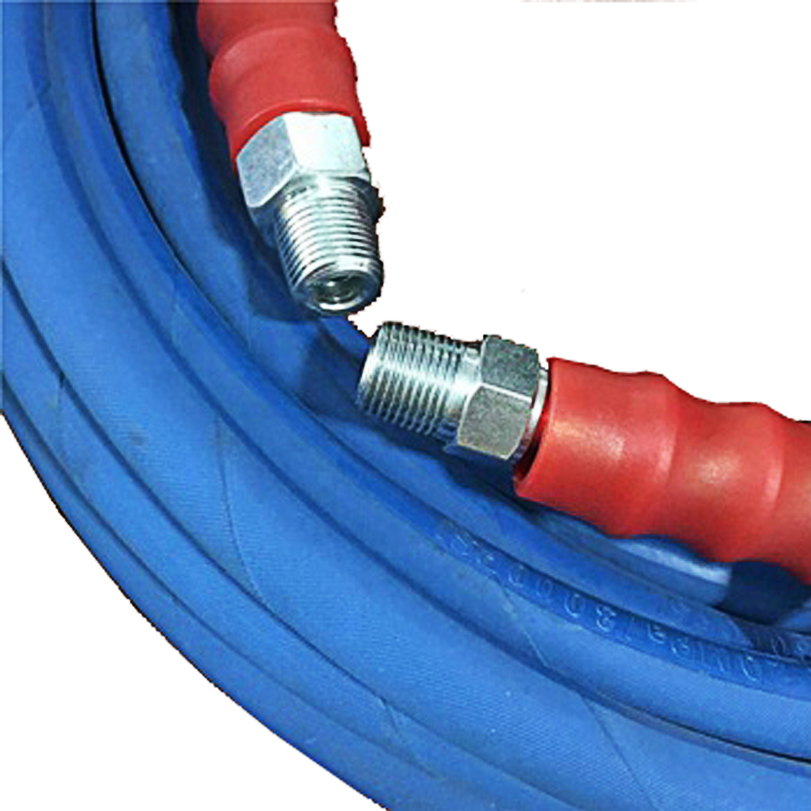
SAE 100R15 hose performance is governed by several key engineering principles. Burst pressure, a critical safety parameter, is determined by the tensile strength of the reinforcement wires and the efficiency of the winding process. Fatigue life, the hose's ability to withstand repeated pressure cycles, is influenced by factors such as wire flexibility, the quality of the rubber compound, and the absence of defects. Environmental resistance, particularly to ozone, UV radiation, and oil exposure, depends heavily on the chemical composition of the cover material and the addition of protective additives. Force analysis reveals that the primary stresses experienced by the hose are hoop stress due to internal pressure and bending stress due to hose routing and movement. Excessive bending radius can lead to localized stress concentrations and premature failure. Compliance requirements, as outlined by SAE J517, dictate minimum performance standards for burst pressure, temperature range, and fluid compatibility. Finite element analysis (FEA) is increasingly used by manufacturers to optimize hose design and predict performance under various operating conditions. Proper hose assembly, including the selection of compatible fittings and correct crimping procedures, is essential for ensuring long-term reliability. Improper crimping can lead to fitting slippage, fluid leakage, and catastrophic hose failure. Chinese manufacturers are increasingly adopting FEA and advanced testing methodologies to improve product performance and meet evolving industry demands.
Technical Specifications
| Parameter | Typical Value (SAE 100R15) | Test Method | Tolerance |
|---|---|---|---|
| Working Pressure (PSI) | 3,000 | SAE J517 | ±10% |
| Burst Pressure (PSI) | 12,000 | SAE J517 | ±15% |
| Temperature Range (°F) | -40 to +212 | SAE J517 | ±5°F |
| Inner Tube Material | Nitrile Rubber (NBR) | ASTM D2000 | Compliant |
| Reinforcement | Multiple Steel Wire Braids | SAE J517 | Specified Ply Count |
| Cover Material | Chloroprene Rubber (CR) | ASTM D2000 | Compliant |
Failure Mode & Maintenance
SAE 100R15 hoses are susceptible to several common failure modes. Fatigue cracking, arising from repeated flexure and pressure cycles, is a prevalent issue, often initiating at the reinforcement layer due to stress concentrations. Delamination, the separation of the rubber layers from the reinforcement, can occur due to poor bonding during manufacturing or prolonged exposure to harsh environments. Oxidation and degradation of the rubber compound, especially the cover, can result from exposure to ozone, UV radiation, and extreme temperatures, leading to cracking and loss of flexibility. Abrasion damage, caused by contact with abrasive surfaces, can compromise the cover's protective function and expose the reinforcement to corrosion. Internal corrosion, though less common, can occur if the hose is used with incompatible fluids. Maintenance practices crucial to extending hose life include regular visual inspections for cracks, abrasions, and leaks. Proper hose routing, avoiding sharp bends and contact with hot surfaces, is essential. Maintaining clean hose connections and using compatible fittings are also important preventative measures. If a hose shows signs of damage, it should be replaced immediately. Chinese manufacturers are increasingly focusing on improving rubber compound formulations and bonding processes to enhance resistance to these failure modes. Periodically flushing the hydraulic system and ensuring proper fluid filtration can minimize internal corrosion and extend hose life.
Industry FAQ
Q: What is the significance of the 'dash size' designation in SAE 100R15 hoses?
A: The dash size (e.g., -6, -8, -10) refers to the inner diameter of the hose in sixteenths of an inch. Therefore, a -6 hose has a 6/16" (3/8") inner diameter. This is a critical parameter for matching the hose to the flow requirements of the hydraulic system.
Q: How do I verify the fluid compatibility of an SAE 100R15 hose with my specific hydraulic fluid?
A: Refer to the hose manufacturer's chemical compatibility chart. These charts detail the resistance of the hose's inner tube material (typically NBR or CR) to various hydraulic fluids. Avoid using hoses with fluids that are incompatible, as this can lead to swelling, degradation, and failure.
Q: What is the recommended minimum bend radius for an SAE 100R15 hose?
A: The minimum bend radius is typically specified by the hose manufacturer and is often a function of the hose diameter. Exceeding the recommended bend radius can induce excessive stress and reduce the hose’s fatigue life. Consult the manufacturer’s datasheet.
Q: What are the key quality control certifications I should look for from a Chinese SAE 100R15 manufacturer?
A: Look for manufacturers with ISO 9001 certification for their quality management system. Additionally, certifications demonstrating compliance with SAE J517, and potentially other industry-specific standards, are crucial. Third-party testing reports from independent laboratories are also valuable.
Q: What are the implications of using a hose with a lower working pressure than my system’s operating pressure?
A: Using a hose with a lower working pressure than the system’s operating pressure is extremely dangerous and can lead to catastrophic hose failure, resulting in injury or equipment damage. Always ensure that the hose’s working pressure rating exceeds the maximum system pressure.
Conclusion
SAE 100R15 hydraulic hoses are indispensable components in a wide range of industrial applications. Understanding the complex interplay of material science, manufacturing processes, and performance characteristics is critical for selecting the appropriate hose for a given application and ensuring long-term reliability. Sourcing from Chinese manufacturers presents cost advantages, but requires diligent attention to quality control, adherence to international standards, and thorough verification of performance specifications.
By prioritizing these factors, buyers can mitigate risks and leverage the competitive benefits offered by the Chinese manufacturing landscape. Continued advancements in rubber compound technology, reinforcement materials, and manufacturing techniques will further enhance the performance and durability of SAE 100R15 hoses, contributing to the efficiency and safety of hydraulic systems worldwide.