
Apr . 01, 2024 17:55 Back to list
china sae100r15 manufacturer Performance Analysis
Introduction
SAE 100R15 is a widely recognized and critically important standard for non-reinforced hydraulic hose utilized in medium-pressure applications. Chinese SAE 100R15 manufacturers play a significant role in the global supply chain, producing hoses essential for industries including construction, agriculture, material handling, and industrial machinery. This guide provides an in-depth technical examination of SAE 100R15 hose, encompassing material science, manufacturing processes, performance characteristics, failure modes, and relevant industry standards. The core performance metrics revolve around burst pressure, working pressure, temperature resistance, and fluid compatibility. A key pain point for procurement managers is ensuring consistent quality and adherence to the SAE standard from various Chinese manufacturers, particularly regarding dimensional accuracy and rubber compound consistency. This guide is intended to equip engineers and procurement professionals with the knowledge necessary to evaluate and select appropriate SAE 100R15 hoses for demanding applications.
Material Science & Manufacturing
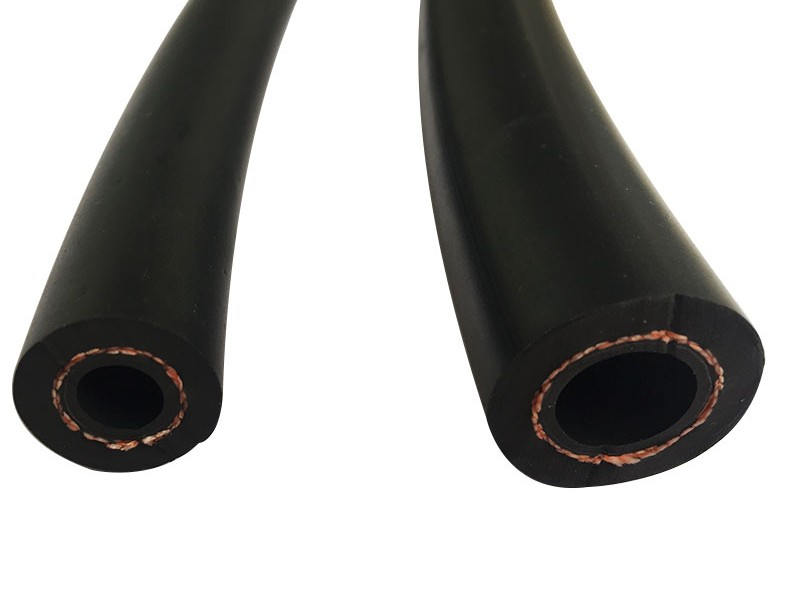
SAE 100R15 hoses are typically constructed from a synthetic rubber inner tube, a high-tensile reinforcement braid, and a synthetic rubber cover. The inner tube is commonly made of nitrile rubber (NBR), known for its excellent resistance to petroleum-based fluids, abrasion, and moderate temperatures. Alternative inner tube materials, such as styrene-butadiene rubber (SBR), may be utilized for specific fluid compatibility requirements but generally offer lower oil resistance. The reinforcement braid is generally composed of two layers of high-strength steel wire, providing the hose with its pressure-holding capability. The cover material is typically a blended synthetic rubber, frequently a combination of chloroprene (neoprene) for weather resistance and abrasion resistance, and nitrile for oil resistance.
Manufacturing involves several critical stages. The inner tube is extruded through a die to achieve the desired internal diameter and wall thickness. The reinforcement braid is then applied using a braiding machine, with precise control of braid angle and tension being crucial for burst strength. Following braiding, the cover is extruded over the reinforcement, and the hose is cured using a vulcanization process. Vulcanization involves heating the rubber compounds with sulfur or other curing agents, initiating crosslinking that imparts elasticity, strength, and resistance to degradation. Critical parameters during vulcanization include temperature, time, and pressure. Post-curing inspections include dimensional checks, burst pressure testing, and visual defect analysis. Manufacturers must maintain strict process control to ensure batch-to-batch consistency in rubber compound formulation and curing parameters, as variations can significantly affect hose performance and lifespan. The selection of the steel wire is equally critical, as wire diameter, tensile strength, and surface finish directly impact burst pressure and fatigue life.

Performance & Engineering
The performance of SAE 100R15 hose is governed by several engineering principles. The hose's ability to withstand internal pressure is directly related to the tensile strength of the reinforcement braid and the inner tube's resistance to stretching. Hoop stress, calculated using the thin-walled pressure vessel formula (σ = Pr/t, where σ is hoop stress, P is internal pressure, r is internal radius, and t is wall thickness), dictates the stress levels within the hose wall. Fatigue life is a critical consideration, as hoses are subjected to cyclic pressure and bending during operation. Fatigue failure can occur due to crack initiation and propagation within the reinforcement braid or the rubber compounds.
Environmental resistance is also paramount. Exposure to ozone, UV radiation, and extreme temperatures can cause rubber degradation, leading to cracking and loss of flexibility. Manufacturers employ antioxidants and UV stabilizers in the rubber compounds to mitigate these effects. Fluid compatibility is another key performance aspect. The inner tube material must be resistant to swelling, softening, or degradation when exposed to the hydraulic fluid being conveyed. SAE J200 provides guidelines for fluid compatibility testing. Furthermore, bend radius is an essential engineering parameter. Exceeding the minimum bend radius can induce stress concentrations and accelerate fatigue failure. SAE 100R15 hoses are designed to withstand a minimum bend radius of 4 times the inside diameter. Compliance requirements are strict; proper marking indicating the hose type, manufacturer, and working pressure is mandatory.
Technical Specifications
| Parameter | Unit | SAE 100R15 Specification | Typical Chinese Manufacturer Range |
|---|---|---|---|
| Working Pressure | MPa | 10.5 | 8 - 12 |
| Burst Pressure | MPa | 31.5 | 24 - 36 |
| Temperature Range | °C | -40 to +100 | -40 to +120 |
| Inner Tube Material | - | Nitrile Rubber (NBR) | NBR, SBR |
| Reinforcement | - | Two Steel Wire Braids | Two Steel Wire Braids |
| Cover Material | - | Chloroprene/Nitrile Blend | Chloroprene/Nitrile Blend |
Failure Mode & Maintenance
Common failure modes for SAE 100R15 hoses include burst failure due to exceeding the working pressure, fatigue cracking resulting from cyclic bending and pressure fluctuations, and degradation of the rubber compounds due to exposure to ozone, UV radiation, and extreme temperatures. Pinholes in the inner tube can occur due to abrasion from fluid contaminants. Another frequent issue is hose distortion or kinking, leading to localized stress concentrations and premature failure. Failure analysis often reveals issues with the reinforcement braid, such as corrosion or broken wires.
Preventative maintenance is critical for maximizing hose lifespan. Regular visual inspections should be conducted to identify signs of cracking, swelling, or abrasion. The hose should be protected from sharp objects and extreme temperatures. Proper hose routing and support are essential to minimize bending stress. Fluid cleanliness should be maintained to prevent abrasive wear. If a hose exhibits any signs of damage, it should be replaced immediately. Proper storage is also important; hoses should be stored in a cool, dry, and dark location, away from ozone sources. When replacing a hose, ensure the new hose meets or exceeds the original specifications and is compatible with the hydraulic fluid being used. Crimping procedures must be followed precisely to ensure a secure and leak-proof connection.
Industry FAQ
Q: What are the key differences between SAE 100R15 and SAE 100R2AT hoses?
A: SAE 100R2AT hoses are designed for higher pressures and offer improved temperature resistance compared to SAE 100R15. R2AT hoses utilize a spiral steel reinforcement, providing greater strength and flexibility. R15 has a braided reinforcement and is generally used in lower-pressure applications. The cost of R2AT is significantly higher due to the more complex manufacturing process and higher material costs.
Q: How can I verify that a Chinese manufacturer is truly adhering to the SAE 100R15 standard?
A: Request a copy of the manufacturer's testing reports, specifically burst pressure tests, temperature resistance tests, and fluid compatibility tests conducted by a certified independent laboratory. Verify that the hose marking includes the SAE 100R15 designation and the manufacturer's identification. Consider conducting a third-party audit of the manufacturer’s quality control processes.
Q: What is the impact of hydraulic fluid type on the lifespan of an SAE 100R15 hose?
A: The choice of hydraulic fluid is critical. Incompatible fluids can cause swelling, softening, or degradation of the inner tube material. For example, using a phosphate ester fluid with a nitrile rubber inner tube will result in rapid deterioration. Always consult the hose manufacturer's compatibility chart to ensure the fluid is suitable.
Q: What are the common causes of premature hose failure in hydraulic systems?
A: Common causes include exceeding the working pressure, improper hose routing and support, contamination of the hydraulic fluid, exposure to extreme temperatures, and damage from abrasion or chemical exposure. Incorrect hose installation, such as over-tightening or under-tightening crimp connections, is also a significant factor.
Q: What is the expected service life of an SAE 100R15 hose under typical operating conditions?
A: The expected service life varies depending on the application and operating conditions. Under normal conditions, with proper maintenance, an SAE 100R15 hose can last between 3 to 5 years. However, in harsh environments or with frequent exposure to high pressures and temperatures, the lifespan may be significantly reduced.
Conclusion
SAE 100R15 hydraulic hose remains a foundational component in numerous industrial applications. Understanding the material science, manufacturing nuances, and performance characteristics detailed within this guide is paramount for procurement professionals and engineers alike. The potential for failure highlights the importance of robust quality control, proper installation practices, and diligent maintenance programs. Selecting a reputable Chinese manufacturer committed to adhering to the SAE standard and providing comprehensive testing data is crucial for ensuring reliability and longevity.
Future trends in hydraulic hose technology focus on developing more durable materials, improving resistance to harsh environments, and incorporating smart sensing capabilities for real-time monitoring of hose condition. The continued emphasis on safety, efficiency, and sustainability will drive innovation in hose design and manufacturing. By prioritizing a thorough understanding of these technical aspects, industries can mitigate risks and optimize the performance of their hydraulic systems.