
Apr . 01, 2024 17:55 Back to list
china sae100r12 manufacturer Performance Analysis
Introduction
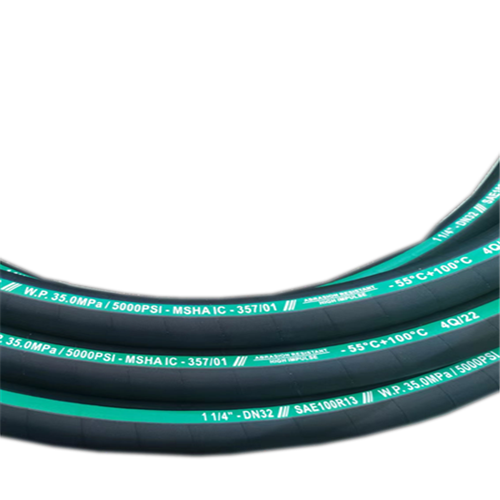
SAE 100R12 rubber hose represents a critical component in hydraulic fluid power systems, widely utilized across diverse industrial sectors including construction, agriculture, material handling, and manufacturing. This standard, defined by the Society of Automotive Engineers (SAE), dictates stringent performance criteria for non-reinforced hydraulic hoses intended for medium-pressure applications. China SAE 100R12 manufacturers play a significant role in the global supply chain, offering cost-competitive solutions while increasingly focusing on quality control and adherence to international standards. The core performance characteristics of SAE 100R12 hose – burst pressure, working pressure, temperature range, and fluid compatibility – directly impact the reliability and safety of hydraulic systems. A primary industry pain point revolves around consistent quality and traceability of materials utilized in hose construction, particularly concerning synthetic rubber compounds and manufacturing process controls. Maintaining consistent inner tube and cover properties is essential to avoid premature failure due to fluid degradation, permeation, or environmental exposure. This guide provides a comprehensive technical overview of SAE 100R12 hose, covering material science, manufacturing processes, performance characteristics, potential failure modes, and relevant industry standards.
Material Science & Manufacturing
The construction of SAE 100R12 hose typically involves three primary components: the inner tube, reinforcement layer, and outer cover. The inner tube, critical for fluid compatibility, is commonly composed of synthetic rubbers such as Nitrile (NBR), also known as Buna-N, due to its excellent resistance to petroleum-based hydraulic fluids. Ethylene Propylene Diene Monomer (EPDM) is also utilized when compatibility with phosphate ester fluids is required. The specific compound formulation dictates performance characteristics like fluid permeation rate and temperature resistance. Manufacturing of the inner tube usually employs extrusion techniques, where the rubber compound is forced through a die to create a continuous tube. Precise control of extrusion temperature, screw speed, and die geometry are crucial for achieving consistent wall thickness and surface finish. The reinforcement layer in SAE 100R12 is absent as per the standard definition; it is a non-reinforced hose. The outer cover provides environmental protection and abrasion resistance, typically utilizing a blend of synthetic rubbers like Chloroprene (Neoprene) or Styrene-Butadiene Rubber (SBR). Cover properties, like ozone resistance and UV protection, are vital for extending service life. Manufacturing the cover also utilizes extrusion. Post-extrusion, the hose undergoes vulcanization – a chemical process involving sulfur or peroxide crosslinking – to enhance the rubber’s strength, elasticity, and resistance to degradation. Vulcanization temperature and time are precisely controlled to achieve optimal material properties. Quality control checks during manufacturing include dimensional inspection, hydrostatic pressure testing, and material composition analysis to ensure adherence to SAE J517 specifications. The purity of raw materials (rubber polymers, plasticizers, fillers) significantly influences the final product’s performance, highlighting the importance of supplier qualification and incoming material inspection.

Performance & Engineering
The performance of SAE 100R12 hose is governed by several key engineering parameters. Burst pressure, typically ranging from 450 to 600 psi (3100 to 4140 kPa) as specified in SAE J517, represents the maximum pressure the hose can withstand before rupture. Working pressure, generally one-third of the burst pressure, defines the safe operating pressure for continuous use. Temperature range is another critical factor; NBR hoses typically operate between -40°C and +100°C, while EPDM hoses can extend up to +121°C. Fluid compatibility dictates the hose's resistance to degradation when exposed to various hydraulic fluids. Incompatibility can lead to swelling, softening, or cracking, compromising hose integrity. Force analysis during bending and flexing considers factors like bend radius, hose diameter, and internal pressure. Excessive bending can induce stress concentrations, leading to fatigue failure. Environmental resistance encompasses protection against ozone, UV radiation, abrasion, and chemical exposure. The cover material plays a crucial role in mitigating these factors. Compliance requirements extend beyond SAE J517 to include REACH and RoHS directives, restricting the use of hazardous substances. Furthermore, hose assemblies incorporating fittings must undergo pressure testing to ensure leak-free operation. Finite Element Analysis (FEA) is often employed to optimize hose design and predict performance under various loading conditions. Consideration must be given to potential thermal expansion and contraction, particularly in applications involving temperature fluctuations. Selection of appropriate fitting materials, compatible with both the hose and the hydraulic fluid, is paramount to prevent corrosion and ensure a secure connection.
Technical Specifications
| Parameter | Unit | NBR (Typical) | EPDM (Typical) |
|---|---|---|---|
| Working Pressure | psi | 300 | 300 |
| Burst Pressure | psi | 900 | 900 |
| Temperature Range | °C | -40 to +100 | -40 to +121 |
| Inner Tube Material | - | Nitrile Rubber (NBR) | Ethylene Propylene Diene Monomer (EPDM) |
| Cover Material | - | Chloroprene (Neoprene) | Chloroprene (Neoprene) |
| Fluid Compatibility | - | Petroleum-based fluids | Phosphate ester fluids |
Failure Mode & Maintenance
SAE 100R12 hoses are susceptible to several failure modes in practical applications. Fatigue cracking, resulting from repeated flexing and pressure cycling, is a common issue. This is exacerbated by excessive bending, improper installation, or exceeding the working pressure. Permeation, the diffusion of hydraulic fluid through the hose wall, can lead to fluid loss and reduced system efficiency. Higher temperatures and incompatible fluids accelerate permeation rates. Abrasion, caused by external contact with abrasive surfaces, degrades the outer cover, exposing the reinforcement layer to corrosion. Oxidation, particularly in the cover material, can result in cracking and loss of flexibility, especially with prolonged exposure to ozone and UV radiation. Internal degradation of the inner tube, due to chemical attack from incompatible fluids, leads to swelling, softening, and eventual failure. Proper maintenance is crucial for extending hose service life. Regular visual inspections should identify cracks, abrasions, bulges, or leaks. Hoses should be replaced if any signs of degradation are observed. Avoid sharp bends and ensure adequate support to prevent excessive stress. Maintain proper fluid cleanliness to minimize internal abrasion and degradation. Store hoses in a cool, dry, and dark environment to prevent ozone cracking and UV damage. Pressure testing hose assemblies periodically can detect leaks before they become critical failures. Implement a preventative maintenance schedule based on operating conditions and fluid type.
Industry FAQ
Q: What is the significance of the SAE J517 standard for SAE 100R12 hose?
A: SAE J517 defines the performance requirements, testing procedures, and marking specifications for non-reinforced hydraulic hoses, including SAE 100R12. It ensures consistent quality and interchangeability across different manufacturers, providing assurance of safe and reliable operation. Adherence to J517 is a fundamental requirement for industry acceptance and regulatory compliance.
Q: How does fluid compatibility impact the selection of an inner tube material?
A: Fluid compatibility is paramount. NBR is generally suitable for petroleum-based hydraulic fluids, but EPDM is necessary for phosphate ester fluids. Using an incompatible material leads to swelling, softening, cracking, and premature hose failure. Always verify the hose material’s compatibility with the intended hydraulic fluid before installation.
Q: What are the common causes of burst failure in SAE 100R12 hose?
A: Burst failures typically result from exceeding the working pressure, fatigue cracking due to repeated flexing, or internal damage caused by incompatible fluids. Manufacturing defects, such as inclusions or thin spots in the tube wall, can also contribute. Regular inspection and adherence to pressure limits are essential to prevent burst failures.
Q: How does temperature affect the performance and lifespan of SAE 100R12 hose?
A: Temperature influences both the mechanical properties and chemical resistance of the rubber compounds. High temperatures accelerate degradation and permeation. Low temperatures can reduce flexibility and increase the risk of cracking. Operating within the specified temperature range is crucial for maintaining performance and extending service life.
Q: What preventative maintenance practices should be implemented for SAE 100R12 hose?
A: Regular visual inspections for cracks, abrasions, and leaks are essential. Avoid sharp bends and ensure proper support. Maintain fluid cleanliness and store hoses in a cool, dry, and dark environment. Periodically pressure test hose assemblies to detect leaks. Implement a scheduled replacement program based on operating conditions and usage.
Conclusion
SAE 100R12 rubber hose, while seemingly a simple component, is critical to the safe and efficient operation of hydraulic systems. The selection of appropriate materials – NBR or EPDM for the inner tube, and typically Chloroprene for the cover – hinges on fluid compatibility and operating temperature. Adherence to SAE J517 standards is non-negotiable for ensuring quality and interchangeability. Understanding potential failure modes – fatigue cracking, permeation, abrasion, and oxidation – is crucial for implementing effective preventative maintenance strategies.
China SAE 100R12 manufacturers are increasingly focused on meeting international standards and providing cost-effective solutions. Future trends point towards the development of more durable and chemically resistant rubber compounds, along with enhanced manufacturing process controls to improve consistency and reliability. Continued research and development efforts are vital to address the evolving demands of the hydraulic industry and optimize hose performance in challenging applications.