
Apr . 01, 2024 17:55 Back to list
china sae100r12 factory Performance Analysis
Introduction
SAE 100R12 rubber hose represents a critical component in hydraulic systems across diverse industrial applications. Manufactured by china sae100r12 factory, these hoses are designed for the conveyance of hydraulic fluid under high pressure, serving as a vital link in power transmission and control systems. Positioned within the hydraulic system supply chain, they connect pumps, valves, cylinders, and other fluid-handling components. Core performance characteristics center around burst pressure, working pressure, temperature range, and fluid compatibility. A primary industry pain point is ensuring long-term reliability and minimizing downtime due to hose failure, necessitating stringent quality control and adherence to international standards. The materials utilized and manufacturing processes employed directly influence the hose's resistance to degradation from factors like heat, oil exposure, and mechanical stress. Understanding these factors is paramount for selection and correct application.
Material Science & Manufacturing
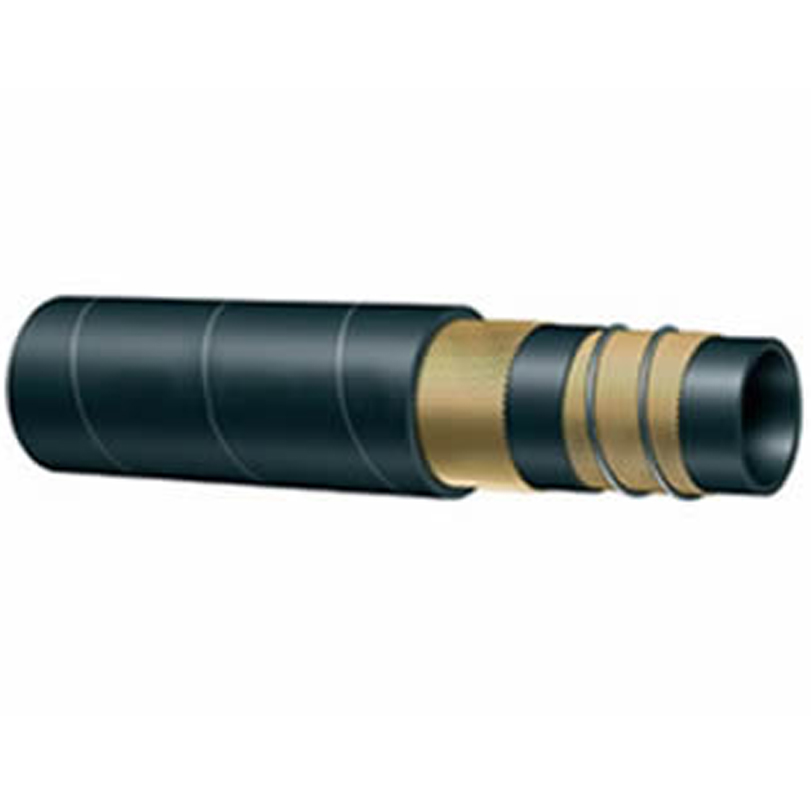
The construction of SAE 100R12 hose relies on a multi-layered configuration, with each layer playing a specific functional role. The inner tube is typically composed of a synthetic rubber compound – often a blend of nitrile (NBR) for oil resistance, or EPDM for phosphate ester fluids – providing a fluid-impermeable barrier. NBR possesses excellent resistance to aliphatic hydrocarbons, but limited resistance to ozone and weathering. EPDM, conversely, demonstrates superior ozone, weathering, and heat resistance but can be less suitable for direct petroleum oil contact. Reinforcement layers, crucial for withstanding high pressure, consist of multiple plies of high-tensile steel wire braided in a helical pattern. The number of braids dictates the hose's working and burst pressure ratings. An outer cover, usually made of Chlorinated Polyethylene (CPE) or polyurethane, provides abrasion, ozone, and weathering protection. CPE offers good overall protection at a lower cost, while polyurethane provides superior abrasion resistance. Manufacturing involves extrusion of the inner tube and outer cover, followed by precise winding of the steel wire reinforcement. Critical parameters during extrusion include temperature control to ensure proper polymer melt flow and consistent wall thickness. Braiding tension and helix angle are crucial for pressure rating and flexibility. Post-production, hoses undergo stringent pressure testing, dimensional checks, and visual inspection to verify compliance with SAE J517 standards. Proper vulcanization of the rubber compounds is essential for achieving desired physical properties and long-term durability.

Performance & Engineering
The performance of SAE 100R12 hose is fundamentally governed by principles of fluid mechanics and material strength. The hose must withstand internal pressure without ballooning or rupturing, requiring sufficient tensile strength from the reinforcement layers. Burst pressure, defined as the pressure at which the hose fails catastrophically, is a key performance metric. Working pressure, typically rated as a fraction of the burst pressure (often a 4:1 safety factor), represents the maximum continuous operating pressure. Flexibility, determined by the hose’s bend radius, is crucial for ease of installation and maneuverability in confined spaces. Environmental resistance is paramount; prolonged exposure to elevated temperatures, UV radiation, ozone, and aggressive fluids can degrade the rubber compounds, leading to reduced performance and eventual failure. Chemical compatibility is equally vital. Incompatible fluids can cause swelling, softening, or cracking of the inner tube, compromising its integrity. Finite element analysis (FEA) is commonly employed during the design phase to predict stress distribution under various loading conditions and optimize reinforcement configurations. Compliance with SAE J517 ensures consistent performance characteristics and interchangeability between hoses from different manufacturers. Proper hose assembly, including the selection of compatible fittings and correct crimping procedures, is essential for achieving rated performance and preventing leakage or failure. Fatigue analysis is critical to understand the life cycle of the hose under cyclic loading conditions.
Technical Specifications
| Parameter | Unit | SAE 100R12 Standard Range | Typical china sae100r12 factory Specification |
|---|---|---|---|
| Working Pressure | MPa | Up to 35 | 10 - 35 |
| Burst Pressure | MPa | Up to 140 | 40 - 140 |
| Temperature Range | °C | -40 to +100 | -40 to +120 |
| Inner Tube Material | - | NBR, EPDM | NBR (Standard), EPDM (Optional) |
| Reinforcement | - | Steel Wire Braid | 2, 4, or 6 Wire Braid |
| Outer Cover Material | - | CPE, Polyurethane | CPE (Standard), Polyurethane (Optional) |
Failure Mode & Maintenance
SAE 100R12 hose failures can manifest in several forms. Fatigue cracking, initiated by repeated flexing and pressure cycling, is a common failure mode, particularly near the fitting crimp. Delamination, the separation of reinforcement layers from the rubber matrix, can occur due to insufficient adhesion or exposure to aggressive fluids. Oxidation and ozone cracking, particularly in the outer cover, result from long-term exposure to atmospheric elements. Abrasion, caused by contact with abrasive surfaces, degrades the outer cover, leading to reinforcement exposure and eventual failure. Pinholes, small perforations in the inner tube, can develop due to internal corrosion or damage from foreign objects. To mitigate these failures, regular visual inspections are essential. Look for signs of cracking, abrasion, swelling, or discoloration. Avoid sharp bends and kinking during installation and operation. Protect hoses from direct exposure to extreme temperatures, ozone sources, and abrasive environments. Use proper hose supports to prevent excessive sagging and strain. Flush hydraulic systems periodically to remove contaminants that can accelerate wear. When replacing a hose, ensure the new hose has the correct pressure rating, temperature range, and fluid compatibility. Proper fitting selection and crimping are critical. Conduct leak tests after installation and periodically throughout the hose’s service life. Implement a preventative maintenance schedule based on operating conditions and manufacturer recommendations. Record keeping of hose installations, inspections, and replacements aids in identifying recurring failure patterns and optimizing maintenance procedures.
Industry FAQ
Q: What is the significance of the number of steel wire braids in an SAE 100R12 hose?
A: The number of braids directly correlates to the hose’s pressure rating. Each additional braid increases the tensile strength and therefore the ability to withstand higher internal pressures. A 2-braid hose typically handles lower pressures than a 4-braid or 6-braid hose. The selection depends on the maximum system pressure and the desired safety factor.
Q: How does fluid compatibility affect hose life?
A: Incompatible fluids can cause significant degradation. For example, petroleum-based oils can swell and soften some rubber compounds, weakening the hose wall. Phosphate ester fluids require specific EPDM formulations to prevent deterioration. Always verify the hose’s material compatibility with the intended fluid before installation.
Q: What are the best practices for preventing hose twisting during installation?
A: Hose twisting significantly reduces its flexibility and increases stress on the reinforcement. Ensure the hose can move freely during system operation and avoid forcing it into bent positions. Use swivels at hose connections to accommodate movement and prevent twisting. Proper routing and support can also minimize twisting.
Q: What is the impact of operating temperature on hose performance?
A: Elevated temperatures accelerate rubber degradation, reducing the hose’s flexibility and tensile strength. Low temperatures can cause the rubber to become brittle and prone to cracking. Always operate the hose within its specified temperature range. For high-temperature applications, consider hoses with specialized heat-resistant rubber compounds.
Q: How often should SAE 100R12 hoses be replaced?
A: Replacement frequency depends on operating conditions, fluid compatibility, and usage intensity. As a general guideline, hoses should be inspected annually and replaced if any signs of damage, such as cracking, abrasion, or swelling, are observed. For critical applications or harsh environments, more frequent inspections and replacements may be necessary.
Conclusion
SAE 100R12 hydraulic hoses are essential components in numerous industrial systems, demanding careful material selection, precise manufacturing, and diligent maintenance. Understanding the interplay between material properties, manufacturing processes, and operational conditions is paramount for ensuring reliable performance and minimizing downtime. The china sae100r12 factory’s commitment to adhering to stringent quality control procedures and international standards is crucial for producing hoses that meet the demands of modern hydraulic applications.
Continued advancements in rubber technology and reinforcement materials are paving the way for hoses with improved durability, temperature resistance, and chemical compatibility. The integration of sensor technologies for real-time monitoring of hose condition and predictive maintenance offers further potential for enhancing reliability and extending service life. By embracing these innovations and maintaining a focus on best practices, the industry can address the ongoing challenges of hydraulic hose failure and optimize system performance.

