
Apr . 01, 2024 17:55 Back to list
china red high pressure hydraulic hose supplier Performance Analysis

Introduction
High-pressure hydraulic hoses are critical components in fluid power systems across diverse industries, including construction, agriculture, manufacturing, and automotive. This guide focuses on china red high-pressure hydraulic hoses, specifically addressing their construction, performance characteristics, and application considerations. These hoses are typically utilized for transmitting hydraulic fluid to power actuators and other hydraulic components, often operating under extreme pressures and temperatures. The “china red” designation refers to the common exterior color of these hoses, signifying a specific polymer blend and manufacturing standard frequently employed by suppliers. Their primary function is to safely and efficiently convey fluid power, and their reliability directly impacts the overall performance and safety of the connected systems. Understanding the intricacies of their material science, manufacturing processes, and potential failure modes is paramount for informed procurement and proper application. This guide will dissect the technical aspects, providing a comprehensive understanding for engineers, procurement managers, and maintenance personnel.
Material Science & Manufacturing
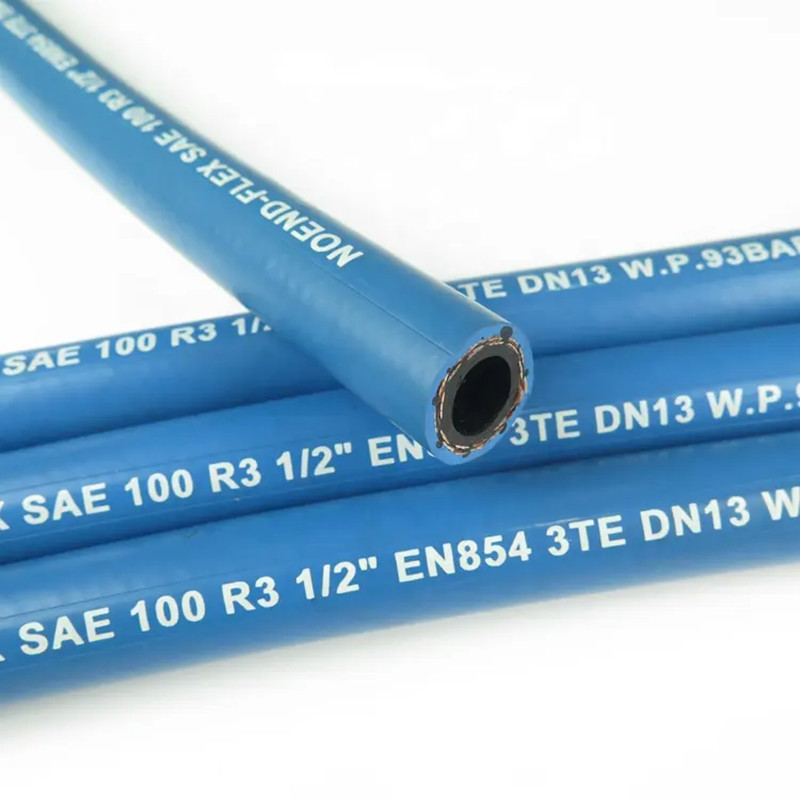
China red high-pressure hydraulic hoses are constructed from multiple layers, each contributing to its overall performance. The innermost layer, the tube, is typically composed of a synthetic rubber compound, often a blend of Nitrile (NBR) or Ethylene Propylene Diene Monomer (EPDM). NBR provides excellent resistance to petroleum-based hydraulic fluids, while EPDM excels in applications requiring resistance to heat, ozone, and weathering. The reinforcement layer is the critical component dictating the hose's pressure capacity. It commonly consists of multiple braids of high-tensile steel wire, spirally wound steel wire, or a combination of both. The number of layers and the wire gauge directly correlate with the maximum working pressure. An outer cover, usually a Chloroprene (CR) rubber compound, provides protection against abrasion, oil, and environmental degradation. The specific formulation of these rubber compounds varies between manufacturers, influencing factors like flexibility, temperature resistance, and fluid compatibility.
Manufacturing begins with the extrusion of the inner tube, followed by the precise winding or braiding of the reinforcement layers. Accurate tension control during reinforcement application is crucial for uniform pressure distribution and burst strength. The outer cover is then extruded over the reinforcement, and the hose undergoes a curing process (vulcanization) to crosslink the rubber polymers, enhancing their strength and elasticity. Quality control throughout the process includes dimensional checks, pressure testing (hydrostatic testing), and impulse testing to verify the hose's ability to withstand repeated pressure cycles. Skiving of the outer cover at the hose ends is a common finishing process to facilitate fitting attachment and prevent extrusion during assembly. Parameter control during extrusion – specifically temperature, pressure, and screw speed – is critical for achieving consistent material properties and eliminating defects like voids or inconsistencies in the rubber matrix.
Performance & Engineering
The performance of a high-pressure hydraulic hose is dictated by its ability to withstand internal pressure, external stresses, and environmental factors. Burst pressure, working pressure, and impulse pressure are key performance metrics. Burst pressure represents the maximum pressure the hose can withstand before rupture, while working pressure is a fraction of the burst pressure, representing the safe operating limit. Impulse pressure refers to the hose’s ability to withstand cyclical pressure fluctuations. Force analysis is critical in applications involving bending or flexing. The bend radius must be maintained within specified limits to prevent kinking and premature failure. Environmental resistance includes considerations for temperature range, ozone exposure, UV radiation, and fluid compatibility. The hose material must remain flexible and maintain its structural integrity across the anticipated operating temperature range.
Compliance requirements vary by region and application. Standards like SAE J517 (for hydraulic hose) and ISO 6897 (for hydraulic hose assembly) define the testing procedures and performance criteria. The selection of fittings is equally important. Fittings must be compatible with the hose material and rated for the same or higher pressure than the hose. Proper crimping of the fittings onto the hose is essential for a secure and leak-proof connection. Finite element analysis (FEA) is often employed during the design process to optimize hose geometry and reinforcement configuration for specific applications, predicting stress distribution and identifying potential failure points. Proper hose routing and support are also critical to prevent excessive bending, abrasion, and vibration.
Technical Specifications
| Parameter | Unit | Typical Value (China Red Hose) | Test Standard |
|---|---|---|---|
| Working Pressure | MPa | 20-35 | SAE J517 |
| Burst Pressure | MPa | 60-105 | SAE J517 |
| Temperature Range | °C | -40 to +100 | ISO 6897 |
| Inner Tube Material | - | NBR/EPDM Blend | ASTM D2000 |
| Reinforcement | - | 2/4 Spiral Steel Wire | SAE J517 |
| Outer Cover Material | - | Chloroprene (CR) | ASTM D2000 |
Failure Mode & Maintenance
High-pressure hydraulic hoses are susceptible to various failure modes. Fatigue cracking, caused by repeated pressure cycling and flexing, is a common issue. This typically initiates at areas of high stress concentration, such as near fittings or at points of severe bending. Abrasion, resulting from contact with abrasive surfaces, can wear away the outer cover, exposing the reinforcement layers to corrosion. Kinking, caused by exceeding the minimum bend radius, can damage the reinforcement and restrict fluid flow. Internal degradation of the tube material due to incompatible fluids or excessive temperatures can lead to swelling, softening, and eventual rupture. External corrosion of the reinforcement wires, particularly in harsh environments, weakens the hose and increases the risk of burst failure.
Preventive maintenance is crucial for extending hose life and preventing catastrophic failures. Regular visual inspections should be conducted to identify signs of abrasion, cracking, kinking, or leaks. Hoses should be replaced if any damage is detected. Proper hose routing and support are essential to minimize stress and abrasion. Fluid compatibility should be verified before use. Regularly check fitting connections for tightness and corrosion. Implementing a scheduled replacement program based on operating hours or calendar time can help prevent unexpected failures. When replacing hoses, ensure the new hose meets or exceeds the original specifications. Proper handling during installation – avoiding twisting, stretching, and excessive bending – is also critical for long-term reliability.
Industry FAQ
Q: What is the primary difference between single-wire and spiral-wire reinforced hydraulic hoses?
A: Single-wire (braided) hoses typically offer higher flexibility but lower pressure ratings compared to spiral-wire hoses. Spiral-wire hoses utilize a continuously wound wire, providing significantly greater strength and resistance to pressure, making them suitable for high-pressure applications. The trade-off is reduced flexibility. The “china red” hoses are frequently constructed with spiral wire for their enhanced pressure capabilities.
Q: How does temperature affect the performance of a hydraulic hose?
A: Extreme temperatures can degrade the rubber compounds used in hose construction. High temperatures can cause softening and swelling, reducing pressure capacity, while low temperatures can reduce flexibility and increase the risk of cracking. It is crucial to select a hose with a temperature rating that matches the operating environment.
Q: What are the common causes of hydraulic hose leaks?
A: Leaks can occur due to several factors, including damaged or improperly crimped fittings, cracks in the hose tube or cover, and internal degradation of the rubber material. Often, leaks are associated with loose connections or corrosion at the fitting interface. Routine inspection and proper maintenance are essential for preventing leaks.
Q: Is it acceptable to repair a damaged hydraulic hose?
A: Repairing a hydraulic hose is generally not recommended, especially for high-pressure applications. Even a seemingly minor repair can compromise the hose's structural integrity and increase the risk of catastrophic failure. Complete replacement is the safest and most reliable option.
Q: What is the role of hose guarding in hydraulic systems?
A: Hose guarding is a critical safety feature that protects hoses from abrasion, impact, and other potential damage. It also prevents personnel from coming into contact with a leaking hose under high pressure, which could cause serious injury. Effective hose guarding is essential for maintaining a safe working environment.
Conclusion
China red high-pressure hydraulic hoses represent a robust and widely utilized component in numerous hydraulic systems. Their performance is intrinsically linked to the careful selection of materials – NBR, EPDM, and CR – and the precision of the manufacturing process, particularly the reinforcement layer construction. Understanding the interplay between working pressure, burst pressure, temperature limitations, and environmental factors is critical for engineers and procurement specialists.
Prioritizing preventative maintenance, including regular visual inspections and adherence to recommended replacement schedules, ensures operational reliability and minimizes the risk of costly downtime and potential safety hazards. The stringent adherence to industry standards, such as those defined by SAE and ISO, underlines the importance of quality control throughout the supply chain. Continued advancements in material science and manufacturing techniques will likely lead to further improvements in hose performance and durability.