
Apr . 01, 2024 17:55 Back to list
china red high pressure hydraulic hose factory Performance Analysis

Introduction
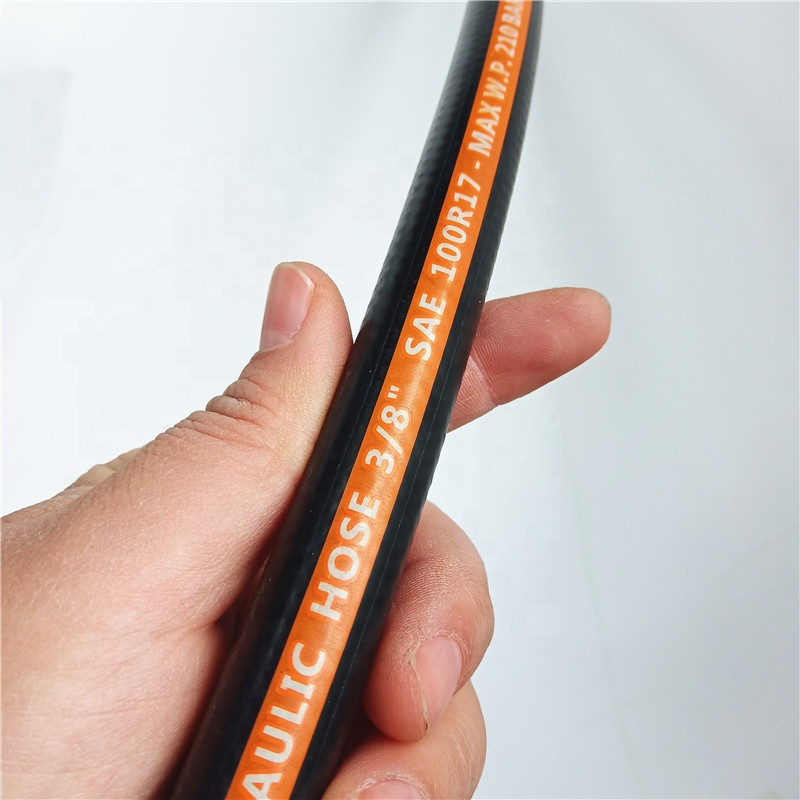
High-pressure hydraulic hoses, specifically those manufactured with a red china finish, are critical components in fluid power systems across diverse industrial applications. These hoses transmit hydraulic fluid to operate heavy machinery, agricultural equipment, and manufacturing processes. Positioned within the broader hydraulic system, their performance directly influences the efficiency, reliability, and safety of operations. The core performance characteristics center around burst pressure, working pressure, temperature resistance, and fluid compatibility. China red high pressure hydraulic hoses, particularly those from specialized factories, have gained prominence due to competitive pricing and increasing adherence to international quality standards. This guide provides an in-depth technical overview of these hoses, covering material science, manufacturing processes, performance parameters, failure modes, and relevant industry standards.
Material Science & Manufacturing
The construction of a high-pressure hydraulic hose involves several layers, each contributing to specific performance attributes. The inner tube, typically made from a synthetic rubber compound like nitrile (NBR), chloroprene (CR), or ethylene propylene diene monomer (EPDM), provides compatibility with the hydraulic fluid. NBR is commonly selected for petroleum-based fluids, CR for heat and ozone resistance, and EPDM for phosphate ester fluids. Reinforcement layers, the core determinant of pressure capacity, are usually composed of multiple plies of high-tensile steel wire, spirally or braided within the hose structure. The number and configuration of these steel wires directly correlate to the hose's working and burst pressure. Between the reinforcement and the outer cover lies a rubber binder compound, providing adhesion and structural integrity. Finally, the outer cover, often made of abrasion, weather, and oil-resistant rubber (typically a blend of synthetic rubbers like SBR or CR), protects the reinforcement from environmental degradation. Manufacturing involves extrusion of the inner tube, winding or braiding of the reinforcement layers (a highly controlled process impacting wire density and angle), application of the binder, extrusion of the outer cover, and final curing. Parameter control during extrusion – temperature, pressure, and screw speed – is crucial for uniform material distribution and avoiding defects like voids or inconsistencies in wall thickness. Steel wire surface treatment (e.g., zinc plating) prevents corrosion and improves adhesion. Curing optimizes rubber elasticity and crosslinking, ensuring long-term performance.
Performance & Engineering
The performance of a high-pressure hydraulic hose is governed by several engineering principles. Burst pressure, typically four times the working pressure, represents the point of catastrophic failure. Working pressure, the maximum continuous operating pressure, is dictated by the reinforcement layer configuration. Tensile strength, measured in MPa or PSI, determines the hose’s resistance to axial loading and stretching. Hose kink radius is critical, as exceeding the minimum bend radius can cause internal damage and restrict flow. Fluid compatibility is paramount; selecting the wrong inner tube material leads to swelling, degradation, and eventual failure. Temperature range impacts rubber elasticity and fluid viscosity. High temperatures reduce rubber strength, while low temperatures increase viscosity, potentially exceeding pressure limits. Impulse pressure, rapid pressure fluctuations common in hydraulic systems, causes cyclic fatigue and requires specific hose designs with enhanced flexibility. Environmental resistance, particularly to ozone, UV radiation, and chemical exposure, is essential for outdoor applications. Finite element analysis (FEA) is commonly used to optimize hose designs, predicting stress distribution under various loading conditions. Compliance requirements, like those dictated by SAE J517 or EN 853, ensure adherence to safety and performance standards.
Technical Specifications
| Parameter | Unit | Typical Value (DN20, SAE 100 R2AT) | Typical Value (DN32, SAE 100 R2AT) |
|---|---|---|---|
| Working Pressure | MPa | 31.5 | 25 |
| Burst Pressure | MPa | 126 | 100 |
| Inner Diameter | mm | 13 | 20 |
| Outer Diameter | mm | 19 | 28 |
| Minimum Bend Radius | mm | 40 | 65 |
| Temperature Range | °C | -40 to +100 | -40 to +100 |
Failure Mode & Maintenance
High-pressure hydraulic hoses are susceptible to several failure modes. Fatigue cracking, induced by repeated pressure cycling and bending, initiates at the inner tube and propagates through the reinforcement layers. Abrasion, caused by external contact with rough surfaces, damages the outer cover, exposing the reinforcement to corrosion. Pinholes, resulting from foreign object penetration, lead to fluid leakage and pressure loss. Hose twist, induced by improper installation or operation, creates stress concentrations and accelerates fatigue. Internal corrosion, caused by incompatible fluids or moisture ingress, weakens the inner tube. External ozone cracking, particularly in unsaturated rubber compounds, creates surface cracks and reduces hose integrity. Delamination, the separation of layers, compromises structural integrity. Maintenance involves regular visual inspections for signs of wear, cracking, or leakage. Proper hose routing and support prevent excessive bending and abrasion. Fluid contamination must be minimized through filtration. Hose assemblies should be periodically pressure tested. Replacement is necessary upon detection of any damage or when the hose reaches its service life. Never attempt to repair a damaged hose; complete replacement is the only safe option.
Industry FAQ
Q: What is the significance of the ‘R2AT’ designation in SAE J517 for hydraulic hoses?
A: The ‘R2AT’ designation specifies a hydraulic hose with a synthetic rubber tube, two steel wire reinforcement layers, and a synthetic rubber cover, suitable for applications requiring high-temperature and oil resistance. ‘R2’ indicates the two-layer reinforcement, ‘A’ signifies a synthetic rubber cover, and ‘T’ denotes suitability for high temperatures.
Q: How does fluid velocity impact hose life?
A: Higher fluid velocities increase the risk of erosion of the inner tube and can contribute to increased heat generation. Excessive velocity can lead to premature failure, especially in hoses with tight bend radii.
Q: What are the primary causes of hydraulic hose leaks?
A: Common causes include component deterioration due to age or exposure to harsh environments, improper installation (over-tightening or under-tightening fittings), exceeding the hose's pressure or temperature limits, and physical damage like abrasion or punctures.
Q: What is the role of the hose guard/sleeve?
A: A hose guard or sleeve provides external protection against abrasion, cuts, and impacts, significantly extending the hose’s service life, particularly in demanding applications or environments. It also helps contain potential leaks in the event of a hose rupture.
Q: How should hydraulic hoses be stored when not in use?
A: Hoses should be stored in a cool, dry, and dark location, away from direct sunlight, ozone sources, and extreme temperatures. They should be coiled loosely, avoiding sharp bends, and protected from physical damage. Avoid storing them under tension.
Conclusion
China red high-pressure hydraulic hoses represent a crucial link in hydraulic power transmission systems. Their performance is fundamentally dependent on meticulous material selection, rigorous manufacturing control, and adherence to industry standards. Understanding the interplay between material properties, engineering principles, and potential failure modes is essential for ensuring operational reliability and safety.
Ongoing advancements in rubber compound technology, reinforcement materials, and manufacturing processes are continuously improving hose performance and durability. Proactive maintenance, proper installation techniques, and careful selection based on application requirements are paramount for maximizing service life and minimizing the risk of catastrophic failure. Continued monitoring of relevant international standards and best practices remains critical for maintaining a safe and efficient hydraulic system.