
Apr . 01, 2024 17:55 Back to list
china ptfe stainless braided hose manufacturers Performance Analysis
Introduction
PTFE (Polytetrafluoroethylene) stainless steel braided hoses, manufactured extensively in China, represent a critical component in fluid transfer systems across diverse industries, including automotive, chemical processing, oil and gas, and pharmaceuticals. These hoses are engineered to convey a broad spectrum of media – corrosive chemicals, high-pressure fluids, and high-temperature gases – where traditional rubber or plastic hoses would fail. Their construction comprises a smooth PTFE inner core, providing excellent chemical inertness and low friction, reinforced by a tightly woven stainless steel braid offering exceptional pressure resistance and mechanical protection. China has emerged as a global leader in the production of these hoses due to its competitive manufacturing capabilities, advanced material sourcing, and robust quality control processes. The core performance characteristics – pressure rating, temperature resistance, chemical compatibility, and flexibility – are paramount concerns for engineers and procurement specialists, dictating the hose’s suitability for specific application demands. This guide provides an in-depth technical analysis of these hoses, covering material science, manufacturing processes, performance parameters, failure modes, and relevant industry standards.
Material Science & Manufacturing
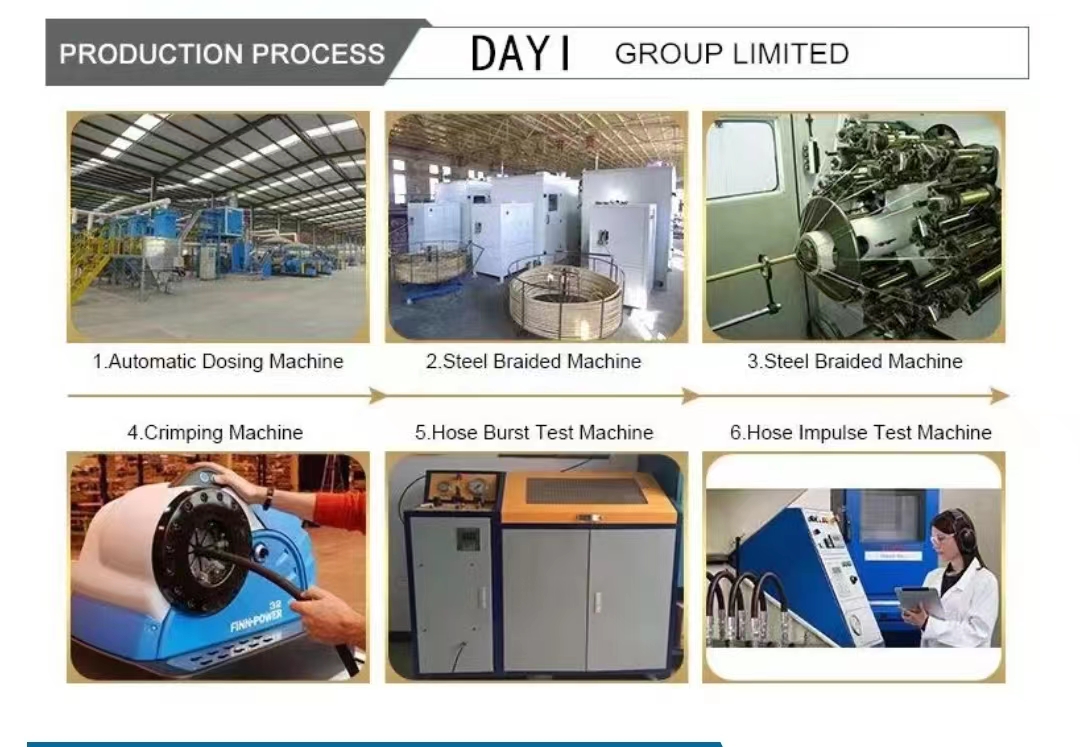
The performance of PTFE stainless steel braided hoses hinges on the properties of its constituent materials. The PTFE inner core, typically utilizing virgin PTFE resin, exhibits exceptional chemical resistance – inert to virtually all chemicals except molten alkali metals and fluorinating agents – a coefficient of friction of 0.04, and a wide operating temperature range (-200°C to +260°C). The manufacturing of the PTFE core commonly involves extrusion, where the resin is heated and forced through a die to create a seamless tube. Critical parameters during extrusion include temperature control (to prevent degradation), screw speed (for consistent material flow), and die design (to achieve desired wall thickness and surface finish). The stainless steel braid, generally 304 or 316 stainless steel, provides mechanical strength and burst resistance. The braiding process involves intertwining individual stainless steel wires using a specialized braiding machine. Braid angle, wire diameter, and braid density are key parameters controlling the hose’s pressure capacity and flexibility. Post-braiding, the hose undergoes a crimping process where the braid is securely attached to the PTFE core, often utilizing swaging technology. Quality control at each stage – resin purity verification, dimensional checks of the extruded core, braid count assessment, and crimp integrity testing – is essential to ensure a reliable final product. Chemical compatibility between the PTFE and the stainless steel, particularly concerning galvanic corrosion in specific media, must also be considered.

Performance & Engineering
The performance of PTFE stainless steel braided hoses is dictated by several engineering considerations. Burst pressure, typically tested according to SAE J526 or EN 856 standards, is a critical parameter, directly related to the braid structure and PTFE core thickness. Pressure ratings are often specified at a 4:1 safety factor. Flexibility, often quantified by bend radius, is influenced by the braid angle and wire diameter; a tighter braid angle generally results in lower flexibility but higher pressure resistance. Temperature resistance is limited by the PTFE core’s thermal degradation point and the potential for creep deformation under sustained high temperatures. The hose’s resistance to permeation – the leakage of fluids through the hose wall – is especially important in applications handling hazardous chemicals. Permeation rates are affected by the PTFE’s crystallinity and the pressure differential across the hose wall. Furthermore, the hose’s susceptibility to kinking under bending stress must be evaluated. Kinking can severely restrict flow and potentially damage the hose. Finite element analysis (FEA) is frequently employed to model stress distribution within the hose under various loading conditions, optimizing braid structure and core thickness for specific applications. The long-term creep resistance of the PTFE core under continuous pressure and temperature cycling is another key design consideration.
Technical Specifications
| Parameter | Unit | Typical Value (China Manufactured) | Test Standard |
|---|---|---|---|
| Working Pressure | MPa | 2.0 - 10.0 | SAE J526 |
| Burst Pressure | MPa | 8.0 - 40.0 | SAE J526 |
| Temperature Range | °C | -60 to +260 | ASTM D395 |
| Inner Diameter | mm | 6.35 - 101.6 | ISO 1307 |
| Braid Material | - | 304/316 Stainless Steel | ASTM A975 |
| PTFE Resin Type | - | Virgin PTFE | ASTM D1753 |
Failure Mode & Maintenance
PTFE stainless steel braided hoses, despite their robust construction, are susceptible to several failure modes. Fatigue cracking in the stainless steel braid, particularly under cyclic pressure loading, is a common occurrence. This can be exacerbated by corrosion in aggressive environments. Delamination – the separation of the PTFE core from the braid – can occur due to inadequate crimping or thermal cycling. PTFE creep, while generally slow, can lead to dimensional changes and eventual failure under prolonged high-temperature, high-pressure conditions. Permeation-induced swelling of the PTFE core can also contribute to failure. Abrasion damage to the outer braid, caused by external contact with abrasive surfaces, can compromise the hose’s mechanical integrity. Maintenance typically involves regular visual inspection for signs of damage – cracks, bulges, abrasion, or leaks. Pressure testing, periodically conducted according to manufacturer’s recommendations, can detect subtle leaks or weaknesses. Proper storage – avoiding direct sunlight and extreme temperatures – is crucial to prevent PTFE degradation. When replacing a hose, it’s essential to verify compatibility with the conveyed media and to select a hose with an appropriate pressure and temperature rating. Avoid sharp bending radii to minimize stress concentration and kinking.
Industry FAQ
Q: What are the key differences between 304 and 316 stainless steel braid, and which should I choose for a chemical processing application involving hydrochloric acid?
A: 304 stainless steel offers good corrosion resistance in many environments but is susceptible to pitting corrosion in chloride-rich environments like those containing hydrochloric acid. 316 stainless steel contains molybdenum, which significantly enhances its resistance to pitting and crevice corrosion, making it the preferred choice for applications involving hydrochloric acid or other halides. While 316 is more expensive, the increased corrosion resistance can prevent premature hose failure and costly downtime.
Q: How does the PTFE resin molecular weight affect the long-term performance and creep resistance of the hose?
A: Higher molecular weight PTFE resins generally exhibit improved creep resistance, tensile strength, and thermal stability. This is because longer polymer chains provide greater entanglement and resistance to deformation under stress. However, higher molecular weight resins can also be more difficult to process during extrusion, requiring higher temperatures and pressures. Therefore, a balance must be struck between processability and performance.
Q: What is the impact of braid angle on the hose's pressure rating and flexibility?
A: A smaller braid angle (steeper angle relative to the hose axis) generally results in a higher pressure rating, as the load is distributed more effectively along the braid wires. However, a smaller braid angle also reduces the hose's flexibility. Conversely, a larger braid angle increases flexibility but lowers the pressure rating. The optimal braid angle depends on the specific application requirements.
Q: What testing methods are used to verify the chemical compatibility of the PTFE core with a specific fluid?
A: Immersion testing is a common method, where a sample of the PTFE core is immersed in the fluid for an extended period at the operating temperature, and any changes in weight, dimension, or appearance are monitored. Swelling tests measure the percentage increase in volume after immersion. Additionally, accelerated aging tests simulate long-term exposure to the fluid under elevated temperatures and pressures.
Q: Can these hoses be used for vacuum applications? What are the limitations?
A: Yes, PTFE stainless steel braided hoses can be used for vacuum applications, but with limitations. The hose’s ability to withstand collapse under vacuum pressure is crucial. The braid provides structural support to prevent implosion, but the vacuum rating is significantly lower than the pressure rating. Factors like hose diameter and wall thickness influence the vacuum capability. Ensure the hose is specifically rated for vacuum service.
Conclusion
PTFE stainless steel braided hoses represent a critical enabling technology for a vast array of industrial applications demanding robust fluid transfer solutions. Their unique combination of chemical inertness, high-pressure resistance, and temperature stability, coupled with the competitive manufacturing capabilities of China, positions them as a preferred choice for engineers and procurement professionals worldwide. Understanding the interplay between material properties, manufacturing processes, and performance parameters is paramount to ensuring optimal hose selection and longevity.
Continued advancements in PTFE resin technology, braid construction techniques, and non-destructive testing methods will further enhance the performance and reliability of these hoses. A proactive approach to maintenance, including regular inspections and adherence to manufacturer’s recommendations, is vital to preventing premature failures and maximizing the return on investment. As industries increasingly prioritize safety, efficiency, and environmental sustainability, the demand for high-performance PTFE stainless steel braided hoses will undoubtedly continue to grow.