
Apr . 01, 2024 17:55 Back to list
china profession manufacturer hydraulic hose manufacturers Performance Analysis
Introduction
Hydraulic hoses, critical components in fluid power systems, are engineered to transmit hydraulic fluid under significant pressure to facilitate power transmission. China has emerged as a leading manufacturer of these hoses, supplying a substantial portion of the global demand. These hoses are integral to a broad spectrum of industries including construction, agriculture, manufacturing, mining, and transportation. The manufacturing process necessitates precise control over material selection, construction techniques, and quality assurance procedures to ensure reliable performance and prevent catastrophic failures. Performance characteristics, defined by working pressure, burst pressure, temperature range, and fluid compatibility, are paramount. This guide provides a comprehensive technical overview of hydraulic hose manufacturing in China, covering material science, production methodologies, performance analysis, failure modes, and relevant industry standards. The core pain point within the industry revolves around maintaining consistent quality in the face of fluctuating raw material costs and increasing performance demands, alongside adherence to stringent international safety regulations.
Material Science & Manufacturing
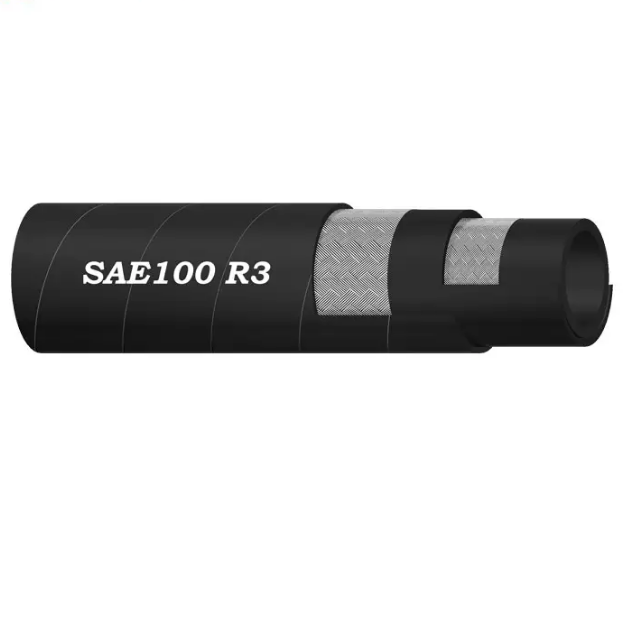
The core material of a hydraulic hose is typically synthetic rubber, predominantly based on nitrile rubber (NBR) for oil resistance, or ethylene propylene diene monomer (EPDM) for water and phosphate ester fluid compatibility. Reinforcement layers, crucial for withstanding high pressures, are commonly composed of multiple braids of high-tensile steel wire. Aramid fiber reinforcement is increasingly utilized in applications demanding lightweight and high-strength hoses. The cover layer, often a Chloroprene rubber (CR) compound, provides abrasion, weathering, and ozone resistance. Manufacturing begins with the extrusion of the inner tube. Precise control of mixing ratios of polymers, plasticizers, and reinforcing fillers is critical for achieving desired flexibility and fluid resistance. Braiding is performed using automated machinery, carefully controlling braid angle and wire tension to optimize pressure rating. The hose is then cured using a vulcanization process, involving heat and pressure to crosslink the rubber molecules, enhancing its strength and elasticity. Quality control includes burst pressure testing, impulse testing, and dimensional inspection. Parameter control during extrusion includes die temperature, screw speed, and resin viscosity. Braiding parameter control focuses on wire tension, braid angle, and lead angle. Vulcanization parameter control encompasses temperature, pressure, and cure time. Chemical compatibility is verified through immersion testing with various hydraulic fluids. The selection of these materials directly impacts the hose’s resistance to degradation from hydraulic fluid, temperature extremes, and mechanical stress.

Performance & Engineering
Hydraulic hose performance is dictated by several critical engineering considerations. Tensile strength, measured in MPa, indicates the hose’s resistance to stretching and breaking under load. Burst pressure, also in MPa, defines the maximum pressure the hose can withstand before rupture. Impulse pressure testing simulates the pressure surges common in hydraulic systems, assessing the hose’s fatigue resistance. The bend radius is crucial, as exceeding the minimum bend radius can lead to kinking and premature failure. Environmental resistance, encompassing temperature range (-40°C to +100°C is typical for NBR), UV exposure, and ozone resistance, determines the hose’s suitability for various operating conditions. Force analysis involves calculating hoop stress within the hose wall based on internal pressure, utilizing the thin-walled pressure vessel formula (σ = Pr/t, where σ is hoop stress, P is pressure, r is radius, and t is wall thickness). Compliance requirements necessitate adherence to industry standards such as SAE J517 and EN 853, ensuring interchangeability and safety. The selection of reinforcement materials directly impacts the hose’s performance characteristics; steel wire provides high strength, while aramid fiber offers a superior strength-to-weight ratio. Leakage prevention is achieved through precise coupling connections and proper hose assembly techniques, minimizing fluid loss and maintaining system efficiency. Failure analysis often correlates to exceeding pressure or temperature limits, improper installation, or material degradation.
Technical Specifications
| Parameter | Unit | NBR Hose (Typical) | EPDM Hose (Typical) |
|---|---|---|---|
| Working Pressure | MPa | 20 | 16 |
| Burst Pressure | MPa | 80 | 64 |
| Temperature Range | °C | -40 to +100 | -30 to +120 |
| Reinforcement Material | - | Steel Wire (multiple braids) | Steel Wire / Aramid Fiber |
| Inner Tube Material | - | Nitrile Rubber (NBR) | Ethylene Propylene Diene Monomer (EPDM) |
| Cover Material | - | Chloroprene Rubber (CR) | Chloroprene Rubber (CR) |
Failure Mode & Maintenance
Hydraulic hose failure can manifest in several ways. Fatigue cracking, arising from repeated flexing and pressure cycling, is a common issue, particularly near the coupling connections. Delamination, the separation of reinforcement layers from the inner tube, results from inadequate bonding or material incompatibility. Abrasion, caused by external contact with abrasive surfaces, weakens the cover layer and exposes the reinforcement. Oxidation and chemical degradation, triggered by exposure to oxygen, ozone, and incompatible hydraulic fluids, leads to rubber embrittlement and loss of flexibility. Kinking, caused by exceeding the minimum bend radius, restricts fluid flow and creates stress concentrations. Failure analysis involves visual inspection, microscopic examination of fractured surfaces, and chemical analysis to identify the root cause. Preventative maintenance includes regular visual inspections for signs of wear, damage, or leaks. Hoses should be replaced based on a predetermined schedule or if any defects are detected. Proper hose routing and support are critical to prevent abrasion and kinking. Correct coupling selection and assembly techniques are essential for preventing leaks and ensuring reliable connections. Hydraulic fluid should be maintained within specified cleanliness levels to minimize internal abrasion. Regular system pressure checks are crucial to ensure operation within the hose’s rated limits.
Industry FAQ
Q: What is the impact of hydraulic fluid type on hose selection?
A: Hydraulic fluid compatibility is paramount. NBR hoses are generally suitable for petroleum-based fluids, while EPDM hoses are preferred for phosphate ester and water-glycol fluids. Using an incompatible fluid can cause swelling, softening, or cracking of the inner tube, leading to premature failure. Always verify fluid compatibility with the hose manufacturer's specifications.
Q: How does temperature affect hydraulic hose performance?
A: Extreme temperatures can significantly impact hose performance. High temperatures accelerate rubber degradation, reducing flexibility and strength. Low temperatures can cause embrittlement and loss of elasticity. Hose materials are rated for specific temperature ranges; exceeding these limits can lead to failure.
Q: What are the key considerations for hose coupling selection?
A: Couplings must be compatible with the hose material and rated for the same or higher working pressure. Proper crimping is crucial for a secure connection. Coupling material should also be compatible with the hydraulic fluid. Frequent coupling/uncoupling can accelerate wear, so selecting durable couplings is essential.
Q: How can fatigue cracking be mitigated?
A: Minimizing hose flexing, maintaining proper hose routing to avoid sharp bends, and using hoses with adequate impulse pressure ratings can help mitigate fatigue cracking. Regularly inspecting hoses for signs of wear and replacing them proactively are also crucial preventative measures.
Q: What role do international standards play in hydraulic hose manufacturing?
A: Standards such as SAE J517 (USA), EN 853 (Europe), and GB/T 36862 (China) define performance requirements, testing procedures, and dimensional specifications for hydraulic hoses, ensuring interchangeability, safety, and quality. Compliance with these standards is often a prerequisite for market access.
Conclusion
The manufacturing of high-performance hydraulic hoses necessitates a deep understanding of material science, precise control over manufacturing processes, and strict adherence to industry standards. China’s position as a leading manufacturer is predicated on its ability to deliver cost-competitive products while meeting increasingly stringent quality requirements. The continued innovation in materials, such as advanced polymer blends and high-strength reinforcement fibers, will be critical for developing hoses capable of withstanding higher pressures, temperatures, and more aggressive hydraulic fluids.
Looking ahead, increased focus on sustainable manufacturing practices, including the use of recycled materials and environmentally friendly production processes, will be essential. Further advancements in non-destructive testing methods, such as ultrasonic inspection, will enable more reliable quality control and predictive maintenance. By prioritizing technological innovation and quality assurance, China can maintain its position as a global leader in hydraulic hose manufacturing.