
Apr . 01, 2024 17:55 Back to list
china profession manufacturer hydraulic hose manufacturer Performance Analysis
Introduction
Hydraulic hoses, critical components in fluid power systems, transmit hydraulic fluid to actuate machinery. China’s manufacturing sector has become a significant global producer of these hoses, offering a range of specifications to serve diverse industrial applications. These applications span construction, agriculture, mining, material handling, and manufacturing itself. The core performance characteristics – pressure rating, temperature range, fluid compatibility, and abrasion resistance – dictate their suitability for specific deployments. Understanding these parameters is crucial for engineers and procurement managers. A key pain point in the industry revolves around balancing cost-effectiveness with long-term reliability and ensuring compliance with increasingly stringent safety and environmental regulations. This guide provides an in-depth technical overview of hydraulic hose manufacturing, performance, and best practices, focusing on offerings from China-based manufacturers.
Material Science & Manufacturing
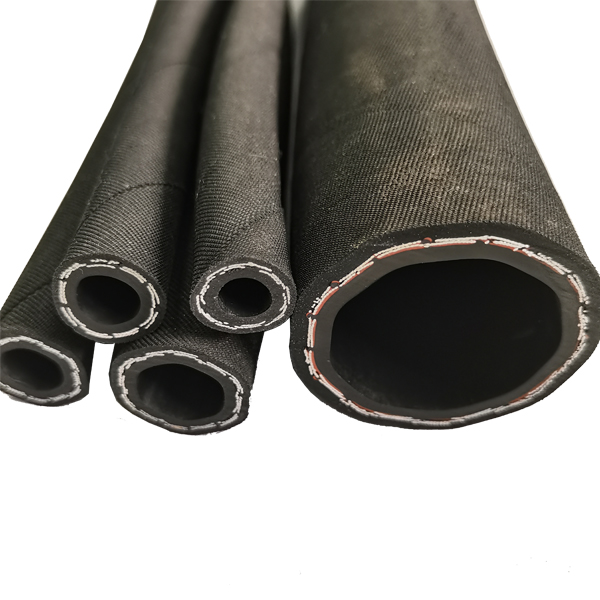
Hydraulic hoses are typically constructed from multiple layers. The inner tube, in direct contact with the fluid, is commonly composed of synthetic rubber compounds like Nitrile (NBR), Ethylene Propylene Diene Monomer (EPDM), or Fluoroelastomer (FKM/Viton). NBR offers excellent resistance to petroleum-based fluids, while EPDM excels in high-temperature applications and compatibility with phosphate ester fluids. FKM provides superior resistance to aggressive chemicals and extreme temperatures, but at a higher cost. The reinforcement layer, crucial for pressure containment, utilizes high-tensile steel wire (single or multiple spiral plies) or synthetic fiber braids (aramid, polyester). The outer cover, protecting the reinforcement from abrasion and environmental degradation, is generally made of Chloroprene (CR) rubber.
Manufacturing processes vary depending on hose type. For spiral wire-reinforced hoses, a mandrel is used to form the inner tube. Wire is continuously spiraled around the tube, and the outer cover is extruded over this assembly. Critical parameters include wire tension, helix angle, and rubber curing temperature. For braided hose, the inner tube is extruded, followed by the braiding process using specialized braiding machines. Fiber tension and braid angle are tightly controlled. Following braiding or spiraling, vulcanization – a chemical process involving heat and pressure – cross-links the rubber polymers, imparting strength, elasticity, and chemical resistance. Post-vulcanization, hoses undergo rigorous testing, including burst pressure tests, impulse tests, and dimensional checks. Variations in material composition and process control directly affect hose performance and longevity. Improper vulcanization can lead to reduced tensile strength and premature failure. China’s manufacturers are increasingly adopting automated production lines and quality control systems to ensure consistent output.

Performance & Engineering
Hydraulic hose performance is governed by several engineering principles. Burst pressure, typically four times the working pressure, is a critical safety factor. Impulse pressure, representing pressure fluctuations within the system, subjects the hose to cyclic stresses, leading to fatigue. Hose design must account for these fluctuating loads. Tensile strength, measured in MPa or PSI, indicates the hose's resistance to stretching. Elongation at break defines the extent of stretch before failure. Fluid compatibility is paramount; incompatible fluids can cause swelling, softening, or degradation of the inner tube. Temperature extremes affect rubber elasticity; high temperatures can reduce pressure rating and accelerate aging, while low temperatures can decrease flexibility.
Finite Element Analysis (FEA) is often employed in hose design to simulate stress distribution under various loading conditions. This allows engineers to optimize reinforcement layer configuration and material selection. Standards like SAE J517 (hydraulic hose - performance characteristics) and EN 856 (steel wire reinforced hydraulic hoses) dictate minimum performance requirements. The choice of hose construction – spiral vs. braided – depends on the application. Spiral hoses generally offer higher pressure ratings and greater flexibility, while braided hoses are more cost-effective and suitable for lower-pressure systems. The hose end termination (crimped fittings) is a critical failure point; improper crimping can lead to leakage or hose separation. The proper selection of fitting material and crimp size is vital, and should be compatible with both the hose and the fluid.
Technical Specifications
| Parameter | SAE J517 R1AT | EN 856 4SH | Typical China Manufacturer Offering |
|---|---|---|---|
| Working Pressure (PSI) | 1500 | 2500 | 1000-3000 |
| Burst Pressure (PSI) | 6000 | 10000 | 4000-12000 |
| Temperature Range (°C) | -40 to +100 | -40 to +100 | -40 to +120 |
| Inner Tube Material | NBR | NBR | NBR, EPDM, FKM |
| Reinforcement | Single Steel Wire Spiral | Four Steel Wire Spiral | Single/Double Steel Wire Spiral, 2/4SP Braided |
| Outer Cover Material | CR | CR | CR |
Failure Mode & Maintenance
Hydraulic hose failures typically stem from several mechanisms. Fatigue cracking, induced by repeated pressure cycles, occurs in the reinforcement layer. Abrasion, caused by external contact with abrasive surfaces, damages the outer cover, exposing the reinforcement to corrosion. Weld spatter, if not immediately removed, can degrade the cover. Kinking, resulting from bending beyond the hose's minimum bend radius, damages the reinforcement. Chemical attack, due to incompatible fluids, causes swelling, softening, or degradation of the inner tube. Improper installation, such as over-tightening or misaligned fittings, leads to premature failure. Thermal degradation, accelerated by high temperatures, reduces rubber elasticity and strength.
Preventive maintenance is crucial for extending hose life. Regular visual inspections should identify abrasion, kinks, or leaks. Ensure proper hose routing, avoiding sharp bends and contact with hot surfaces. Use appropriate guarding to protect hoses from abrasion and impact. Regularly check fitting tightness. Replace hoses based on a predetermined schedule or after exceeding a specified operating time. When replacing hoses, always use compatible fittings and follow the manufacturer's crimping instructions. For chemical exposure, consult a fluid compatibility chart to select the appropriate hose material. Document all maintenance activities for traceability and analysis. Correct identification of failure modes allows for targeted preventative measures and improved system reliability.
Industry FAQ
Q: What is the impact of varying steel wire helix angles in spiral hose construction on pressure capability and flexibility?
A: A smaller helix angle generally increases pressure capability, as it distributes the load more effectively along the wire. However, it reduces flexibility. A larger helix angle enhances flexibility but compromises pressure capacity. Manufacturers balance these factors based on intended application requirements.
Q: How do different rubber compounds (NBR, EPDM, FKM) affect the lifespan of a hydraulic hose in specific fluid environments?
A: NBR is suitable for petroleum-based fluids, offering good abrasion resistance but limited temperature range. EPDM excels in high-temperature environments and phosphate ester fluids, but has lower oil resistance. FKM provides superior chemical resistance and temperature stability, crucial for aggressive fluids, but is the most expensive option.
Q: What are the key differences between crimped and field-attachable fittings, and when should each be used?
A: Crimped fittings offer a secure, permanent connection requiring specialized tooling. Field-attachable fittings (e.g., swaged, threaded) allow for on-site assembly and disassembly, ideal for maintenance or remote locations, but generally have lower pressure ratings and can be more prone to leakage if not properly installed.
Q: How does the quality control process within a Chinese hydraulic hose manufacturer impact the reliability of their products?
A: Reputable Chinese manufacturers are increasingly adopting ISO 9001 quality management systems, implementing stringent testing procedures (burst pressure, impulse, leak testing) throughout the production process. Look for manufacturers with certifications and demonstrable track records of quality control. Third-party inspection is also advisable.
Q: What are the typical lead times for custom hydraulic hose orders from Chinese manufacturers, and what factors influence them?
A: Lead times typically range from 2 to 8 weeks, depending on complexity, quantity, and material availability. Factors influencing lead time include the specific hose construction, fitting requirements, and current production capacity of the manufacturer. Clear communication and advance planning are crucial.
Conclusion
Hydraulic hoses are essential components requiring careful consideration of material selection, manufacturing processes, and performance characteristics. China’s manufacturing capabilities offer a diverse range of hydraulic hose solutions, but diligent evaluation of quality control practices and adherence to international standards are paramount. Understanding the interplay between pressure rating, temperature range, fluid compatibility, and potential failure modes is vital for ensuring long-term system reliability and operational safety.
The trend towards increased automation and improved quality control within the Chinese manufacturing sector is driving enhanced product performance and consistency. Selecting a supplier with a robust quality management system and a commitment to industry best practices is crucial for mitigating risk and optimizing the total cost of ownership. Continuous monitoring of hose condition and implementation of preventive maintenance programs will further extend service life and maximize return on investment.