
Apr . 01, 2024 17:55 Back to list
china production ptfe hose manufacturers Performance Analysis
Introduction
Polytetrafluoroethylene (PTFE) hose manufactured in China represents a significant portion of the global supply chain for fluid transfer systems. These hoses, characterized by their exceptional chemical inertness, high-temperature resistance, and low coefficient of friction, are utilized across diverse industries including aerospace, automotive, chemical processing, food & beverage, and pharmaceuticals. The growth in Chinese PTFE hose production is driven by competitive pricing, increasing manufacturing capabilities, and a rapidly expanding domestic industrial base. However, achieving consistent quality and adhering to stringent international standards remain key challenges. This technical guide provides an in-depth analysis of PTFE hose manufacturing, material science, performance characteristics, potential failure modes, and relevant industry standards, focusing on the landscape of Chinese production. Understanding these factors is critical for procurement managers, engineers, and quality control personnel involved in sourcing and utilizing PTFE hose.
Material Science & Manufacturing
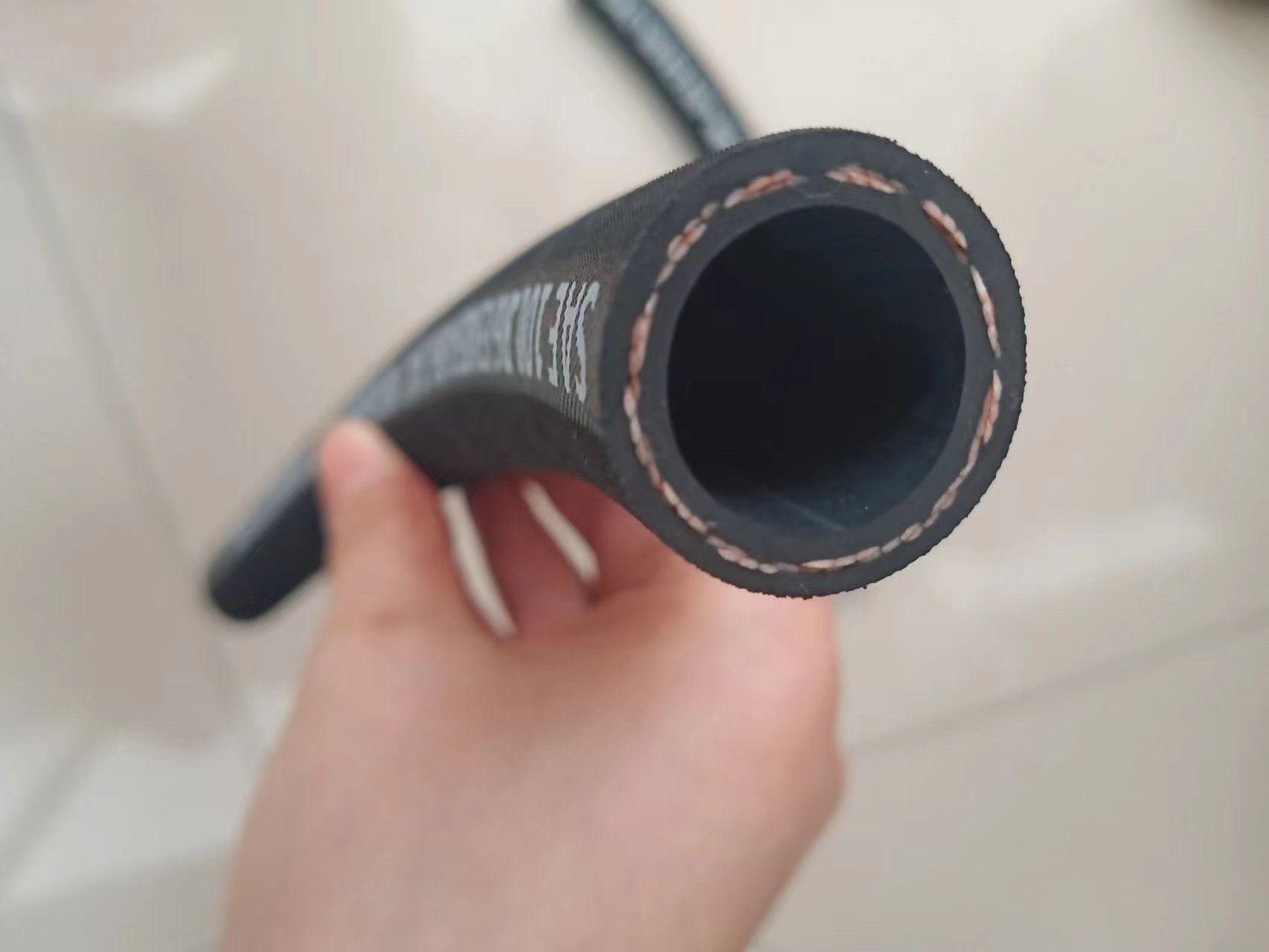
PTFE, commonly known as Teflon, is a synthetic fluoropolymer of tetrafluoroethylene. Its key physical properties include a melting point of 327°C (621°F), a density of 2.2 g/cm³, and a dielectric constant of approximately 2.1. Chemically, PTFE is remarkably stable due to the strong carbon-fluorine bonds, rendering it virtually unreactive with most chemicals. Raw material selection for PTFE hose primarily involves virgin PTFE resin, but compounded grades containing fillers like glass fiber, carbon, or bronze are also utilized to enhance specific properties such as dimensional stability and creep resistance. The manufacturing process for PTFE hose typically involves several steps. Firstly, PTFE resin is processed into a tube via extrusion or molding. Extrusion is favored for continuous hose production, while molding is preferred for short lengths or complex geometries. Sintering is a crucial step, involving heating the extruded or molded PTFE to a temperature below its melting point, causing the polymer particles to fuse together. Precise temperature control during sintering is paramount to achieve optimal density and mechanical properties. Following sintering, the hose undergoes surface treatment, which might include etching to improve adhesion for subsequent layering, or coating with other materials for enhanced performance. Braiding with materials like stainless steel or aramid fibers is commonly applied to increase burst pressure and provide structural support. The final step usually involves dimensional inspection and quality control checks. Parameter control during extrusion – including temperature of the extruder barrel zones, screw speed, and die pressure – critically impacts the homogeneity and quality of the PTFE tube.

Performance & Engineering
The performance of PTFE hose is dictated by its ability to withstand internal pressure, external loads, and harsh environmental conditions. Force analysis focuses on hoop stress within the hose wall, determined by the internal pressure and hose dimensions. Braiding significantly enhances the hose’s ability to resist hoop stress and prevents expansion under pressure. Environmental resistance is a critical aspect, particularly concerning temperature fluctuations and chemical exposure. While PTFE exhibits excellent chemical resistance, prolonged exposure to highly alkaline or strong oxidizing agents at elevated temperatures can lead to degradation. Furthermore, creep – the tendency of a material to deform permanently under sustained stress – is a concern with PTFE, especially at higher temperatures. Fillers like glass fiber are incorporated to mitigate creep. Compliance requirements vary significantly based on the application. For example, hoses used in food and beverage applications must comply with FDA regulations regarding material purity and leachability. Automotive hoses must meet SAE standards for fuel resistance and temperature cycling. Aerospace hoses necessitate adherence to stringent AMS specifications for fluid compatibility and burst pressure. Functional implementation involves proper installation and connection techniques. Flare fittings, compression fittings, and threaded fittings are commonly used, each requiring specific torque specifications to ensure a leak-proof seal. Improper installation can lead to premature failure due to stress concentrations or fluid leakage. The service life of a PTFE hose is heavily dependent on operating conditions and adherence to manufacturer’s specifications. Regular inspection for signs of wear, damage, or degradation is essential for ensuring safe and reliable operation.
Technical Specifications
| Parameter | Unit | Standard Grade PTFE Hose | Silver Coated PTFE Hose |
|---|---|---|---|
| Operating Temperature | °C | -200 to +260 | -200 to +260 |
| Burst Pressure (1” ID) | MPa | 2.76 | 4.14 |
| Tensile Strength | MPa | 21 | 24 |
| Elongation at Break | % | 300 | 250 |
| Dielectric Strength | kV/mm | 10 | 10 |
| Chemical Resistance | - | Excellent to most chemicals | Excellent to most chemicals, reduced permeation |
Failure Mode & Maintenance
PTFE hose, while durable, is susceptible to several failure modes. Fatigue cracking can occur due to repeated flexing or pressure cycling, particularly at fittings or areas of high stress concentration. Delamination can result from inadequate bonding between layers of PTFE and braiding materials, often stemming from improper sintering or surface preparation. Degradation, though slow, can occur with prolonged exposure to harsh chemicals or extreme temperatures, leading to reduced mechanical properties and increased permeability. Oxidation can affect PTFE containing fillers, particularly at elevated temperatures, causing embrittlement and cracking. Abrasion from internal fluid flow containing particulate matter can erode the PTFE lining, leading to leakage. Maintenance practices are crucial for extending hose life and preventing failures. Regular visual inspections should be conducted to identify any signs of cracking, swelling, discoloration, or damage to the braiding. Pressure testing can verify the hose’s integrity. Cleaning the hose with appropriate solvents can remove contaminants and prevent clogging. Proper storage is essential; hoses should be stored in a cool, dry place away from direct sunlight and corrosive substances. Damaged hoses should be replaced immediately. Fittings should be inspected for corrosion or damage and replaced as needed. Preventive maintenance schedules should be established based on the operating conditions and manufacturer’s recommendations. Detailed records of inspections, maintenance, and replacements should be maintained for traceability and analysis.
Industry FAQ
Q: What are the key differences in PTFE hose quality between Tier 1 and Tier 3 Chinese manufacturers?
A: Tier 1 manufacturers typically invest significantly in advanced extrusion technology, rigorous quality control processes, and certified raw materials. They consistently meet or exceed international standards like SAE and FDA. Tier 3 manufacturers often prioritize cost reduction, potentially leading to inconsistent material quality, inadequate sintering processes, and higher defect rates. The primary differences lie in consistency, traceability, and compliance.
Q: How does the addition of glass fiber impact the long-term performance of PTFE hose in high-temperature applications?
A: Glass fiber significantly improves the dimensional stability and creep resistance of PTFE hose at elevated temperatures. However, prolonged exposure to hydrolytic environments can lead to glass fiber degradation, potentially reducing the hose's mechanical properties over time. The grade of glass fiber and the percentage loading are critical factors.
Q: What is the significance of permeation testing for PTFE hose used in pharmaceutical applications?
A: Permeation testing verifies the hose’s ability to prevent the diffusion of fluids or gases through the hose wall, ensuring product purity and preventing contamination. Pharmaceutical applications require extremely low permeation rates to meet stringent regulatory requirements.
Q: What are the common causes of PTFE hose failure at threaded connections?
A: Common causes include improper torque application during installation, leading to over-tightening or under-tightening. Corrosion of the fitting material, particularly in harsh environments, can also compromise the seal. Damage to the PTFE hose end during installation or handling can create leak paths.
Q: What are the limitations of silver coated PTFE hose, and when would it be preferable to use a standard PTFE hose?
A: While silver coating reduces permeation, it can be susceptible to silver migration over time, particularly in chloride-rich environments, potentially impacting the purity of the conveyed fluid. It is also more expensive. Standard PTFE hose is preferable when silver contamination is a concern or when permeation is not a critical factor.
Conclusion
PTFE hose manufactured in China offers a compelling combination of performance, cost-effectiveness, and availability. However, navigating the diverse landscape of Chinese manufacturers requires a thorough understanding of material science, manufacturing processes, and quality control measures. Consistent quality and adherence to international standards are paramount for ensuring reliable performance and preventing premature failures. Selecting the appropriate PTFE hose grade, coupled with proper installation and maintenance practices, is critical for maximizing service life and minimizing operational risks.
The future of PTFE hose technology in China will likely involve increased adoption of advanced manufacturing techniques, a greater focus on sustainability and environmental compliance, and the development of new PTFE compounds with enhanced properties. Proactive engagement with reputable manufacturers, coupled with rigorous quality assurance protocols, will be essential for leveraging the benefits of Chinese PTFE hose production while mitigating potential challenges.